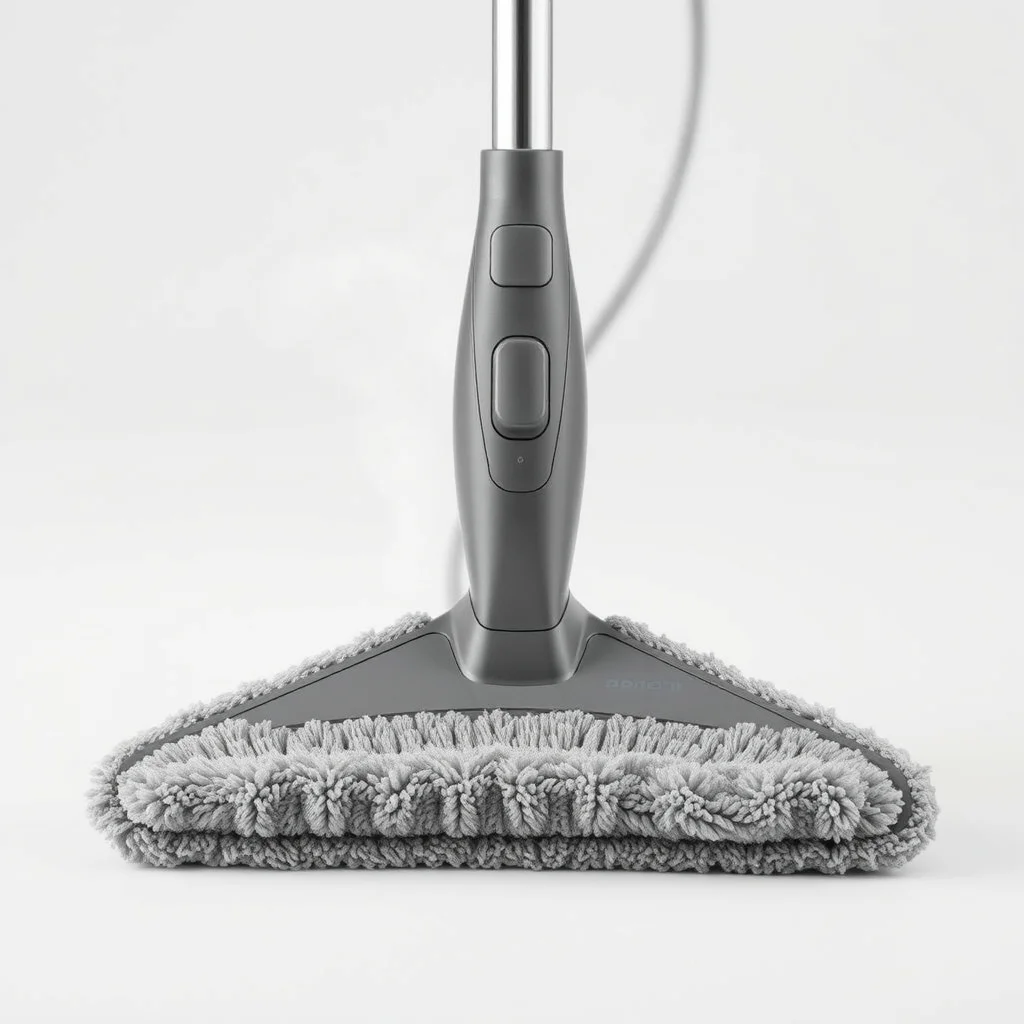
Floor Type First: The Safety Question That Comes Before Everything Else
Before comparing steam mop specs, you need to know what your floor surface is and whether it is sealed. This is not optional — excess steam moisture can permanently damage certain floor types, and the damage is not always immediately obvious. It can show up weeks later as warped boards or clouded finish.
Safe for steam mops (sealed surfaces): Sealed hardwood (confirm with your floor manufacturer or installer), ceramic tile, porcelain tile, sealed natural stone, sealed concrete, and most vinyl composition tile. "Sealed" means there is a protective layer on top of the floor material that prevents water penetration.
Use with caution or avoid: Unsealed hardwood, bamboo flooring, waxed floors, laminate (most laminate is not rated for steam — the HDF core can swell), luxury vinyl plank (LVP) and luxury vinyl tile (LVT) — manufacturers vary widely on steam mop approval for LVP/LVT, so check your specific product's care guide. Cork and linoleum are generally not steam-mop-compatible.
Heat-Up Time: What "Fast Heat-Up" Actually Means
Heat-up time is the time from plug-in to usable steam output. The range across consumer steam mops runs roughly from 15 seconds (fast) to 90 seconds (slow). Most mainstream models land in the 20–45 second range.
Heat-up time is determined by boiler size and wattage. Small boilers with high wattage elements heat faster. Large boilers take longer to heat but can sustain steam output longer without pressure fluctuations.
Faster heat-up is genuinely more convenient for quick cleanups, but it rarely affects cleaning performance once the mop is at temperature. If you use your steam mop for occasional spot cleaning, heat-up time matters more than if you mop whole floors weekly.
Some models use a continuous-fill or pressurized tank design that can add refill time mid-job when the tank runs dry. Budget models typically have fixed tanks; better models sometimes allow continuous-flow top-up. Tank capacity ranges from about 0.3 liters (portable handhelds) to 0.75+ liters (full uprights). A 0.5-liter tank on a standard mop covers roughly 900–1,200 square feet of mopping before refill, though this varies considerably with steam output level.
Steam Control: Variable vs Fixed Output
Basic steam mops operate at a single fixed steam level. More capable models offer two or three steam settings — typically a low setting for sealed hardwood and delicate surfaces, a standard setting for tile and vinyl, and a high setting for heavily soiled tile or grout.
Variable steam control is not a gimmick if you have multiple floor types in your home. Running a high-output steam setting on sealed hardwood is not necessarily damaging (assuming the floor is properly sealed), but it deposits more moisture than needed and may leave a steam film. Low settings on a heavily soiled tile floor are frustratingly ineffective. Having the option to dial it down or up is genuinely useful.
A continuous steam trigger (squeeze to steam) versus always-on steam is another meaningful difference. Trigger designs let you turn steam off while repositioning, which reduces the steam deposit on any single area.
Pad Type: Microfiber vs Terry Cloth
Steam mop pads come primarily in two materials: microfiber and terry cloth (the looped cotton or cotton-poly material used in traditional mop heads). They are not interchangeable in use case.
Microfiber pads (typically 70–80% polyester, 20–30% polyamide) trap microscopic particles and bacteria through electrostatic attraction. They work well on smooth sealed floors and are gentle enough for hardwood. Microfiber does not hold soil as a scrubbing agent — it captures it in the fiber loops. These are the correct choice for hardwood and most smooth surfaces.
Terry cloth pads have more abrasive texture and hold more cleaning solution. They work better on tile and textured stone where you want physical scrubbing action. The downside is that terry cloth can leave more residue if steam output is high.
Washable pads are worth the attention. Most pads survive 20–50 machine washes before degrading, though heavy scrubbing against grout wears them faster. Buying a 3–4 pad starter pack is reasonable — it allows you to swap mid-job without waiting for a wet pad to dry.
Shopping for steam mops? Browse current eBay listings → (we earn a small commission; your price is unchanged).
Detachable Handheld Attachments
Many steam mop models include a detachable handheld unit that can be used independently for grout lines, stovetop grates, bathroom fixtures, and upholstery. This is genuinely useful if you need to sanitize surfaces beyond the floor — but evaluate it as a secondary feature, not a primary reason to buy.
The handheld unit's steam output and water capacity are almost always less capable than a dedicated handheld steam cleaner. If detailed steam cleaning of vertical surfaces is important to you, a standalone handheld steam cleaner performs better than a mop attachment. If it is an occasional use, the built-in detachable is convenient.
Check whether the handheld detaches easily — some designs require unlocking mechanisms that are awkward in use, and others simply detach with a button. Also check the handheld tank capacity; some share the main tank (convenient) while others have a separate smaller tank that must be refilled independently.
Mop Head Size and Swivel
Steam mop heads range from about 9 inches to 14 inches wide. A wider head covers more floor per pass, which speeds up whole-room mopping. A narrower head is easier to maneuver in tight spaces and around furniture legs.
A 360-degree swivel joint between the handle and head matters for cleaning under furniture and in corners. Rigid-neck designs have to be tilted to reach corners; swivel designs glide around obstacles. Most mid-range and above models include some degree of swivel.
Water Quality and Scale Buildup
If you live in an area with hard tap water (high mineral content), scale will build up in the steam mop's boiler over time. This gradually reduces steam output and can eventually block the steam jets. Models with removable, descalable boilers or built-in descaling ports extend service life significantly.
Using distilled water entirely prevents scale buildup and is often recommended by manufacturers in hard-water areas, though it adds ongoing cost. Some manufacturers specifically prohibit distilled-only use (it can cause corrosion in certain boiler materials), so check your manual. Filtered water is a middle ground.
What to Skip
- Built-in fragrance or cleaning solution dispensers: Steam mops are designed to work with water only; adding solution to the tank can damage the boiler and void the warranty on many models. Separate solution dispensers are a workaround, but they add complexity for questionable benefit.
- Extremely wide mop heads on budget models: A wide head on a low-wattage heater means the steam pressure per square inch is lower. Worse performance, more weight.
- Extra-long cords as a selling point: Most steam mops have 25–30 foot cords, which is adequate for most rooms. Cord length is rarely the limiting factor.
The Decision in Plain Terms
Confirm your floor is sealed before buying any steam mop. If it is not, a damp microfiber flat mop is a safer choice. If your floors are sealed tile or hardwood, buy a model with variable steam control and washable microfiber pads. Add a detachable handheld only if you have a genuine use for it on non-floor surfaces. For heavily tiled bathrooms or kitchens with grout that needs regular cleaning, a floor steam cleaner with a scrubbing attachment delivers better results than a standard mop head.
Search eBay for steam mops
We earn a small commission on qualifying sales; your price is unchanged. Full disclosure.
 Steam mop
Upright floor mops with fast heat-up and variable steam
Steam mop
Upright floor mops with fast heat-up and variable steam
 Hardwood steam mop
Low-moisture models safe for sealed hardwood floors
Hardwood steam mop
Low-moisture models safe for sealed hardwood floors
 Steam cleaner floor
Multi-surface cleaners with tile scrubbing attachments
Steam cleaner floor
Multi-surface cleaners with tile scrubbing attachments
 Handheld steam cleaner
Compact units for grout, fixtures, and vertical surfaces
Handheld steam cleaner
Compact units for grout, fixtures, and vertical surfaces
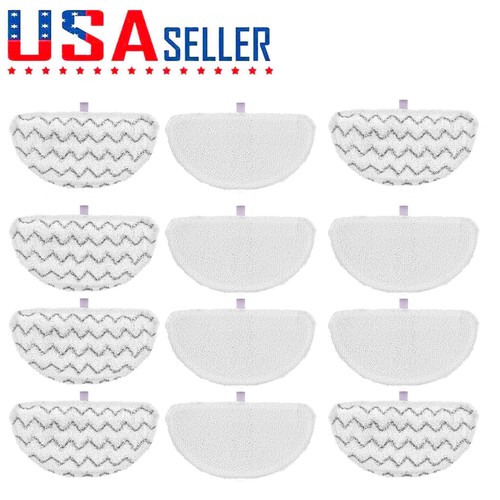 Steam mop pads
Replacement washable microfiber and terry pads
Steam mop pads
Replacement washable microfiber and terry pads