Inshore vs Offshore Leader Choice: Fluorocarbon, Wire, and Mono by Target Species
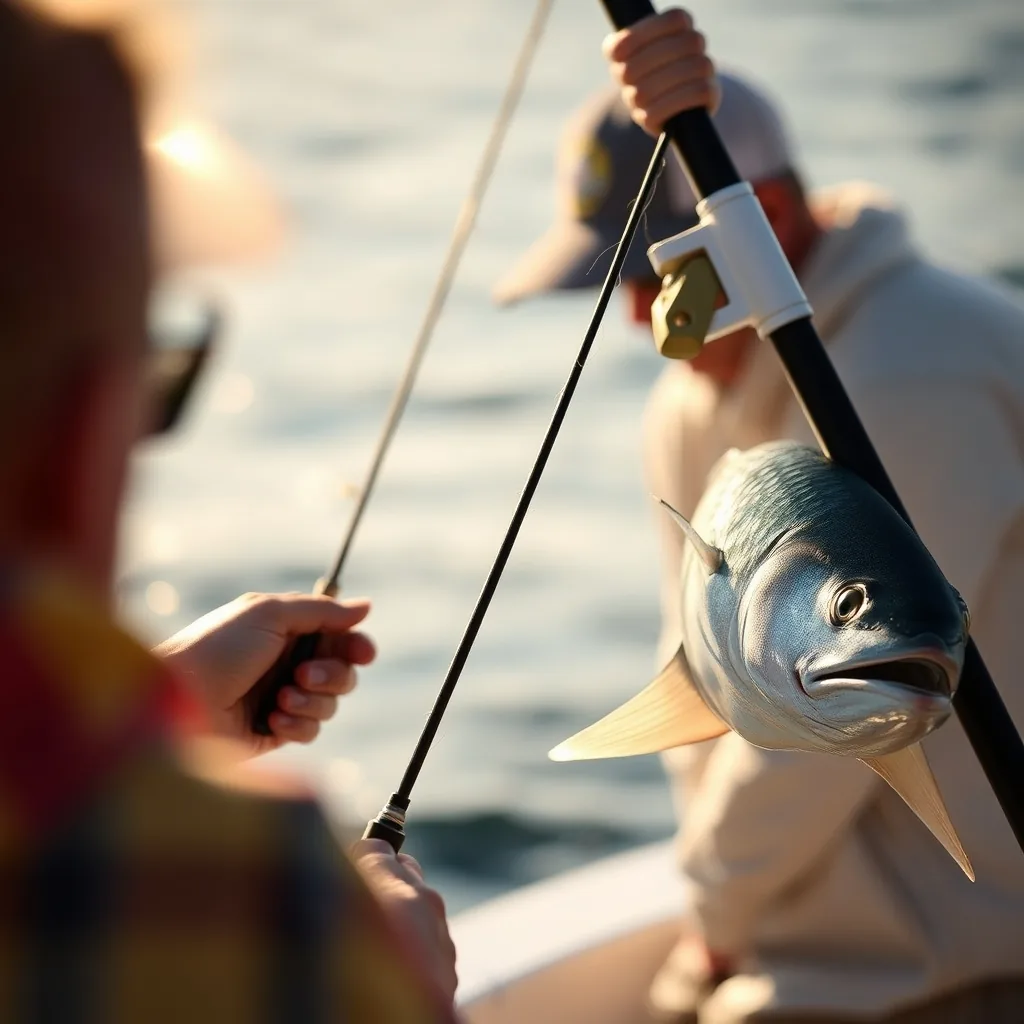
The wrong leader loses fish before the rod even loads. This guide covers when to run fluorocarbon, when wire is mandatory, and when cheap mono still makes sense — keyed to inshore vs offshore and the actual species you're targeting.
Why Leader Material Matters More Than Most Anglers Think
Your main line — typically 20–50 lb braid for most saltwater setups — is optimized for sensitivity and casting distance, not for the last two to six feet of presentation where fish are actually deciding. That terminal section, the leader, needs to solve completely different problems: abrasion from teeth, gill plates, structure, and rocky bottom; visibility in clear water; and stretch characteristics that affect how the hook sets and whether the fish stays pinned.
The three materials in regular use are fluorocarbon, single-strand wire, and monofilament. They are not interchangeable, and using the wrong one for the wrong species costs fish. Here is how to choose.
Fluorocarbon Leaders: The Inshore Default
Fluorocarbon is the standard leader material for most inshore fishing and for offshore species without significant teeth. Its refractive index is close to water, making it much harder for fish to see than mono. It is stiffer than mono, resists abrasion from gill plates and structure, and sinks faster — a real advantage when working soft plastics or live bait near the bottom.
The downside is stiffness at heavier pound tests. Above 60 lb, fluorocarbon becomes difficult to work with in knots and loses most of its castability advantage. It is also significantly more expensive than mono at the same diameter.
Inshore fluorocarbon pound test by species
| Species | Typical leader | Notes |
|---|---|---|
| Speckled trout (spotted seatrout) | 15–20 lb fluoro | Light for finesse; trout aren't toothy but are line-shy in clear flats water |
| Redfish (red drum) | 20–30 lb fluoro | Abrasion from structure and gill plates; heavier in oyster beds |
| Flounder | 20–25 lb fluoro | Low-visibility, bottom-oriented; fluoro sinks naturally |
| Snook | 30–40 lb fluoro | Sharp gill plates; 40 lb for dock fishing around pilings |
| Sheepshead | 20–25 lb fluoro | Crushers not biters; focus on sensitivity more than bite-off prevention |
| Tarpon (large) | 60–80 lb fluoro or heavy mono | Above 60 lb, fluoro loses its handling advantage; many anglers switch to mono here |
Wire Leaders: Mandatory for Toothy Species
Wire leaders exist because some species will cut through any mono or fluorocarbon you tie. Spanish mackerel, king mackerel, wahoo, barracuda, bluefish, and sharks all qualify. The teeth aren't always visible until you pull back a cut line — and then you know.
There are two main types: single-strand stainless wire and multi-strand coated wire (often called "coffee-colored" wire or AFW Surfstrand).
Single-strand wire
Single-strand is the more sensitive option and preferred for species that are otherwise line-shy (like king mackerel in clear offshore water). It transmits lure action better because it has no flex to dampen movement. The tradeoff: it kinks permanently. One kink means you cut and retie. Single-strand is sized in gauges: #2 (27 lb) through #12 (174 lb) are common. For most kingfish and wahoo setups, #4 (38 lb) to #7 (69 lb) covers you.
Multi-strand coated wire
Multi-strand like AFW Surfstrand or American Fishing Wire 49-strand is more flexible, handles easier in knots or crimps, and doesn't kink. It is the right choice for shark leaders, bluefish rigs, or any situation where you are handling the leader frequently. Pound test runs 30–400 lb depending on strand count. For bluefish inshore, 30–40 lb multi-strand on 6–12 inches of leader is standard. For blacktip and bull sharks, 60–90 lb minimum.
Wire leader pound test by species
| Species | Leader type | Pound test / gauge |
|---|---|---|
| Spanish mackerel | Single-strand wire | #2–#3 (27–38 lb); keep leader short (6–10 in) to preserve lure action |
| King mackerel | Single-strand wire | #4–#6 (38–58 lb); slow-trolled live bait rigs often use longer sections |
| Wahoo | Single-strand or multi-strand | #6–#9 (58–104 lb); wahoo cut heavy braid with ease if you skip wire |
| Barracuda | Multi-strand coated wire | 40–60 lb; flexible wire preferred because it handles repeated bites better |
| Bluefish (inshore) | Multi-strand coated wire | 30–40 lb; 12 inch section sufficient; blues bite constantly and multi-strand survives multiple fish |
| Blacktip/spinner shark | Multi-strand heavy wire | 60–80 lb minimum; 24–36 inch section; use swivel at connection |
| Bull/tiger shark | Multi-strand heavy wire | 100–200 lb; heavier crimped connections; not a finesse rig |
Monofilament Leaders: When Mono Still Wins
Monofilament has been largely replaced by fluorocarbon for inshore clarity applications, but it remains legitimate in several situations.
Heavy tarpon and billfish leaders
Above 60 lb test, fluorocarbon gets expensive and difficult to handle. Heavy monofilament — specifically the IGFA class mono used in 80 lb and 100 lb leader setups for tarpon, sailfish, and marlin — is still the industry standard. It stretches more than fluoro (which acts as a shock absorber during head-shakes and jumps), it handles better in crimps, and it is dramatically cheaper per foot. For live-bait sailfish rigs using 80 lb mono leader, you're spending about 15 cents per foot versus $1.50+ for equivalent fluoro.
Surf fishing and heavy bottom rigs
When dragging through coarse sand or rock, where abrasion replaces visibility as the primary concern, heavy mono (40–80 lb) is appropriate and affordable. Surf rigs for striped bass, red drum, or channel bass frequently use 40–60 lb clear mono with a fish-finder slider. No need for expensive fluoro when the fish can't see the leader clearly through churned, colored water.
When to not use mono
Avoid mono in clear inshore water for line-shy species (trout, speckled bass, permit), and don't use it as your first choice against toothy species where abrasion from teeth rather than structure is the threat. Mono also degrades faster in UV light — a spool left rigged in hot sun for weeks weakens faster than fluorocarbon or wire.
Knots: Matching Your Connection to the Material
The leader material choice is only half the decision. A poor knot wastes a good leader.
Braid-to-fluoro or braid-to-mono connections
- FG Knot: The strongest and lowest-profile braid-to-leader connection available. Harder to tie than alternatives but passes through rod guides smoothly. The best choice when casting distance matters.
- Alberto Knot: Faster to tie than the FG, nearly as strong, preferred by many inshore anglers for quick retying in the field.
- Double Uni: Quick and reliable to about 85% of line strength. Fine for most applications, slightly bulkier through guides.
Braid-to-wire connections
- Haywire twist: The standard termination for single-strand wire. Creates a loop at the wire end that attaches to a snap swivel. Requires specific technique — a rushed haywire twist straightens and the wire slips.
- Crimps: Used for multi-strand wire. Aluminum or copper sleeves pressed with a crimping tool. More reliable than knots for heavy wire and the standard for shark and offshore big-game rigs.
Leader Length: Inshore vs Offshore
Inshore leaders typically run 18–36 inches. Long enough to keep the braid away from the fish's field of view near the lure, short enough to remain manageable when landing fish.
Offshore leaders vary much more widely. For trolling, leader sections of 15–30 feet are common (keeping the braid above the thermocline or out of the propeller wash zone). For live-bait drifting for cobia or tarpon, 4–8 foot leaders are standard. For kite fishing, the leader often extends to the kite clip — sometimes 20 feet or more.
A useful offshore heuristic: the more line-shy the species and the clearer the water, the longer the leader should be. Wahoo in blue offshore water at 100+ feet of depth may not justify a 20-foot leader — but permit or cobia on the surface in clear Atlantic water at midday likely does.
Quick Reference Summary
| Situation | Material | Why |
|---|---|---|
| Inshore clear flats, non-toothy | Fluorocarbon 15–30 lb | Low visibility, stiff enough for structure abrasion |
| Inshore dock/structure, snook | Fluorocarbon 30–40 lb | Gill plate abrasion, pilings |
| Heavy inshore (tarpon, jack) | Fluoro or heavy mono 60–80 lb | Above 60 lb mono handles better, shock absorption |
| Spanish/king mackerel | Single-strand wire #3–#6 | Mandatory for bite-off prevention |
| Wahoo offshore | Single-strand or multi-strand wire | High-speed strikers cut anything else |
| Bluefish inshore | Multi-strand coated wire 30–40 lb | Flexible, handles repeat fish without re-rig |
| Surf fishing | Heavy mono 40–60 lb | Sandy/rocky bottom abrasion, visibility less relevant |
| Offshore billfish/sailfish | Heavy mono 80–100 lb | Cost, stretch as shock absorber, IGFA class standard |
| Shark | Multi-strand wire 60–200 lb crimped | Teeth + long fight duration; no knot is reliable long-term |
Leader material worth buying
Smart eBay searches for the leader materials covered in this article. We earn a small commission on qualifying sales; your price is the same either way. Full disclosure.
 Fluorocarbon leader (25–40 lb)Seaguar Blue Label and Ande Tournament are the reliable inshore fluoro choices. Buy by the 25–50 yard spool to save vs pretied leaders.
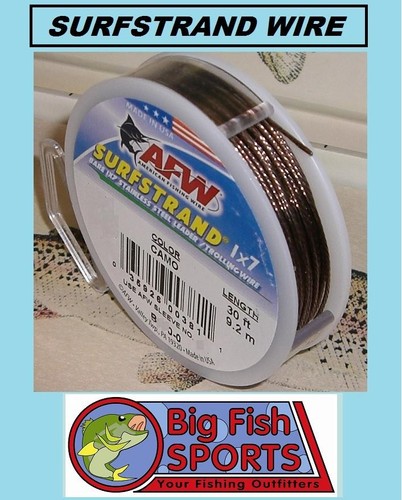 AFW coated wire leaderAmerican Fishing Wire Surfstrand is the standard multi-strand coated wire for bluefish, barracuda, and lighter shark rigs. Flexible and kink-resistant.
 Single-strand stainless wireFor kingfish and wahoo. Gauge #4 (38 lb) handles most kingfish situations; #6–#7 for wahoo. Use haywire twist termination.
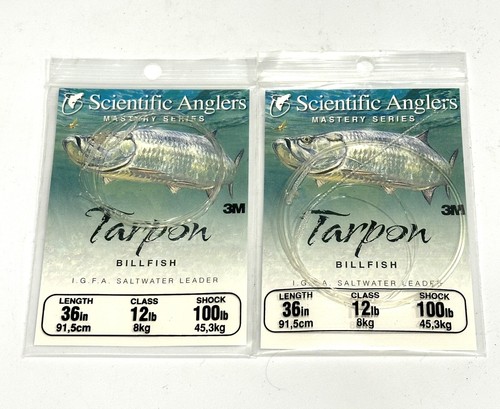 Heavy mono leader (80–100 lb)Ande Premium and Berkley Big Game mono are the tarpon and billfish leader material standards. IGFA class available if tournament fishing.
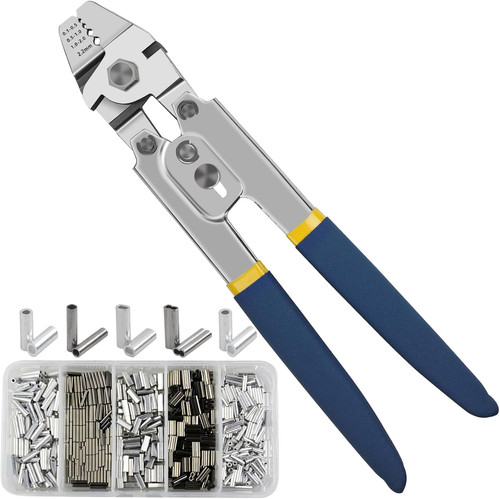 Wire leader crimping tool + sleevesA decent crimping tool (American Fishing Wire or Jinkai) and a pack of aluminum sleeves covers 90% of offshore wire rigging. Crimps are stronger than knots in heavy wire.