
The gap between a 1st edition Charizard and an unlimited Charizard in similar condition can be tens of thousands of dollars. That price difference rests on a few physical characteristics of the card itself — details that forgers have learned to replicate, and that buyers need to know cold before handling high-value Base Set cards. This guide covers the authentication process from first principles.
The Three Base Set Print Runs
Most collectors know about 1st edition vs unlimited, but the Base Set actually had three distinct print runs — and collapsing "shadowless" into "unlimited" is a mistake that costs buyers money in both directions.
1st Edition (February–July 1999)
The first print run of the English Base Set was a limited production batch. Cards from this run carry the "Edition 1" stamp — a filled black oval containing the text "Edition 1" — located on the left side of the card, below the artwork window. The stamp appears on every card in the set, from commons to holofoils. 1st edition cards also lack the drop shadow on the right and bottom edges of the artwork window that would appear in later prints.
Shadowless Unlimited (mid-1999)
When WOTC switched production to the second print run and removed the 1st edition stamp, they initially kept the same artwork window design — no drop shadow. This created a brief window of "shadowless unlimited" cards: no stamp, but also no shadow. Shadowless holos are rarer than standard unlimited but considerably less valuable than 1st edition. A shadowless unlimited Charizard is not the same card as a 1st edition Charizard, and conflating the two is a common error — or a deliberate misrepresentation — in listings.
Standard Unlimited (late 1999 onward)
The third print run added a visible drop shadow on the right and bottom borders of the artwork window. This is the most common Base Set print and what most people who opened packs in 1999–2000 received. Standard unlimited cards have no stamp and have the shadow. They are the lowest tier of the three print runs in collector value.
The Dot Test
The term "dot test" refers to examining the printed halftone dot pattern on a Pokémon card to authenticate it — specifically to identify cards that have been altered, reprinted on fake stock, or doctored to appear as a different print run.
What the dot pattern looks like on authentic cards
Authentic WOTC-era cards were printed using a standard four-color offset lithography process (CMYK). Under 10x magnification — a loupe works, a jeweler's loupe is clearest — the color areas of the card resolve into a regular grid of circular dots arranged in a rosette pattern. The dots have clean, sharp edges. The spacing between dots is consistent. The black ink dots do not bleed into adjacent colors.
What it looks like on reprints and fakes
Consumer inkjet and laser reprints do not use the same rosette halftone pattern. Under magnification you'll see one of two things:
- Inkjet: Irregular dots with visible feathering at the edges. No clean rosette pattern. The dots are not arranged in uniform rows.
- Laser/toner: Fused toner particles rather than liquid ink dots. The color appears slightly granular and the surface has a faint sheen that differs from offset lithography.
Where to look
The most revealing areas for the dot test are solid color regions — the yellow border of the card, the colored energy symbols, and the HP number. In these areas on a genuine card, the halftone dots are clearly visible and uniform. On a reprint, the same areas will show inconsistent dot structure or absence of a rosette pattern.
Identifying Authentic 1st Edition Stamps
Since the Edition 1 stamp is what most buyers are paying for, it's also the most common target for alteration. Three types of fake stamps appear in the market:
Printed-on stamps
A counterfeiter scans a 1st edition card, prints the stamp onto an unlimited card using a fine inkjet printer, and lists it as 1st edition. Under magnification, the stamp will show inkjet dot structure rather than the offset pattern found on the rest of the card. The colors in the stamp will also appear slightly different from the card's printed border under direct light — inkjet ink sits on the surface of the card stock rather than being absorbed into it the way offset ink is.
Sticker stamps
A physical sticker of the stamp is applied over the correct area of an unlimited card. This is detectable by slightly raised texture at the stamp edges when viewed at an angle, by the stamp failing to align precisely with the card's orientation (stickers are hand-applied), and by examining the area under magnification where the sticker edge meets the card surface.
Chemically altered stamps
Less common but present in the market: the artwork or border of a genuine 1st edition card is chemically altered (whitened or bleached) to simulate better condition, or a 1st edition stamp from a low-value card is transferred to a high-value one. PSA and BGS graders are trained to detect these alterations; raw cards should be submitted to a grader before significant purchases are made at the high end of the market.
Which Eras Beyond Base Set Actually Matter
The 1st edition premium exists across all WOTC-era sets (1999–2003), but the magnitude differs dramatically by set. Here's the practical breakdown:
| Set | 1st edition premium (holo rares) | Note |
|---|---|---|
| Base Set | Very high (10–30x unlimited) | Charizard, Blastoise, Venusaur drive this |
| Jungle | Moderate (3–8x unlimited) | Scyther, Clefable, Jolteon sought |
| Fossil | Moderate (3–6x unlimited) | Gengar, Lapras, Articuno |
| Team Rocket | Moderate–high (4–10x unlimited) | Dark Charizard is the anchor pull |
| Gym Heroes / Challenge | Low–moderate (2–4x unlimited) | Smaller collector base; less demand for 1st ed specifically |
| Neo Genesis | Low–moderate (2–3x unlimited) | Lugia is significant; other holos modest |
| Neo Discovery and beyond | Low (1.5–2x unlimited) | 1st ed premium nearly disappears by Neo Revelation/Destiny |
| E-Series and later | Negligible | Different stamp format; market doesn't price it significantly |
The practical conclusion: if you're paying a significant 1st edition premium, it should almost always be for Base Set, Jungle, Fossil, or Team Rocket. Neo Genesis Lugia is the one post-Team Rocket exception where the 1st edition stamp carries real weight. Everything beyond that is a niche interest among completionists, not a broadly-priced premium.
The Shadow Check as a Fraud Screen
The drop shadow on the artwork window is one of the fastest fraud screens for Base Set cards specifically. The process:
- Look at the right edge and bottom edge of the artwork window (the image of the Pokémon).
- On a 1st edition card: no shadow. The border meets the image directly.
- On a shadowless unlimited: also no shadow. This is where buyers confuse shadowless for 1st edition.
- On a standard unlimited: a visible gray drop shadow runs along the right and bottom of the image window.
To distinguish 1st edition from shadowless once you've confirmed no shadow: look for the Edition 1 stamp below and to the left of the artwork, between the image and the bottom of the card. On genuine 1st edition cards it is printed in solid black with the WOTC offset process. On shadowless unlimited cards, that space is blank.
Grading and Condition Considerations
PSA 10 (Gem Mint) 1st edition Base Set holos are among the most valuable Pokémon cards in existence. The price gap between PSA 9 and PSA 10 on a 1st edition Charizard is enormous — historically a factor of 3–5x or more depending on market conditions. The centering requirements for PSA 10 on Base Set cards are strict: 60/40 or better in any direction, with surface, corners, and edges all near-perfect.
For Base Set cards specifically, centering is the most common reason a card fails PSA 10. WOTC's printing process for 1999 cards was not as precisely controlled as modern production, and a significant percentage of legitimate 1st edition packs contained cards with off-center prints. A visibly off-center 1st edition card still has collector value — it's genuine — but grading it at PSA 9 or below means the premium over a well-centered unlimited is much smaller than the raw price difference might suggest.
Where Forgeries Concentrate in the Current Market
Forgery activity clusters around three card categories:
PSA slab fakes
Fake PSA slabs — counterfeit cases holding an unlimited or outright fake card — have appeared in the market. The PSA case itself can be replicated reasonably well in appearance. Authentication involves checking the PSA certification number on the case against PSA's online lookup tool (psacard.com cert verification) — real numbers will show the card and grade; fake numbers either won't exist or will return different card information. The case seam quality on fake slabs is also typically inferior to genuine PSA cases when examined closely.
Raw Base Set holofoils
High-value Base Set holofoils (Charizard, Blastoise, Venusaur, and to a lesser extent Chansey, Raichu, Nidoking) are the most counterfeited raw cards. The holo pattern on genuine Base Set cards has a distinctive starburst/cosmos pattern that is difficult to replicate exactly. Fake holo cards often have a holo pattern that is either too bright, uses a different geometric structure, or does not extend correctly to the card edges.
Cheap 1st edition commons and uncommons
A subtler fraud: fake 1st edition stamps are applied to low-value common and uncommon cards from Base Set, then bundled into "1st edition lot" listings. Individually, each card is low enough value that buyers don't scrutinize them, but the lot is priced as if everything is genuine. Checking every card in a lot with a loupe before paying a 1st edition premium on a bulk purchase is essential.
Practical Buying Checklist for 1st Edition Base Set Cards
- Confirm no shadow on artwork window (eliminates standard unlimited)
- Confirm Edition 1 stamp is present and positioned correctly (left side, below artwork)
- Examine stamp under 10x magnification — offset dot pattern should match card body
- Check holo pattern extends to card edges and uses the correct Base Set starburst structure
- For slabbed cards: verify PSA cert number on psacard.com before purchase
- For high-value raw cards: consider submitting for grading before finalizing purchase price
- Compare to sold eBay listings for same card, same grade — not asking prices, sold prices
Gear for serious Pokémon card collecting
What we'd actually buy for authentication and protection. We earn a small commission on qualifying eBay sales. Full disclosure.
 10x jeweler's loupeEssential for the dot test. 10x magnification reveals halftone dot structure that separates genuine offset printing from inkjet reprints. Get one with a built-in LED.
 KMC perfect-fit inner sleevesInner + outer double-sleeve is the standard for any card worth more than $10. KMC perfect fits are the collector consensus; they don't add texture or static.
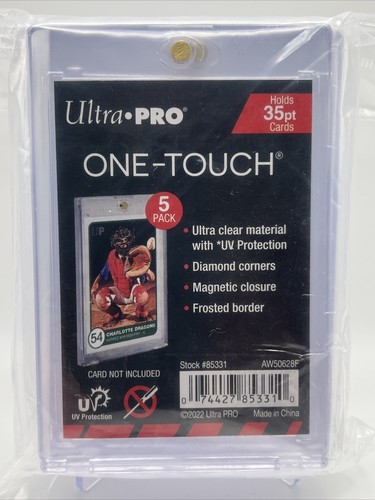 One-touch magnetic holders (35pt)One-touch cases for raw cards worth significant money. The 35pt size fits standard WOTC-era cards without sleeve. UV-blocking acrylic standard in most brands.
 Base Set sealed packs (eBay search)Sealed 1st edition packs are extraordinarily rare. Search sold listings for realistic price expectations — asking prices on sealed packs are often speculative.
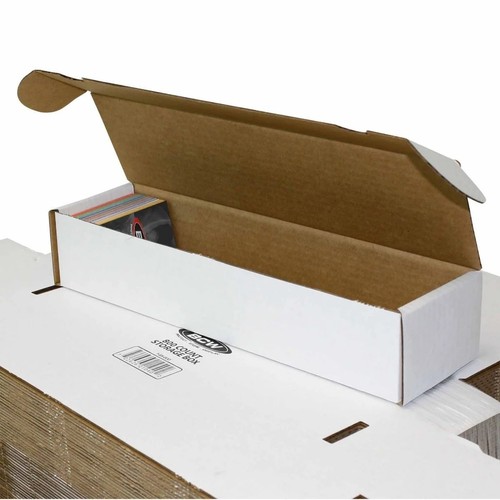 BCW 800-count storage boxesBCW cardboard long boxes hold 800 sleeved cards and stack cleanly. Standard for bulk storage of commons and uncommons; cheap enough to dedicate one box per set.