Start with your vehicle's payload and roof rating
Before you choose any gear, you need two numbers from your vehicle's documentation: the roof's static load rating and its dynamic load rating. Static load is what the roof can support while parked. Dynamic load — sometimes called the dynamic roof rack rating — is what it can carry while moving, and it is almost always significantly lower. A vehicle might have a 400 lb static roof rating and only a 165 lb dynamic roof rack rating. That distinction matters enormously for rooftop tents.
Your vehicle's overall payload capacity (GVWR minus curb weight) also dictates how much total gear you can add — roof rack + tent + awning + drawers + tools + passengers + water. These numbers add up fast. Weigh your rig at a truck scale if you're serious about building it out properly.
Rooftop tents: soft-shell vs hard-shell
The core tradeoff is setup time and aerodynamics vs. price. Soft-shell tents fold accordion-style and typically take 2–4 minutes to deploy; they're lighter and usually less expensive. Hard-shell tents — either clamshell or lift-top designs — open in 15–60 seconds and close neatly, reducing wind drag significantly on highway driving. Hard-shells are substantially heavier (typically 120–200 lbs vs. 60–100 lbs for soft-shells) and more expensive.
| Feature | Soft-Shell RTT | Hard-Shell RTT |
|---|---|---|
| Typical weight | 60–100 lbs | 120–200 lbs |
| Setup time | 2–4 minutes | 15–60 seconds |
| Closed profile | Bundled fabric roll | Low-profile shell |
| Wind drag (highway) | Moderate-high | Low |
| Typical price range | $700–$2,500 | $2,000–$5,500+ |
| Insulation | Fabric-only (varies) | Often includes foam panel |
When buying used, inspect the fabric for UV degradation, mold, and seam tape condition. Hard-shell latches and hinges can wear; verify they seal tight under light rain before committing.
The annex and mattress questions
Many RTTs include an annex — a fabric room that hangs below the tent when deployed, adding covered ground-level space. Useful for gear storage or a second sleeping space. The included mattress is typically 2.5–3 inches of foam; some overlanders swap to a custom cut for better comfort or to reduce weight.
Recovery gear: the numbers you actually need to know
Recovery gear is the safety net when the track turns bad. The two most common mistakes: buying straps rated for lighter vehicles than you're recovering, and not understanding what each piece of equipment is designed to do.
Snatch straps (kinetic recovery ropes)
A snatch strap stores kinetic energy as it stretches, then releases it to jerk a stuck vehicle free. The working load limit (WLL) printed on a strap should be at least 1.5× your vehicle's gross vehicle weight (GVW). For a 5,500 lb loaded truck, that means 8,250 lb WLL minimum. Never use a tow strap (zero stretch, yellow or black, chain hooks) as a recovery strap — the shock load can damage attachment points or break the strap catastrophically. Kinetic ropes, which look like thick braided ropes rather than flat webbing, have become popular for their smoother energy storage and recovery feel.
Winches
The commonly cited rule is to size a winch at 1.5× your vehicle's GVW. A 6,000 lb loaded vehicle warrants a 9,000 lb line pull winch. But line pull ratings are measured at the innermost layer of the drum — each additional layer of rope wrapped over it reduces effective pull by roughly 15%. In practice, you're often using outer layers, so the real-world pull is less than the rated figure. Synthetic rope (UHMWPE) is lighter than steel cable, easier on hands, and doesn't store energy dangerously when it snaps; it's the standard choice for most modern overland winches. Budget for a synthetic rope upgrade if the winch ships with steel.
Traction boards
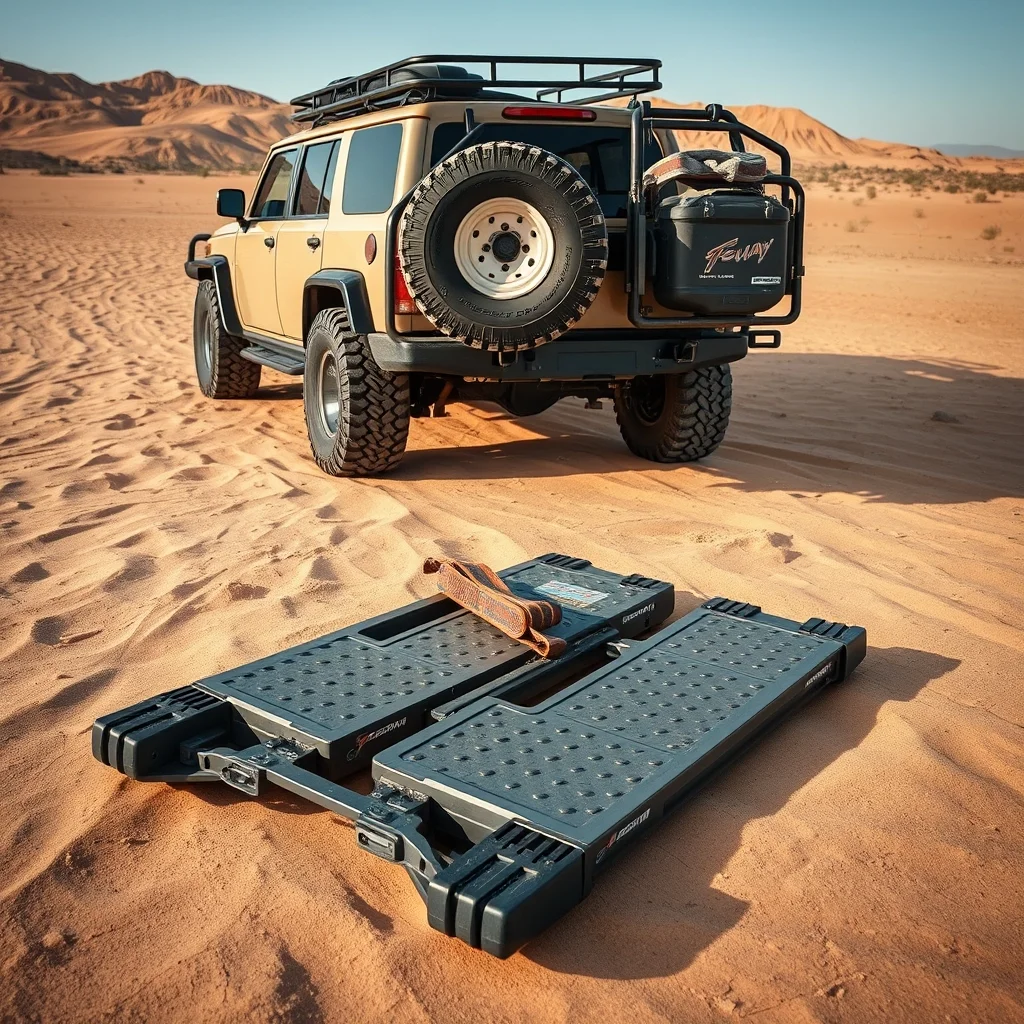
Traction boards (MAXTRAX, Tred Pro, ARB, and numerous generics) work by giving your spinning wheel a surface to grip, ramp, and drive off. The key spec is vehicle weight rating — many inexpensive boards are rated to 3.3 tons (about 7,300 lbs), which is fine for most light trucks but not for heavy full-size SUVs or lifted rigs with added gear weight. Boards with glass-reinforced nylon typically hold up better under repeated high-load use than cheaper polypropylene versions. Inspect secondhand boards carefully: cracked pegs or delamination of the ramp surface are failure risks.
Shopping for overlanding recovery gear? Browse current eBay listings → (we earn a small commission; your price is unchanged).
Storage: drawers, cargo slides, and organization
Drawer systems turn an SUV cargo area or truck bed into organized, accessible storage. The distinction between a good drawer and a mediocre one comes down to the slide mechanism, the structural rating, and the mounting system.
Ball-bearing drawer slides are far smoother and more durable than plain steel-on-steel slides, particularly after a few years of off-road vibration. The payload rating per drawer — not the total system rating — tells you how much you can load into a single drawer when it's fully extended. A common spec is 100–200 lbs per drawer fully extended; cheaper systems have lower ratings that manufacturers don't always advertise clearly.
Vehicle-specific systems are cut to fit your exact floor dimensions, which maximizes space and usually simplifies installation. Universal kits are cheaper but require more fabrication to fit properly and secure safely. In either case, anchor points need to connect to structural elements, not just the floor skin — drawers loaded with tools and recovery gear create significant forces during hard stops and rollovers.
Awnings
Vehicle-mounted awnings attach to roof rails or rack crossbars and deploy a shaded covered area adjacent to your vehicle. Most consumer overlanding awnings are roll-out designs in 2m, 2.5m, or 3m widths. Fabric weight matters: 270–300D ripstop polyester is common for budget awnings; 600D or heavier canvas-style fabrics are more durable in UV-intense environments and resist tearing better. No consumer awning should be considered wind-rated without its guy ropes properly tensioned — even moderate gusts can flip or damage an untensioned awning.
270-degree awnings (wrapping from the passenger side around the rear) are a popular configuration for full perimeter coverage, but they're heavier and typically require two people to handle. Side-only awnings are faster and lighter.
12V power systems: sizing your electrical
A typical modern overlanding electrical setup involves a dual-battery system (starter battery + auxiliary battery), a DC-DC charger or battery-to-battery charger that safely charges the auxiliary from the alternator, and either a 12V fuse box or a fused distribution block. The critical calculation is your overnight power budget.
Estimating your load
A 12V compressor fridge typically draws 2–5 amps average when running (accounting for compressor duty cycle). Running a 60-liter fridge for 12 hours overnight at 3A average = 36 Ah consumed. Add lighting (LED strips draw very little, typically under 1A total), USB charging (1–2A), and any 12V accessories. A 100Ah lithium (LiFePO4) battery provides roughly 95–100 Ah of usable capacity. A 100Ah AGM provides roughly 50 Ah usable before damaging the battery. For a two-night off-grid camp, LiFePO4 is nearly always the better investment despite higher upfront cost.
Common buying mistakes
The most expensive overlanding mistake is buying gear before knowing your vehicle's payload numbers — adding 600 lbs of steel drawers, a 130-lb tent, and a 100-lb winch to a pickup already carrying two people and camping gear can push you over GVWR, which affects handling, braking, and your insurance coverage in an accident.
The second most common mistake is buying cheap recovery gear. A $30 snatch strap that snaps under load can become a projectile. Buy recovery gear from brands with published testing data and identifiable MBS ratings, not unbranded items sold by weight.
Third: buying an awning without verifying the roof rail mounting compatibility. Many awnings require specific crossbar widths or Rhino-Rack/Yakima/Thule adapters that aren't included — factor that into the actual cost.
Overlanding gear on eBay
We earn a small commission on qualifying sales; your price is unchanged. Full disclosure.
 Rooftop Tent
Soft or hard-shell; verify dynamic load rating.
View on eBay →
Rooftop Tent
Soft or hard-shell; verify dynamic load rating.
View on eBay →
 Recovery Kit
Snatch strap + shackles; check WLL vs GVW.
View on eBay →
Recovery Kit
Snatch strap + shackles; check WLL vs GVW.
View on eBay →
 Traction Boards
Recovery boards; check vehicle weight rating.
View on eBay →
Traction Boards
Recovery boards; check vehicle weight rating.
View on eBay →
 Vehicle Awning
Side or rear mount; check fabric weight and mount kit.
View on eBay →
Vehicle Awning
Side or rear mount; check fabric weight and mount kit.
View on eBay →
 Storage Drawers
Cargo drawers; compare slide type and payload rating.
View on eBay →
Storage Drawers
Cargo drawers; compare slide type and payload rating.
View on eBay →
What to check before buying used overlanding gear
Rooftop tents: open and close the tent fully, inspect all seams with a flashlight for delaminated tape, check zippers (replace or budget for it if sticky), look for mold or mildew smell inside. Hard-shells: operate all latches and hinges under load.
Recovery gear: never buy used snatch straps without knowing their history — a strap that has been overstressed may look fine but fail at lower loads. Shackles are generally fine secondhand; check for deformation of the bow and that the pin threads cleanly. Traction boards: inspect all pegs for cracks, particularly at the base where they meet the board surface.
Winches: test before buying — connect to a power source and run it both in and out, preferably under light load. Listen for grinding in the planetary gear set (indicates wear) and inspect the rope or cable for kinks, fraying, and bird-nesting.
Drawers: extend fully and apply downward pressure on the extended drawer — any racking or binding indicates worn slides. Check that the lock mechanism engages positively.
The build order that avoids expensive mistakes
A sensible overlanding build sequence: (1) platform first — get the rack, crossbars, or bed system right before anything bolts to it, because a wrong rack choice cascades into compatibility problems with everything above; (2) recovery gear before camping gear — it's safety equipment, not optional; (3) power system before the fridge, so you understand your capacity; (4) sleep system and shelter; (5) storage and organization last, once you know what you're actually carrying.
Each category interacts with the others. An awning mounts to the rack. The tent is on the rack. The rack has a dynamic load limit that covers both. Do the math on paper before buying anything, and weigh every component you add so the real total number stays in front of you.