Phalaenopsis watering in bark, sphagnum, and leca: how each medium shifts your schedule
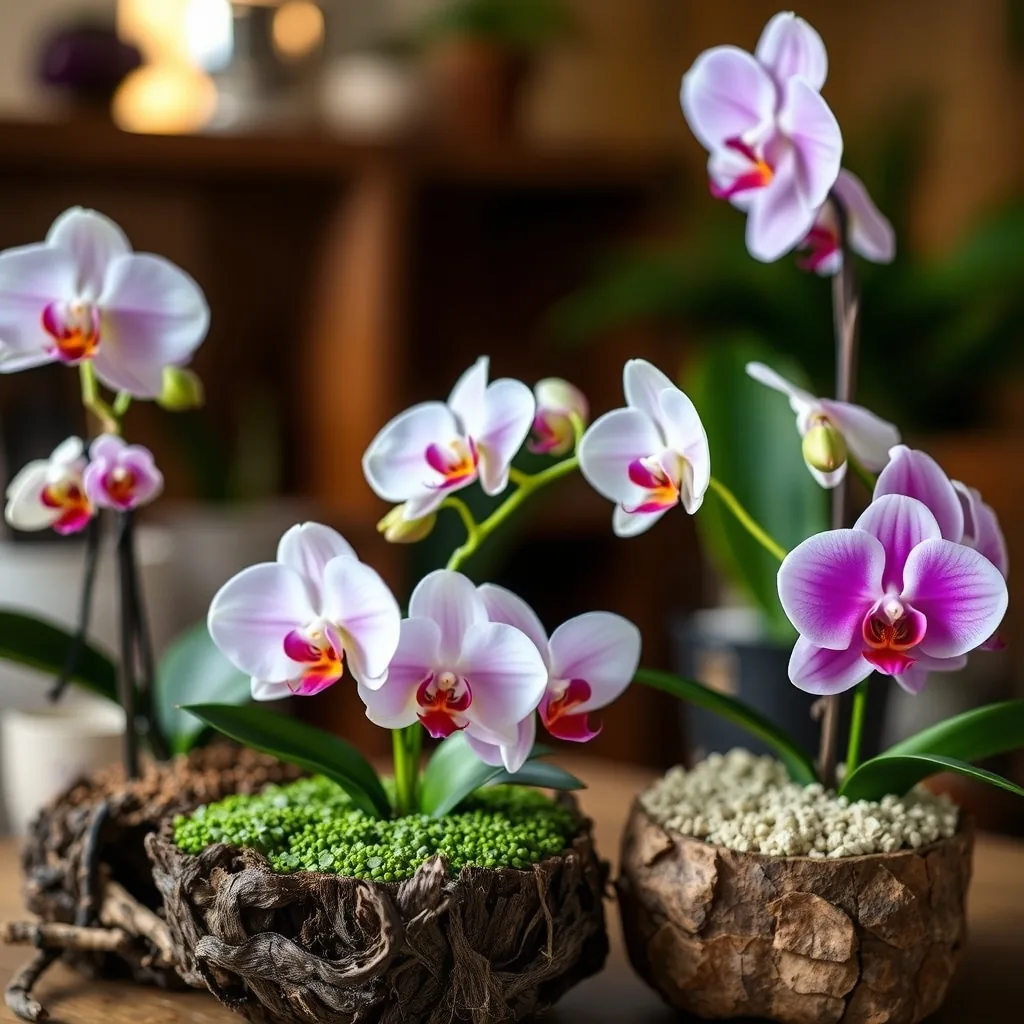
Most watering advice for Phalaenopsis ignores what's actually in the pot. Bark, sphagnum moss, and leca (lightweight expanded clay aggregate) dry out at completely different rates — and the right schedule for one medium will rot roots or desiccate them in another.
Why the medium matters more than any rule
The most common watering advice for Phalaenopsis is "water once a week" or "water when the pot feels light." Both are heuristics that can work — but only within a narrow set of conditions (pot size, medium type, air circulation, humidity, temperature) that aren't specified in the advice. When those conditions differ, the heuristic fails.
The underlying variable is how long the root zone stays at the moisture level Phalaenopsis roots actually want: humid but not wet, with regular access to air. Phalaenopsis roots evolved on tree bark in humid tropical environments. They're exposed to rain and dry out completely between rainfall events. That rhythm — wet then fully aerated — is what you're approximating indoors regardless of which medium you use.
The medium determines how fast you move through the wet-to-dry cycle. A dense, moisture-retentive medium extends that cycle. A coarse, open medium shortens it. Your job is to understand where your current medium falls, then adjust your watering frequency to match the plant's needs — not the medium's convenience.
Fir bark: the standard for good reason
Medium-grade fir bark is the default medium sold with most Phalaenopsis, and it earns that status. Fir bark chunks create significant air pockets between particles. Roots grow through those spaces and have direct air contact. When you water thoroughly, the bark absorbs some moisture and the spaces between hold a humid microclimate for a day or two before drying out.
Typical watering interval in bark
In a 4-inch clear pot with medium-grade fir bark, most Phalaenopsis in typical home conditions (65–75°F, 40–55% relative humidity, moderate airflow) need water every 7–10 days in summer and every 10–14 days in winter when growth is slower and evaporation is reduced. A 6-inch pot extends that slightly; a small 3-inch pot may need water every 5–7 days.
The signal that overrides any schedule: look at the roots through a clear pot. Healthy, hydrated Phalaenopsis roots are bright green or silver-green immediately after watering and gradually shift to a silvery-gray as they dry. Water again when the majority of roots have returned to silvery-gray and the bark is dry to the touch at the base of the pot.
Bark deterioration changes the equation
New fir bark is chunky and open. After 1.5–2 years, bark breaks down and compresses. Fine particles fill the air pockets, the medium stays wetter longer, and root rot risk increases. If you notice your bark-potted orchid needs water less frequently than it used to, the bark has likely broken down. Repot rather than reducing your watering frequency — compressed bark is suffocating roots even if it looks like it's "holding" moisture helpfully.
Sphagnum moss: slow to dry, easy to overwater
Sphagnum moss holds significantly more moisture than fir bark. Its fibrous structure wicks and retains water throughout the mass, creating a more uniformly moist environment. This is genuinely useful in certain situations — small seedlings, miniature orchids, or in very dry homes where bark dries out in three or four days — but it dramatically increases the overwatering risk for most growers.
Typical watering interval in sphagnum
A Phalaenopsis in fresh sphagnum moss in a 4-inch pot typically needs water every 12–21 days in typical home conditions, sometimes longer. The center of a densely packed sphagnum ball can remain moist for two to three weeks after the surface feels dry. This is the critical mistake most growers make: they feel dry moss on the outside, assume the whole pot is dry, and water — when the core is still saturated.
To check sphagnum properly, push a wooden chopstick or skewer to the center of the moss. Leave it for 30 seconds, then feel the stick. If it's cold and damp, the center is still moist. Only water when the stick comes out barely damp or dry, and the moss feels light when you lift the pot.
Packing density matters
Sphagnum packed tightly holds more moisture and takes longer to dry than loosely packed sphagnum. Some growers pack it tight to reduce watering frequency; others pack it loose to mimic bark-like drainage. For Phalaenopsis, a moderate pack — firm enough to hold roots but with some give — is a reasonable middle ground. If your sphagnum-potted orchid consistently shows mushy root tips or blackened lower roots, repack more loosely or switch to bark.
Long-fiber sphagnum (New Zealand sphagnum is a common type) generally performs better than shredded moss. It retains its structure longer before breaking down, allows better air flow between fibers, and is easier to judge moisture by feel. Shredded or fine sphagnum compacts quickly and turns essentially anaerobic at the core.
Leca (expanded clay): the medium that inverts the whole approach
Leca — lightweight expanded clay aggregate, sold under names like Hydroton, LECA, and expanded clay pebbles — is a semi-hydroponic medium that fundamentally changes how watering works. Unlike bark or sphagnum, leca doesn't retain water in its particles. The balls are porous ceramic that absorbs a small amount of moisture but primarily functions as a structural medium that holds roots in place while allowing water to pool at the bottom and wick upward by capillary action.
The leca reservoir method
Most Phalaenopsis growers using leca use a passive reservoir approach: the orchid sits in leca inside a net pot or a pot with many holes, which sits inside an outer decorative pot or reservoir container. The reservoir holds a small amount of water at the bottom — typically enough to cover the lowest 1–2 inches of leca — and the leca wicks moisture upward toward the roots. Roots that extend into the reservoir below the water line are typically kept dry above the waterline to prevent rot.
In this system, you're not watering on a schedule at all. You check the reservoir every 3–5 days. When the water level drops to near zero, refill it to the 1–2 inch mark. In hot, dry conditions (summer, forced-air heating) the reservoir empties faster, sometimes in 3–4 days. In cool, humid conditions, it may last a week or more.
Flushing is essential with leca
Because you're adding fertilizer to the reservoir in most leca setups, mineral salts accumulate in the clay and on root surfaces over time. Every 2–4 weeks, flush the entire leca medium thoroughly with plain water — take the inner pot out, run plain water through it until the runoff runs clear, then return it to a freshly cleaned reservoir. Skipping this leads to salt buildup that burns roots even when the moisture level looks correct.
Comparing the three media: a practical summary
| Medium | Typical interval (4" pot) | Overwatering risk | Best for |
|---|---|---|---|
| Medium fir bark | 7–10 days summer, 10–14 winter | Low–moderate (if bark is fresh) | Most growers, standard care |
| Sphagnum moss | 12–21 days | High (core stays wet longer than surface suggests) | Dry climates, seedlings, miniatures |
| Leca (reservoir) | Check every 3–5 days, refill as needed | Low if reservoir not overfilled | Growers who want to monitor closely, semi-hydro |
Environmental variables that shift these intervals
The intervals above assume typical home conditions. Several environmental factors compress or extend them significantly:
- Low humidity (under 35%): All media dry faster. Bark intervals compress to 5–7 days. Consider a humidity tray or localized humidifier near your orchid collection.
- High humidity (over 65%): Drying slows. Sphagnum in humid bathrooms may only need water every 3–4 weeks. Bark may need 14+ days even in summer.
- Air circulation: A gentle fan running nearby accelerates drying significantly. This is actually positive for root health — increased air movement mimics the air flow on tree bark in natural habitats. If your bark is consistently staying wet more than 12 days in summer, improve air circulation before reducing watering frequency.
- Pot material: Terracotta wicks moisture through the pot wall and dries faster than plastic or glazed ceramic. If you switch from plastic to terracotta, expect to water 30–50% more frequently.
- Pot size relative to plant: An oversized pot means far more medium than roots to use the moisture, leading to longer wet periods and higher rot risk. Phalaenopsis prefer a snug fit — roots should reach the bottom and sides of the pot without leaving large unoccupied areas.
Root signals that override any schedule
Any watering schedule is a starting point, not a rule. The roots tell you more reliably than a calendar:
- Bright green roots, bark still damp: Don't water yet.
- Silvery-gray roots, bark dry at base: Water now.
- Brown, mushy root tips: Overwatering or old bark — assess medium condition and repot if needed.
- Shriveled, wrinkled aerial roots: Underwatering or very low humidity — increase frequency or add humidity.
- White or tan firm roots: Healthy, fully dry — ready for watering.
Clear plastic pots are genuinely useful for Phalaenopsis for exactly this reason. The ability to see root color and the moisture level at the base of the medium is more reliable feedback than any interval recommendation, including the ones in this article.
Switching media: expect a transition period
If you repot a Phalaenopsis from sphagnum into bark, or bark into leca, allow 4–6 weeks for the plant to adjust. Roots that developed in sphagnum are accustomed to consistently moist conditions; moved into bark they may show some dehydration as they adapt. Maintain slightly higher ambient humidity during the transition and water a day or two earlier than you otherwise would until the plant shows new healthy root growth, which indicates adaptation to the new medium is underway.
Similarly, a plant coming out of leca into sphagnum will have roots accustomed to the aeration and capillary-wicking environment. Those roots may show stress when moved into the more uniform moisture of sphagnum. Watch the root tips for new white growth as the signal that adaptation is complete.
Gear for this
Top picks for orchid growing media and watering. We earn a small commission on eBay purchases — price you pay is the same. Full disclosure.
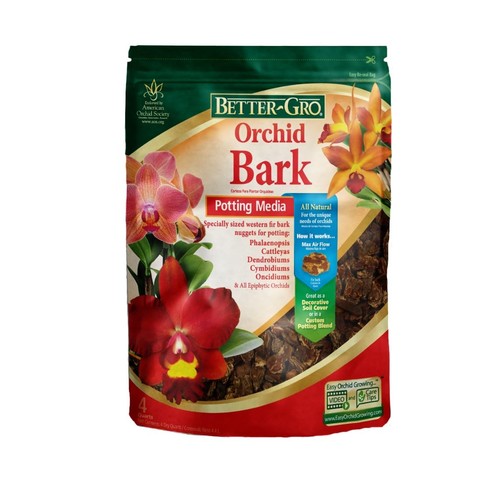 Medium-grade fir barkThe standard Phalaenopsis medium. Fresh bark with good chunk structure drains fast and aerates roots properly.
 Long-fiber sphagnum mossNew Zealand long-fiber sphagnum holds structure longer than shredded types and is easier to judge moisture by feel.
 Leca / expanded clay pebbles4–16mm clay pebbles for semi-hydro setups. Rinse thoroughly before first use to remove clay dust.
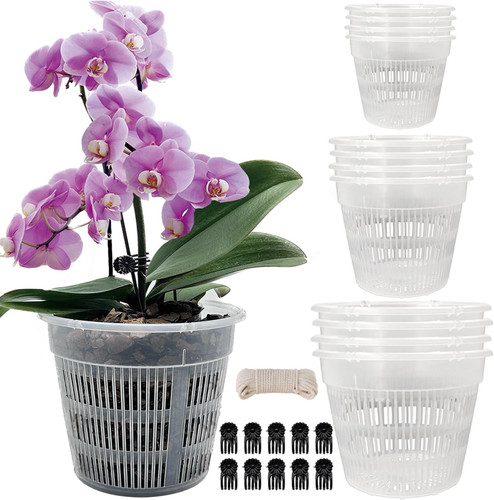 Clear slotted pots (4")Clear walls let you check root color and medium moisture without unpotting. Slots provide the drainage and aeration Phalaenopsis need.
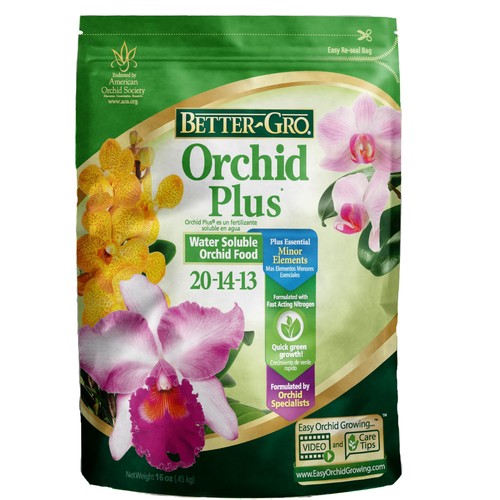 Urea-free orchid fertilizerEssential for leca setups (diluted in reservoir) and beneficial for bark. Urea-free formulas like Dyna-Gro Orchid-Pro are gentler on roots.