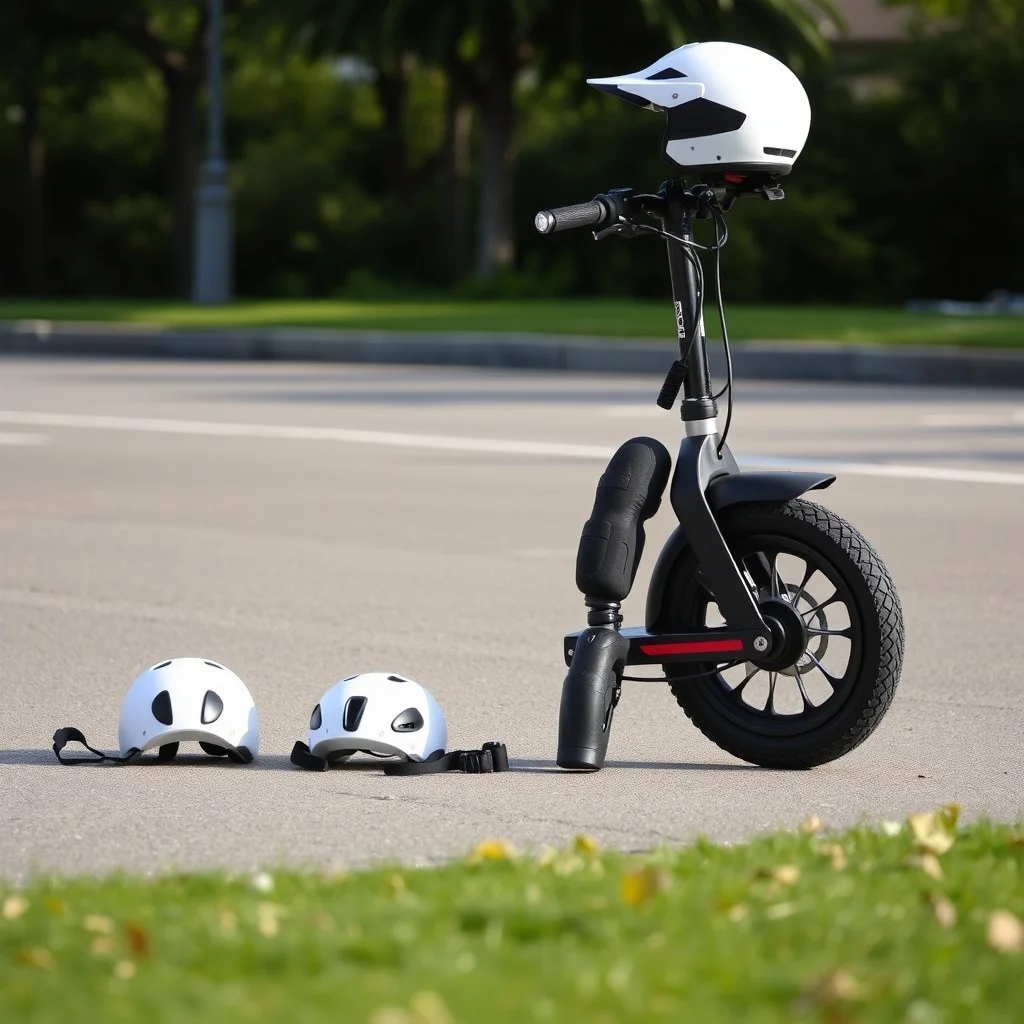
EUC vs Onewheel: the fundamental difference
An electric unicycle (EUC) is ridden like a unicycle — feet on side-mounted pedals, body weight and leg pressure control speed and direction. There's no handlebar. Balance is maintained by the motor reacting to your lean. EUCs are ridden in the direction of travel (facing forward), and leaning forward accelerates, leaning back decelerates.
A Onewheel-style board (the original brand is Onewheel by Future Motion; there are now competitors after the market opened) is ridden like a skateboard or snowboard — feet perpendicular to the direction of travel, on a wider platform that straddles a single central wheel. Torque is applied through the platform, not through pedal pressure. The stance feels more familiar to skaters and snowboarders.
Both rely on gyroscopic stabilization and accelerometers to maintain balance. Both have a maximum lean angle beyond which the motor cannot compensate — a cutout. The fall pattern when a cutout occurs is almost always a forward faceplant, which is why wrist guards and face protection are critical for both, and not optional.
| Category | Electric Unicycle | Onewheel-style |
|---|---|---|
| Rider stance | Forward-facing, feet side-mounted | Sideways, skate/snowboard stance |
| Learning curve | Steep (typically 10–20+ hours) | Moderate (typically 1–5 hours) |
| Top speed (typical range) | 20–50+ mph (varies widely) | 15–25 mph |
| Range (typical) | 20–100+ miles | 6–18 miles |
| Terrain | Pavement, paths, some off-road | Pavement and moderate off-road |
| Portability | Handle + roll; heavier (30–70 lbs) | Handle; lighter (25–30 lbs) |
Reading range specs honestly
Range is the most misleading spec in the EUC and Onewheel market. Rated range figures assume flat terrain, a 154-lb (70 kg) rider, moderate speed (typically 75% of top speed), and a fresh battery at room temperature. In practice, your real range will be lower — sometimes significantly lower.
The primary factors that reduce range: rider weight (heavier riders draw more current on any grade), terrain (hills are the biggest killer — a 5% grade at speed can halve your range), speed (drag increases as the square of velocity, so riding fast burns battery fast), cold temperatures (lithium cells lose capacity below 50°F), and age of the battery (degraded cells hold less charge).
A reasonable rule of thumb for urban riding with moderate hills: expect 60–70% of the rated range figure. On hilly terrain with a heavier rider, 50% is more realistic. If a board is rated for 20 miles, plan routes around 12–14 miles until you know your actual numbers.
Motor wattage vs. torque
Motor wattage tells you the continuous power output the motor can sustain. Higher wattage motors handle hills and acceleration better. But wattage alone doesn't tell the full story — torque delivery, which depends on motor design and controller tuning, determines how the board feels under acceleration and on grade.
EUCs are typically rated in peak motor wattage (a short-duration figure) and continuous wattage (sustainable). For a commuter EUC on flat-to-moderate terrain, 1,000–2,000W continuous is sufficient. For hilly terrain or heavier riders, 2,000W+ continuous is more comfortable. High-performance EUCs (Veteran Sherman, Begode EX, Inmotion V12) run 3,000–5,000W+ peak with massive torque reserves for aggressive riding.
Wheel diameter also matters: larger diameter wheels (18–24 inches) roll over obstacles more easily and tend to feel more stable at high speed. Smaller wheels (14–16 inches) are more maneuverable and typically found on lighter, cheaper models.
Suspension: do you need it?
EUC suspension (available on models like the Inmotion V11, Begode EX, Veteran Patton) uses air or spring-damper systems in the axle to absorb impacts. The ride quality difference over rough terrain and expansion joints is significant. Suspension adds weight (typically 5–10 lbs) and maintenance complexity.
For smooth pavement commuting, suspension is a comfort upgrade but not necessary. For trail riding, gravel paths, or city roads with poor infrastructure, suspension makes a meaningful difference in fatigue and control. It also generally improves your ability to handle unexpected obstacles at speed, which has safety implications.
Onewheel-style boards typically rely on tire volume (5-inch wide pneumatic tire) for cushioning rather than mechanical suspension. The fat tire also contributes to the board's terrain versatility.
Shopping for an EUC or Onewheel? Browse current eBay listings → (we earn a small commission; your price is unchanged).
Safety gear: why it's different for self-balancing boards
Self-balancing boards have a specific failure mode that bicycle and e-bike riders rarely experience: the motor cutout. A cutout occurs when the motor reaches its current limit (usually from demanding too much torque at speed, like a hard push or steep hill) and the board suddenly goes dead under your feet. When this happens at speed, you are launched forward with your full momentum and no control.
The fall pattern is a forward dive — you typically hit the ground hands-first, then knees, then face. This is why the EUC community is heavily protective gear-focused compared to cyclists.
Wrist guards
The highest-priority piece of protection. Hard-shell wrist guards with a rigid splint (SFR, Triple Eight, Sector 9 hard-shell, or the popular Triple Eight Hired Hands) protect against the wrist fractures that are the most common EUC injury. Soft padded gloves are not sufficient above beginner speeds. Look for EN 14120 certified guards with a palm splint.
Knee pads
Hard-shell knee pads (not soft foam inserts) are the correct choice. Skate-style hard-cap knee pads (187 Killer, G-Form Pro, TSG knee pad) stay on during falls and protect against pavement contact. Soft foam pads compress on impact and provide little real protection above slow speeds.
Helmet
For EUC specifically: full-face helmets are the community standard above 20 mph. The face and chin are exposed in forward falls. A half-shell bicycle helmet provides no chin protection. Popular choices include the TSG Pass (designed specifically for EUC), full-face mountain bike helmets with MIPS, and motorcycle-style helmets at lower weight. MIPS (Multi-directional Impact Protection System) reduces rotational forces during angled impacts and is worth the premium.
Elbow pads
Secondary priority after wrists and knees, but useful for learning stages. Hard-shell elbow pads are preferred.
What to look for when buying used
Battery health is the primary concern on used EUCs and Onewheels. Ask for battery cycle count if the wheel logs it (many do via app). Look for balance among cells — a pack where some cells are degrading faster than others will have reduced capacity and may develop charging issues. An early indicator of battery problems is range that's significantly shorter than expected for a relatively low-mileage wheel.
Inspect tire condition: cuts, cracking sidewalls, and uneven wear indicate a tire replacement is coming. Factor that into the price — EUC tires are typically not cheap, particularly for larger diameter wheels.
Test the motor by listening for grinding or clicking sounds during slow, low-load riding. Motor bearing wear is audible before it becomes dangerous. Check the pedals for cracks or damaged hanger mounts — pedal failures do happen and can cause crashes.
For Onewheel: check board logs via the app for crash history and any cutout events. Future Motion boards log this data. High-mileage boards with documented cutout history may have motor, controller, or footpad sensor issues worth investigating before purchase.
EUC & Onewheel gear on eBay
We earn a small commission on qualifying sales; your price is unchanged. Full disclosure.
 Electric Unicycle
Check motor wattage and battery Wh.
View on eBay →
Electric Unicycle
Check motor wattage and battery Wh.
View on eBay →
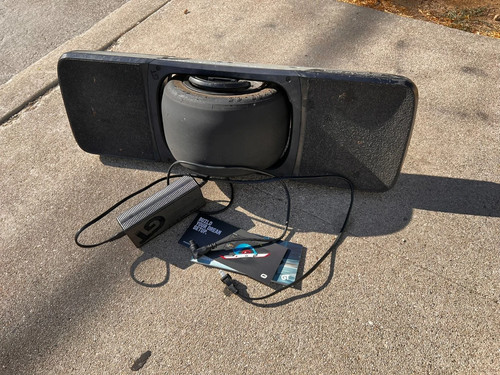 Onewheel Board
Check cycle count and board logs.
View on eBay →
Onewheel Board
Check cycle count and board logs.
View on eBay →
 Inmotion EUC
Good beginner-to-mid range brand.
View on eBay →
Inmotion EUC
Good beginner-to-mid range brand.
View on eBay →
 EUC Protective Gear
Hard-shell wrist, knee, elbow pads.
View on eBay →
EUC Protective Gear
Hard-shell wrist, knee, elbow pads.
View on eBay →
 Full-Face Helmet
TSG Pass or MIPS full-face for speed.
View on eBay →
Full-Face Helmet
TSG Pass or MIPS full-face for speed.
View on eBay →
Beginner recommendations by category
For the Onewheel category: the used market is active and boards hold value reasonably well. Onewheel Pint-series boards are the beginner format — smaller, lighter, lower top speed. The GT series are the performance tier. With Future Motion out of business (as of their 2024 closure), the aftermarket support ecosystem (float plates, footpad sensors, sidekick boards, Floatwheel ADV) has become important to factor into buying decisions.
For EUC beginners: the Inmotion V8F or V8S are commonly recommended entry points — manageable size, sufficient battery, and a brand with decent parts availability. The Begode (formerly Gotway) and KingSong brands are popular in the mid-to-high tier; both have extensive community support. Veteran (an offshoot of Begode) produces some of the highest-performance EUCs.
Regardless of brand: budget for safety gear before the board. A new EUC without wrist guards and a proper helmet is a medically expensive choice. The community consensus is that protective gear is non-negotiable.