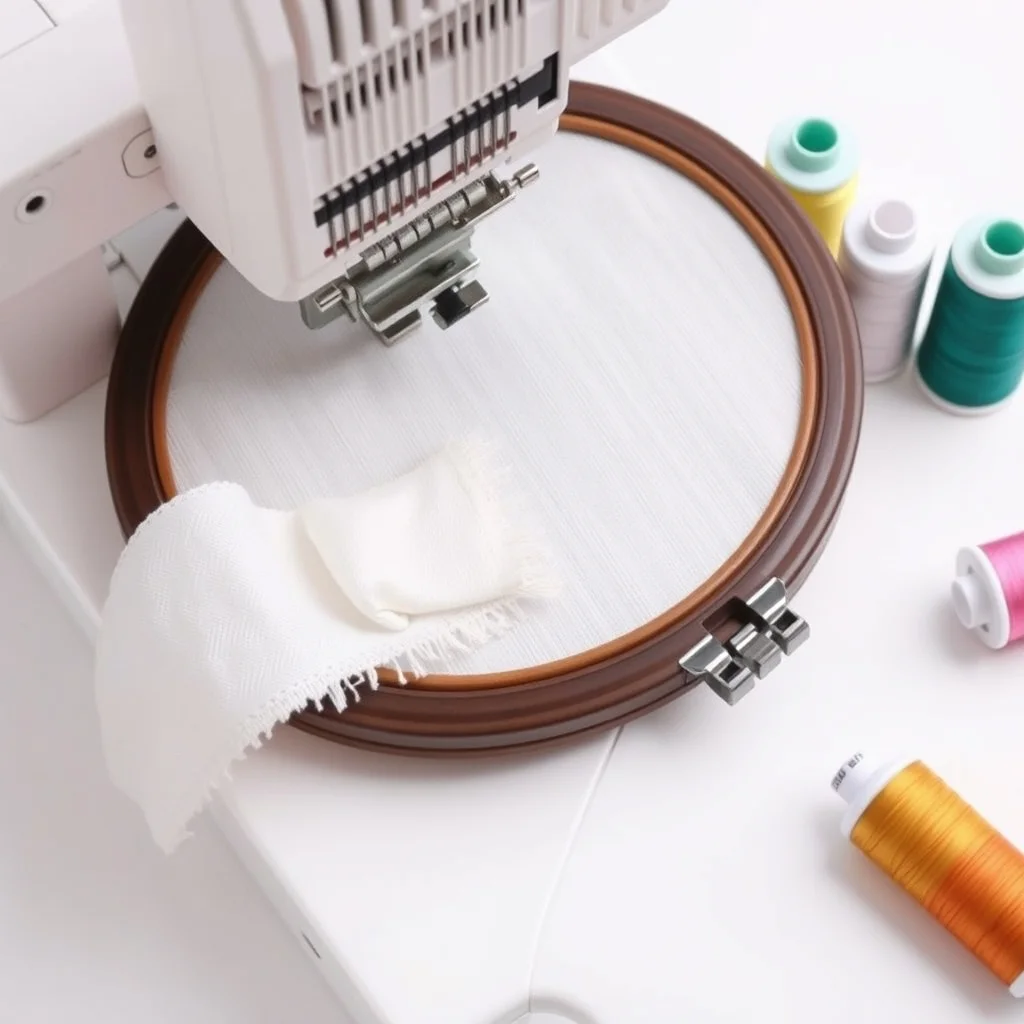
Single-needle vs multi-needle: the workflow divide
The most consequential choice in embroidery machines isn't brand or price — it's needle count. This determines how many thread colors you can have loaded simultaneously, which directly affects how often you stop to change thread on multi-color designs.
Single-needle machines are the standard for home use. You thread one needle and one bobbin, and the machine pauses at each color change to let you re-thread. A 10-color design requires 9 manual re-threads. This is fine for occasional projects and hobby use. Most home machines from Brother, Janome, and Singer are single-needle, typically priced from around $300 to $1,500.
Multi-needle machines (typically 6, 10, or 15 needles) pre-load all thread colors at the start of a job. The machine switches needles automatically at each color change without human intervention. This is the workflow change that makes embroidery practical for small business or high-volume hobby use. Multi-needle machines start at approximately $2,000–$4,000 and scale upward significantly for commercial equipment.
Hoop size: what it actually determines
The embroidery hoop holds fabric flat under the machine's sewing field. Hoop size (given in inches, e.g., 4×4 or 6×10) defines the maximum design footprint you can embroider without repositioning the fabric. This is a hard limit — a design that's 6 inches wide cannot run on a machine with a 4-inch maximum hoop without splitting the design across multiple hooping passes, which requires alignment precision and extra setup time.
| Hoop size | Max design area | Typical use |
|---|---|---|
| 4×4 inch | 10×10 cm | Small logos, patches, pocket placement; very limited for chest designs |
| 5×7 inch | 13×18 cm | Standard for most home designs; covers most purchased embroidery files |
| 6×10 inch | 15×25 cm | Full left-chest logo size; t-shirt center placement; jacket backs with splits |
| 8×12 inch+ | 20×30 cm+ | Large jacket backs, quilt blocks, tablecloths; semi-professional scale |
A 5×7 inch hoop is the practical minimum for general-purpose work. A 4×4 machine is a real limitation — the majority of purchased embroidery designs are sized for 5×7 and won't fit without resizing (which can degrade stitch quality on dense designs).
Additional hoop types
Most machines ship with one or two hoop sizes. Specialty hoops (cap frames, tubular frames for sleeves, sash frames for borders) are sold separately and are machine-specific. Verify the hoop ecosystem before buying — some brands have wide accessory availability, others don't.
Design file formats: the compatibility grid
Embroidery designs are stored as machine-specific stitch files, not image files. A .PNG or .SVG is not directly usable — it must be converted (digitized) into a stitch file first. Different machines use different native formats, though most modern machines can read several formats.
| Format | Primary machine brand | Notes |
|---|---|---|
| .PES | Brother, Babylock | Most widely available on design marketplaces; safe default |
| .DST | Tajima (commercial) | Universal commercial format; no color data, only stitch data |
| .JEF / .JEF+ | Janome | Native Janome format; most design sites also offer it |
| .VP3 | Husqvarna Viking, Pfaff | Includes color and thread data; well-supported |
| .EXP | Bernina | Less universal; verify marketplace availability before buying a Bernina |
| .XXX | Singer | Less common on design marketplaces; plan for conversion software |
If you plan to buy designs from online marketplaces (Etsy, Creative Fabrica, etc.), verify that your machine's format is offered. .PES is the safest choice for design availability. Most sites offer 5–8 formats per design.
Shopping for embroidery machines? Browse current eBay listings → (we earn a small commission; your price is unchanged).
Built-in designs: how much they actually matter
Most machines advertise 150–700+ built-in designs as a key selling point. In practice, built-in designs are a minor factor for most buyers. If you plan to buy designs from the internet (which is where the interesting, current, and professional-quality designs live), the built-in count is largely irrelevant. It matters only if you plan to embroider entirely from the machine's library without using a computer.
What matters more in this category is built-in font quality and built-in monogram capabilities. If you intend to embroider names or text regularly, a machine with 5–10 high-quality built-in fonts is more useful than 700 decorative motifs you'll never use.
USB, WiFi, and connectivity
Design transfer is the daily friction point. The options in order of convenience:
- USB flash drive: Standard on most machines. Copy the design file to a drive and insert it in the machine. Works reliably and doesn't depend on your home network.
- WiFi / app transfer: Available on higher-end machines (Brother, Janome Skyline series, etc.). Transfer designs wirelessly from a phone or computer. Genuinely convenient for frequent use.
- Direct computer connection (USB cable or direct embroidery software): Older workflow common with Bernina/Husqvarna; requires a connected computer during embroidery on some models.
- Bundled software: Some machines include digitizing or design management software. Quality varies significantly. Brother PE-Design, Janome Digitizer, and Hatch Embroidery are well-regarded; generic bundled software typically is not.
Stabilizer: the consumable that determines result quality
Stabilizer supports fabric during stitching and is removed (or stays hidden) after. The wrong stabilizer is a common cause of puckering, distortion, and embroidery that looks good in the hoop but bad on the finished garment. The three main types:
- Cut-away stabilizer: Permanently attached; trimmed close after embroidery. Best for knits, stretch fabrics, and anything that needs permanent backing.
- Tear-away stabilizer: Torn off cleanly after embroidery. Good for woven, stable fabrics like denim, canvas, and cotton t-shirts.
- Water-soluble topping (WSS): Placed on top of the fabric surface (not behind). Prevents stitches from sinking into pile — essential for towels, velvet, and fleece.
What to verify before buying
- Maximum hoop size — verify it's listed in the specs, not just marketed as "extra-large"
- Supported design file formats — check the manual or manufacturer spec sheet
- Whether the machine reads designs from USB flash drive, WiFi, or requires proprietary media
- Included hoops — many machines ship with only a 4×4 hoop even if the machine supports larger
- Whether design conversion software is included or sold separately
- Warranty and service — embroidery machines have mechanical precision requirements; manufacturer service matters
Shop embroidery machines and supplies on eBay
Machines, thread, and stabilizer. We earn a small commission on qualifying sales; your price is unchanged. Full disclosure.
 Embroidery machine
Home single-needle machines. Check max hoop size and USB support. 5×7 inch minimum for general work.
View on eBay →
Brother embroidery machine
.PES format with widest design marketplace availability. PE and SE series are the main home lines. Verify hoop size in the spec sheet.
View on eBay →
Embroidery machine
Home single-needle machines. Check max hoop size and USB support. 5×7 inch minimum for general work.
View on eBay →
Brother embroidery machine
.PES format with widest design marketplace availability. PE and SE series are the main home lines. Verify hoop size in the spec sheet.
View on eBay →
 Embroidery machine multi needle
6–10 needle machines for automatic color switching. Significant time saving for multi-color work. Starting price typically $2,000+.
View on eBay →
Embroidery machine multi needle
6–10 needle machines for automatic color switching. Significant time saving for multi-color work. Starting price typically $2,000+.
View on eBay →
 Embroidery thread set
40-weight polyester is the standard. 1,000-meter spools for production use. Isacord and Madeira are the most widely referenced quality benchmarks.
View on eBay →
Embroidery thread set
40-weight polyester is the standard. 1,000-meter spools for production use. Isacord and Madeira are the most widely referenced quality benchmarks.
View on eBay →
 Embroidery stabilizer
Cut-away for stretch, tear-away for woven, water-soluble topping for pile fabrics. Buying a variety pack lets you experiment across fabric types.
View on eBay →
Embroidery stabilizer
Cut-away for stretch, tear-away for woven, water-soluble topping for pile fabrics. Buying a variety pack lets you experiment across fabric types.
View on eBay →