
Every LEGO collector eventually faces the same question: build it, display it, or keep it sealed and hope the price goes up. The investment advice you'll find on forums leans heavily on anecdotes — "the Millennium Falcon 75192 is up 40%!" — without doing the actual math on what "sealed" really means to a buyer on the secondary market, or what degrades that value before a set ever leaves your shelf.
This article covers what the secondary market actually rewards, what conditions move the needle on price (and by how much), and what the honest compound-return math looks like against simpler alternatives.
What "MISB" Means — and What It Doesn't
MISB stands for Mint In Sealed Box. It is the highest condition category in LEGO resale and commands the largest premium over retail. But "sealed" is not binary, and buyers who know what they're looking at will price-adjust based on several factors that the seller often hasn't considered.
Tape integrity
Factory tape on a LEGO box is the first thing experienced buyers check. LEGO has used several tape types across production years — thin yellow tape, clear tape, and on some sets a double-sealed method with tape across both flap edges. Tape that is lifting at a corner, has been re-adhered, or shows moisture yellowing triggers automatic skepticism. A set with a minor tape lift might still be sealed, but buyers will discount it 10–20% off comparable MISB sold prices on eBay because they can't be certain the seal has been unbroken.
Box condition
Box corners are the most common damage point. Crushed or creased corners on the top or bottom of a large set — the Eiffel Tower 10307, the Icons range sets — drop the practical value considerably, even if the contents are untouched. Sellers often list these as "minor shelf wear," but on a set where MISB premium is 60–80% over retail, a corner-crushed box might only command 20–35% above retail because it loses the collector-grade buyers and competes instead with people who just want to build it.
Shrink wrap vs tape
Some sets — particularly Creator Expert and Icons sets shipped before 2018 — came in shrink wrap rather than factory tape. Shrink-wrapped sets that are still wrapped command a significant additional premium because shrink is verifiably unbroken without opening. A shrink-wrapped 10188 Death Star or 10179 Ultimate Collector's Millennium Falcon is worth meaningfully more than the same set with intact tape, because the seal itself is a stronger proof of unopened condition.
Sticker Sheets: The Overlooked Price Driver
Sticker sheets are among the most underappreciated value factors in LEGO resale. They matter in two distinct ways.
For sealed sets
A sealed set's sticker sheet is — by definition — unapplied and perfect. This is baked into the MISB premium. But if a set was opened, sticker sheets removed, and the set re-sealed (which does happen), experienced buyers request photos of the sticker sheet to verify it has been neither applied nor removed from the backing. A sticker sheet that shows fold creases, adhesive migration on the backing paper, or missing stickers is a strong signal the set has been opened regardless of how the box looks.
For open/displayed sets
A built and displayed set with all stickers unapplied — where the builder chose decal alternatives or left panels plain — can actually command a meaningful premium over a displayed set with stickers applied, particularly for parts-out buyers. Unapplied sticker sheets preserved in the instruction booklet bag are worth something on their own on BrickLink, where replacement sticker sheets for retired sets can sell for $15–60+ depending on the set.
Conversely, a displayed set with poorly applied stickers — air bubbles, misalignment, partial application — has limited parts-out value for the stickered pieces and makes the set harder to sell as a complete displayed build.
Bag Intactness Inside Sealed Sets
This is where casual investors get surprised: opening a sealed box to inspect the bags inside immediately eliminates the MISB designation, even if nothing is touched or removed. But even within a sealed box, bag intactness matters if a seller opens the outer box and then wants to resell — and some sellers do this.
Factory-sealed inner bags vs open bags
LEGO packages parts in numbered inner bags (most current sets) or unnumbered loose bags (some older sets and polybags). Numbered bags that are all sealed inside an opened outer box allow a seller to list as "contents sealed." This is worth less than MISB but more than loose parts. The distinction on eBay sold listings is typically 15–30% — a set with opened outer box but all sealed inner bags sells for meaningfully more than the same set built and displayed.
Bag color and era
Older sets — pre-2009 roughly — used clear bags. From 2009 onward, LEGO shifted to numbered opaque bags. This matters for authentication: a claimed-sealed older set with clear bags inside is consistent; a newer set that should have opaque numbered bags but shows clear bags has probably had the bags replaced, which is a red flag for contents tampering.
The Actual Price Premium Math
Let's use real market data categories rather than specific set numbers (prices shift constantly), because the relationships are more useful than snapshot prices.
| Condition | Typical premium over retail (on retirement) | Notes |
|---|---|---|
| MISB, shrink-wrapped | 70–120% | Highest ceiling; only applies to older sets |
| MISB, factory tape intact | 50–90% | Standard investment-grade condition |
| MISB, minor tape lift | 20–45% | Loses collector-grade buyers |
| Box opened, inner bags sealed | 15–35% | Buyer can verify contents |
| Built, complete, instructions | 10–30% | Highly set-dependent; popular builds hold better |
| Built, missing pieces | 0–10% | Usually parts-out territory |
These premiums only materialize for sets that actually appreciate. Not every LEGO set does. The secondary market for LEGO is concentrated in a small number of themes and product lines: Icons (Creator Expert), Star Wars UCS, Technic flagship sets, Architecture, and select limited-edition sets. City sets, standard Creator, and most seasonal sets do not reliably appreciate beyond 20–30% even years after retirement — and inflation plus the opportunity cost of capital often erases that margin entirely.
The Honest Compound-Return Calculation
The claim you'll see repeated on r/legoInvesting and similar communities is that "LEGO beats the S&P 500." The academic paper behind this claim (Dobrynskaya & Kishilova, 2022) looked at a broad set of retired LEGO sets between 1987 and 2015. What it actually found was a mean annualized return of about 11% — but with enormous variance, storage costs not fully accounted for, and a selection of sets that survivors-bias toward the ones that appreciated.
The honest calculation for a set you're considering buying sealed today:
- Retail price × (1 + expected annual appreciation rate) ^ years held = future sale price
- Subtract: storage space cost per year × years held
- Subtract: eBay final value fees (13.25% on most collectibles) + shipping + packaging
- Subtract: any box damage that happened during storage
- Compare to: same money in a low-cost index fund at 7% annualized
When you run this honestly for a $200 retail set held for 5 years at a 15% annual appreciation (optimistic), the net return after fees is roughly $140 of gain on $200 invested. The same $200 in an index fund at 7% compounded returns about $81. The LEGO investment wins in this scenario — but only if your set is in the appreciating minority and you achieved a genuine 15% annual appreciation, which requires picking correctly.
Displayed Sets: What Actually Degrades Value
If you've decided to build and display a set, knowing what degrades value helps you protect resale if you ever want to move it.
UV and sunlight exposure
LEGO ABS plastic yellows under UV exposure. White and light-gray pieces are most susceptible. A displayed set in a south-facing window for two years can show visible yellowing on white pieces, which effectively destroys resale value above parts-out prices. Indirect light or UV-filtering display cases (standard museum-grade acrylic blocks most UV) prevents this.
Dust and cleaning
Dust settles into recesses on displayed builds. Cleaning with compressed air can dislodge connection points and scatter small pieces. Water and dish soap cleaning of individual pieces is effective but requires full disassembly. A displayed set that hasn't been cared for sells at a significant discount even if structurally complete.
Missing minifigures
Minifigures account for a disproportionate share of secondary market value on most retail sets. A complete Modular Building with all minifigures sells for significantly more than the same set missing two figures — even though those figures might represent only 3–5 pieces total. Buyers know the part-out math and price missing figures into their offers aggressively.
Lost instruction booklets
Instruction booklets have standalone value on BrickLink — typically $8–25 for popular sets. More importantly, their absence signals to buyers that the set may have been built from a casual pile of parts rather than care for completeness, which affects the price they're willing to pay for the full set.
What "Mint" Means in Practice
In LEGO secondary market listings, "mint" is overused. The community-understood definition of mint for a displayed/built set is: complete piece count, all minifigures with correct accessories, instruction booklet present, sticker sheet present and flat (even if unapplied), no yellowing, no stress marks from being forced apart, and no discoloration from cleaning.
A "mint built" set matching all these criteria typically sells for 25–40% over the cost of sourcing the same set from BrickLink parts — which reflects the convenience premium rather than any investment premium.
When to Keep Sealed, When to Build
The practical answer depends on what you actually want from collecting. If the answer is financial return, the sealed route requires: buying at retail (not above), storing in climate-controlled, UV-free conditions, and holding for 3–7 years minimum. Sets that reliably meet this profile are: large UCS Star Wars sets, Icons Modular Buildings (the series as a whole has a strong track record), and certain Art and Architecture sets from the current lineup. Seasonal, City, and most Creator sets are not investment grade regardless of how well they're stored.
If the answer is enjoyment of the hobby, building and displaying is almost always the better use of the set. The opportunity cost of a displayed set held for years in a case versus built and enjoyed from purchase is real — and for most collectors, the emotional value of the build is what made them buy it in the first place.
Gear for serious LEGO collectors
Smart eBay searches for storage, display, and protection. We earn a small commission on qualifying sales — your price doesn't change. Full disclosure.
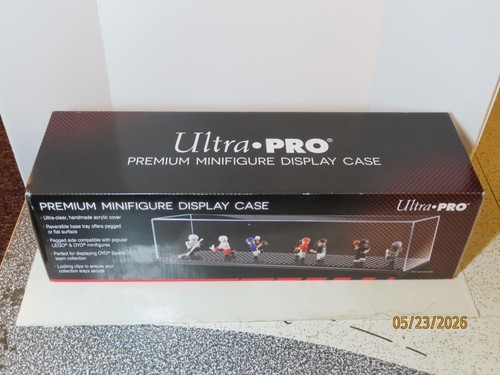 UV-filtering acrylic display casesUV-blocking acrylic prevents ABS yellowing on white and light-gray pieces. Essential for long-term display value preservation.
 Acid-free storage bagsStoring sealed sets in acid-free poly bags inside larger archival boxes protects box corners and tape from humidity and contact damage.
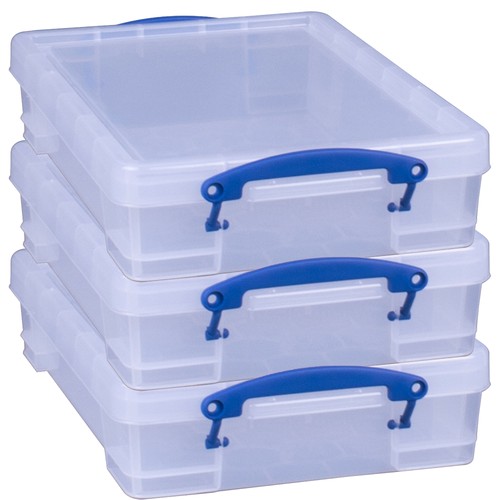 Really Useful Boxes (stackable)The standard for LEGO part storage. Airtight lids, stackable, available in sizes from 0.3L to 64L. The 4L and 9L sizes cover most sorted-brick needs.
Instruction booklet protection sleevesPolypropylene sleeves sized for LEGO instruction booklets protect from moisture and creasing during storage. Booklets in good shape add to resale value.
Really Useful Boxes (stackable)The standard for LEGO part storage. Airtight lids, stackable, available in sizes from 0.3L to 64L. The 4L and 9L sizes cover most sorted-brick needs.
Instruction booklet protection sleevesPolypropylene sleeves sized for LEGO instruction booklets protect from moisture and creasing during storage. Booklets in good shape add to resale value.
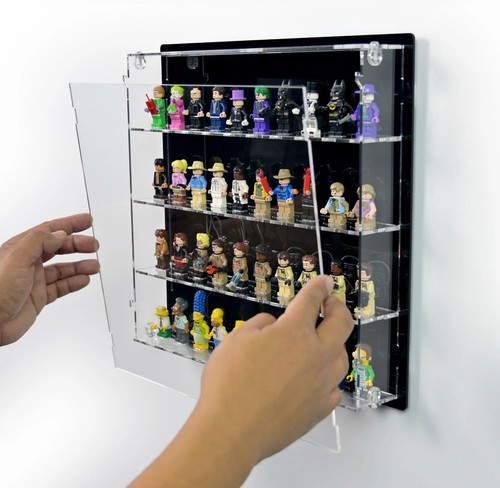 Minifigure display framesWall-mount frames with individual pegs for minifigures. Displaying figs separately from the set protects both — the set stays dust-free, the figs get shown off.