Steel hardness vs toughness: when 60 HRC is too hard and 56 HRC is right
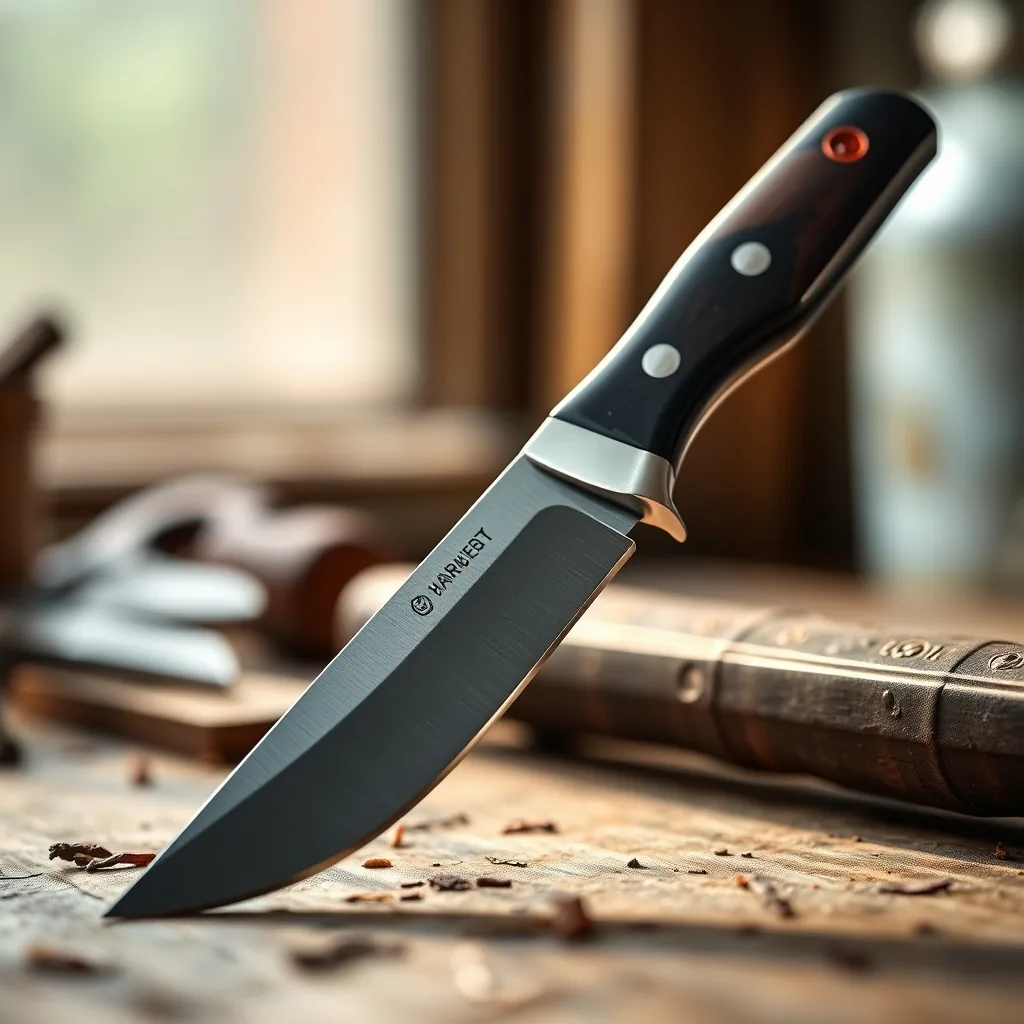
The Rockwell C scale is the number knife marketing built its mythology on. Higher is better, right? Not always. A harder knife chips where a tougher one would flex. A softer knife takes and holds an edge that a brittle one can't hold at all. The application determines which tradeoff serves you.
What the Rockwell C scale actually measures
The Rockwell C (HRC) scale measures a material's resistance to permanent indentation by a diamond cone pressed into the steel under a standardized load. It measures hardness — the resistance of the crystalline structure to deformation at a single point — not strength, not toughness, and not edge-holding ability directly. Those properties correlate with hardness in complex ways, and the correlation is not linear or simple.
HRC values for knife steels typically run from around 52 (soft side, very tough, easy to sharpen) to 68+ (extremely hard, excellent edge retention, brittle). Most working knives land between 56 and 64 HRC. The scale is logarithmic, not linear — the difference between 60 and 62 HRC is larger in practical terms than the difference between 54 and 56 HRC.
What hardness does buy you: a harder steel can be ground to a thinner, more acute edge before it deforms under load. It also resists microscopic plastic deformation during use — the mechanism by which an edge "rolls" or folds over rather than cutting cleanly. A hard steel maintains a keener geometry longer. What hardness costs you: the harder a steel, the more brittle it becomes under impact, lateral stress, or flex. A steel that's too hard for its use will chip rather than deform. Chips are a worse failure mode than a rolled edge — they're harder to sharpen out and they remove more material.
Hardness vs toughness: the inverse relationship
Toughness is a steel's ability to absorb energy without fracturing. A tough steel bends under impact; a hard steel cracks. These properties pull in opposite directions because they're driven by the same underlying factor: the carbide structure in the steel's microstructure.
High-carbon steels with many carbide particles distributed through the matrix are hard. The carbides resist deformation, which gives the steel its Rockwell number. But carbide particles are also stress concentrators — under impact or flex, cracks propagate through carbide networks faster than through homogeneous steel. Tougher steels have fewer or smaller carbides distributed differently, which allows them to absorb energy by controlled deformation rather than crack propagation.
This is not a flaw in materials science — it is a fundamental property relationship. You cannot have maximum hardness and maximum toughness in the same steel. Every steel design is a negotiated tradeoff between these properties, adjusted by alloying elements (chromium, vanadium, molybdenum) and heat treatment protocols.
Why 60+ HRC is too hard for many uses
A knife at 62–64 HRC has exceptional edge retention on soft-to-medium materials: vegetables, meat, paper, rope under moderate loads. For controlled use on appropriate materials, the edge geometry holds for a long time. The same knife used for prying, batoning wood, or contact with hard surfaces like bone or frozen foods will chip.
The chip is the problem. Rolling (edge deformation without material loss) requires light pressure and a few strokes on a honing rod to correct. Chipping removes a notch from the edge that requires significant metal removal to grind out — often 0.5 to 2mm of steel, depending on chip depth. On a hard steel that resists abrasion (part of why it holds an edge), that removal is time-consuming and requires aggressive abrasives. Users who chip a high-HRC edge often find they cannot field-sharpen it with a basic stone and end up carrying a damaged knife.
Very hard steels are also more sensitive to improper heat during sharpening. Using an aggressive belt grinder without cooling on a 63 HRC steel can locally overheat the edge, destroying the heat treatment in that area and softening the edge selectively. Lower-HRC steels are more forgiving of aggressive sharpening.
Why 56–58 HRC is right for demanding field use
Bushcraft knives, hunting knives, and general camp tools typically land at 56–59 HRC deliberately. A hunting knife that contacts bone repeatedly, a camp knife used to baton firewood, or a fixed blade carried in conditions where the user can't be selective about what the edge contacts — these benefit from toughness over hardness.
At 56–58 HRC, the edge rolls under lateral stress rather than chipping. A rolled edge can be corrected in the field with a ceramic rod or a flat stone in under a minute. The knife can be resharpened on basic equipment — even a smooth river stone if necessary. The steel is also tolerant of aggressive sharpening technique, which matters when you're restoring a working edge in the field rather than at a bench with proper equipment.
The tradeoff: a 56 HRC knife in hard use needs sharpening more frequently than a 62 HRC knife doing the same tasks. For a hunting trip or a weekend camping, that means a touch-up once or twice rather than never. For most users in genuine field conditions, maintenance access beats maintenance interval. Carrying a small ceramic rod is easier than carrying the equipment needed to regrind a chip.
Common steels by HRC and application
| Steel | Typical HRC | Character | Best application |
|---|---|---|---|
| 1075 / 1080 carbon | 56–58 | Tough, easy to sharpen, moderate edge retention, not stainless | Bushcraft, camp, chopping tools |
| 1095 carbon | 57–59 | Classic tough working steel, hairy edge if properly sharpened, not stainless | Hunting, outdoor fixed blades |
| D2 semi-stainless | 59–61 | High wear resistance, good edge retention, lower toughness than carbon steels, harder to sharpen | EDC folders, slicing tasks |
| VG-10 stainless | 60–61 | Good edge retention, moderate toughness, common in kitchen knives | Kitchen knives, EDC folders |
| S30V stainless | 59–61 | Balanced edge retention and toughness, good stain resistance, sharpens without frustration | EDC folders, general-purpose |
| M390 stainless | 60–62 | Excellent edge retention, good corrosion resistance, slightly less tough than S30V | Premium EDC, light-duty use |
| Elmax stainless | 60–62 | Comparable to M390, very fine grain, good for thin grinds | Premium EDC, slicing |
| ZDP-189 | 64–67 | Extreme hardness and edge retention, brittle, requires careful use | Collector pieces, controlled precision use only |
Edge geometry: the factor that changes the whole equation
HRC is not the only variable in edge behavior. Geometry — specifically how thin the blade is behind the edge — interacts with hardness to determine real-world performance in ways that HRC alone cannot predict.
A thin-behind-the-edge geometry (a blade that tapers aggressively toward the cutting edge, often called a thin grind or Scandi grind) cuts efficiently but is more vulnerable to lateral stress, especially in harder steels. A convex grind or a heavier secondary bevel (thicker behind the edge) adds resistance to lateral flex, which allows a harder steel to survive tasks it couldn't with an aggressive geometry.
This is why a well-made Mora Companion at 59 HRC carbon steel with a Scandi grind holds up through years of hard camp use — the geometry and hardness are matched. A thin laser-ground S35VN blade in a premium folder at 61 HRC, thin enough to slice magazine paper, will chip through the same tasks. The Mora is more durable for the use, despite lower HRC.
Conversely: a thicker convex grind in a hard steel extends what the steel can do without chipping. Full-convex fixed blades like the ESEE-6, hardened to 55–57 HRC, survive genuinely abusive use because the geometry absorbs what the hardness cannot. The thick convex edge deflects lateral stress into the blade body rather than concentrating it at the edge apex.
The kitchen knife case: where high HRC earns its reputation
Japanese kitchen knives routinely run 60–65 HRC, and in the kitchen context, this is genuinely appropriate. A chef's knife never contacts bone (if used correctly), never pries, never bends laterally, and always cuts on a wood or plastic cutting board. The tasks are controlled, the contact material is soft, and the edge geometry can be maintained precisely at a bench.
High HRC allows Japanese kitchen knives to be ground to a single-bevel or narrow double-bevel at 10–15 degrees per side — geometries impossible to sustain in a tougher, softer steel. The combination of high hardness and acute geometry produces cutting performance that lower-HRC steels cannot match on appropriate kitchen tasks. The brittleness is managed by using the knife correctly, not by changing the steel.
When those knives enter inappropriate territory — cracking a lobster, cutting through bones, dropping point-first onto ceramic tile — they chip or crack because the hardness that makes them exceptional at their real job makes them fragile at others. The HRC is right for the application. The application boundary is strict.
What to look for when buying
- Outdoor, camp, hunting, bushcraft: 56–59 HRC in a tough steel (1095, 3V, Infi, S35VN in lower heat treat). Toughness prevents chip failure in field conditions; easy field sharpening matters more than edge retention interval.
- Everyday carry (folder, general use): 59–62 HRC in a balanced steel (S30V, S35VN, M390, 20CV). Good edge retention without excessive brittleness. Can be sharpened on standard bench equipment without frustration.
- Kitchen knives: 60–65 HRC in appropriate steels (VG-10, AUS-10, SG2/R2, Aogami Super). The controlled environment justifies high hardness for performance. Buy from a maker who does proper heat treatment — cheap imports claiming 67 HRC are usually dishonest about their process.
- Collector and limited-use pieces: HRC can be whatever the maker specifies without practical concern if the knife is not a user.
The heat treatment caveat
The same steel at the same nominal HRC can perform completely differently depending on heat treatment quality. The hardening cycle (temperature, soak time, quench rate) and the temper cycle (how far the steel is brought back from maximum hardness) determine the actual microstructure. A poorly heat-treated blade at 60 HRC may be more brittle than a well-treated blade at 62 HRC, because the carbide distribution and grain structure are worse.
Reputable makers — Benchmade, Spyderco, Chris Reeve, ESEE, Bark River — document their heat treatment and stand behind it. No-name imports that claim "high HRC" without documentation of their process are often lying about the number or achieving it through poor technique that makes the steel unreliable. An honest 59 HRC from a maker who knows what they're doing beats a suspicious 63 HRC from a maker who doesn't.
This is why collector communities pay attention to makers, not just steels. The steel is the starting point. The heat treatment is where the knife is actually made.
Gear actually worth buying
Smart eBay searches for knife collecting and steel knowledge. Small commission on qualifying sales; your price is the same either way. Full disclosure.
 Spyderco folder (S30V / S35VN)Spyderco's Paramilitary 2 and Manix 2 in S30V or S35VN hit the sweet spot for EDC: 59–61 HRC, tough enough for daily use, sharpenable on standard bench stones without frustration.
 ESEE fixed blade (1095 carbon)ESEE runs their 1095 at 55–57 HRC by design. Maximum toughness for genuine field use. Chips are not a failure mode at that hardness. The tradeoff is more frequent sharpening and rust-prone steel — oil it.
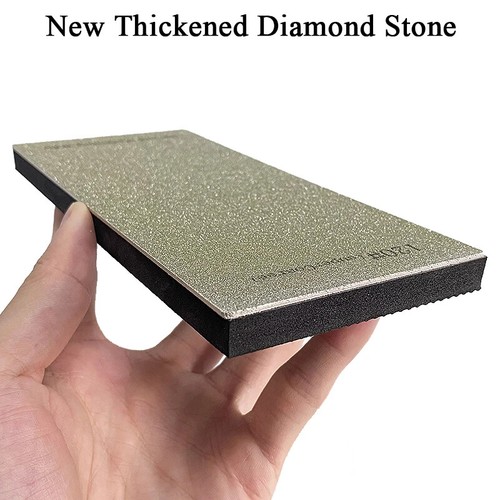 Diamond sharpening platesHigh-HRC steels like M390 and ZDP-189 resist conventional waterstones. Diamond plates cut them efficiently. DMT is the standard; get coarse, fine, and extra-fine and use water as lubricant.
 Ceramic honing rodFor softer steels (56–59 HRC) that roll rather than chip, a ceramic honing rod restores the edge between full sharpenings in seconds. Too aggressive for very hard steels — use a leather strop there instead.
 Benchmade premium folder (S90V)S90V at 59–61 HRC is Benchmade's step up in edge retention without sacrificing field usability. Harder to sharpen than S30V but holds the edge significantly longer. The Bugout and 940 in S90V are collector favorites.