Diatonic vs chromatic: the primary split
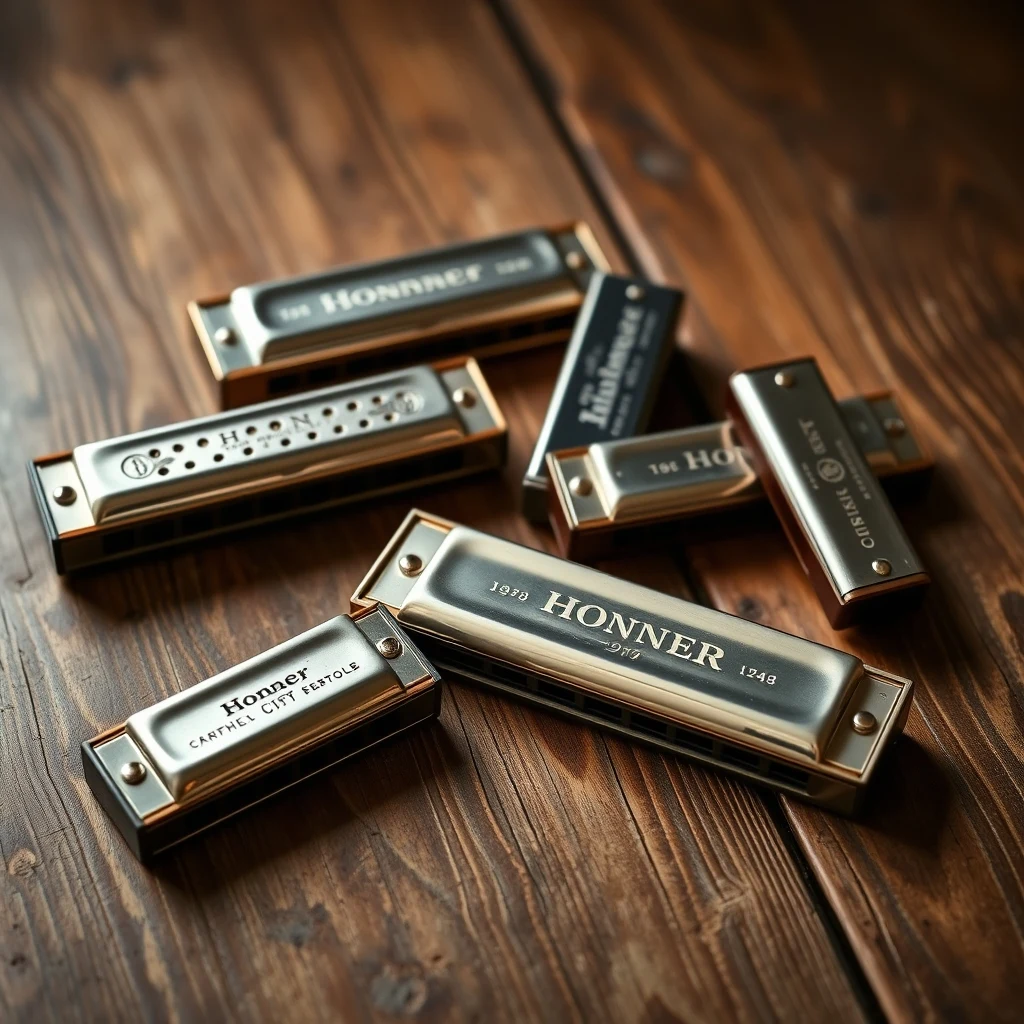
The two main types of harmonica encountered in collecting are diatonic and chromatic. They are different instruments with different playing techniques, different repertoires, and different collector markets.
A diatonic harmonica plays a single key. A standard 10-hole diatonic in the key of C has 20 reeds — one for each blow (exhale) note and one for each draw (inhale) note across ten holes. It covers the notes of the major scale in that key using standard technique, with additional notes available through bending (lip and tongue technique that flattens draw notes by a half-step or more).
A chromatic harmonica has a slide mechanism that shifts the pitch of every note up by a half-step when the button is pressed. This allows playing in any key from a single instrument and provides access to all 12 pitches. The Hohner Chromonica 48 (12-hole) and 64 (16-hole) are the most collected vintage chromatics.
| Type | Keys | Technique | Tradition |
|---|---|---|---|
| Diatonic (10-hole) | Single key per harmonica | Bending, overblowing for chromaticism | Blues, folk, country, rock |
| Chromatic (slide) | All 12 pitches on one instrument | Slide button for semitone shift | Jazz, classical, pop, European folk |
| Tremolo | Single key, double reeds per note | Similar to diatonic | East Asian folk, traditional music |
Hohner and the Marine Band model line
Matthias Hohner founded the Hohner harmonica company in Trossingen, Germany in 1857. By the early 20th century, Hohner dominated the global harmonica market and produced hundreds of models. The Marine Band, introduced in 1896, is the longest continuously produced harmonica in history and the model most associated with American blues.
The Marine Band's design has changed through its long production history. Key variants:
Pre-war Marine Band (before approximately 1945)
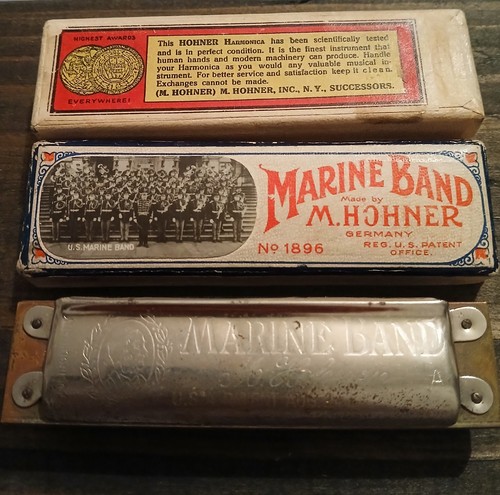
Pre-war Marine Bands are the most sought by collectors. They used slightly different reed plate alloys and construction methods than later production. The cover plates on early models had different graphics — a ship-in-oval or anchor-and-shield motif in earlier years. Reed plate screws rather than nails were used in some eras. Pre-war examples in original boxes with intact graphics command significant premiums over post-war production.
Post-war Marine Band (1945–approximately 1980s)
Standard production with wood combs. Considered the "classic" Marine Band by most players. Reed plates are brass with phosphor bronze reeds (or steel in some eras — confirm specifics for the period you're researching). The graphics shifted over decades but remain recognizable as the Marine Band. Many of these were played and are found in worn condition; unplayed examples in original boxes are more valuable.
Modern Marine Band
Current production uses the traditional pear wood comb and same basic structure but with refined reed tolerances. Not typically collected as vintage, but useful as a reference point for condition comparison.
Comb materials and their implications
The comb is the center body of the harmonica — the piece with the channels (holes) that direct airflow to the reeds. The material determines how the instrument ages and how it responds to moisture from playing.
Wood combs
Traditional Marine Band and many vintage harmonicas use wood (typically pear wood) combs. Wood has a warm tonal character favored by many blues players. The critical problem: wood absorbs moisture during playing and swells, which can cause the comb to bulge slightly — creating gaps between the comb and reed plates, allowing air to leak, and reducing response. A well-played vintage wood comb harmonica may have noticeably warped combs. An unplayed example in a closed box may have combs in pristine condition, or they may have absorbed ambient humidity over decades.
Plastic combs
Hohner's Special 20 (introduced in the 1970s) uses a plastic comb that does not swell, warp, or absorb moisture. Modern performance-oriented diatonics typically use plastic or acrylic combs. For collectors, plastic-comb instruments are generally less sought than equivalent wood-comb models of the same era.
Metal combs
Some professional models (particularly certain chromatics and Hohner's professional-grade diatonics) used aluminum combs. Metal combs do not swell, but can develop corrosion or taste issues over time. Generally durable for the instrument's lifetime.
Evaluating reed condition
The reed is the voice of the harmonica. A single cracked, fatigued, or heavily corroded reed silences that note. Playing every hole on blow and draw is the basic test — but here is what you're listening and feeling for beyond simple silence:
Shopping for vintage harmonicas? Browse current eBay listings → (we earn a small commission; your price is unchanged).
Reed fatigue
Steel reeds work-harden and eventually fatigue after extensive playing. A fatigued reed may produce a slightly flat or inconsistent pitch, or it may begin to crack at the rivet point. This is the primary failure mode in heavily played vintage harmonicas. An unplayed example in original packaging is far less likely to have fatigued reeds.
Oxidation and corrosion
Reeds that have sat unused — particularly in damp environments — can develop surface oxidation that stiffens the reed and changes its pitch response. Minor oxidation can sometimes be addressed; heavy corrosion typically requires reed replacement.
Reed gap
The "gap" is the distance between the tip of the reed and the surface of the reed plate. Proper gap is set at the factory and determines ease of response vs volume. Improperly gapped reeds (too close, too far) affect playability. This is adjustable by a technician but indicates the instrument may have been worked on or abused.
Chromatic harmonica: slide mechanism and airtightness
The chromatic adds the slide mechanism to the complexity. Test the slide by pressing and releasing the button repeatedly — it should move smoothly with no sticking, and the spring should return it fully without assistance. A sluggish slide may need cleaning; a sticky slide may have a warped or corroded slide plate.
Chromatics require tight airtightness between the mouthpiece, slide, and comb. Press your palm over the mouthpiece and press the slide button — any air you feel escaping from between the mouthpiece components indicates a seal issue that will reduce the instrument's response.
Key identification
Diatonic harmonicas are made in specific keys. The key is typically stamped or printed on the cover plate. Standard blues harmonicas are in keys C, D, A, G, and E (the primary blues keys). Less common keys (B, F#, Ab) are rarer and command modest premiums in certain collector circles. For playing purposes, having harmonicas in multiple keys is necessary; for collecting, finding sealed original-box examples in any key is the primary objective.
Other makers worth knowing
Hohner dominated the market but was not alone:
- Seydel (Germany): Founded 1847, oldest harmonica maker still operating. Made steel reeds rather than brass/bronze — longer lasting but different tonal character. Seydel vintage instruments are less commonly encountered than Hohner but valued by specialists.
- Huang (Taiwan): Major manufacturer from the 1970s onward. Student and mid-range instruments. Less collected than Hohner vintage.
- Tombo (Japan): Japanese maker producing quality instruments, particularly tremolo harmonicas popular in East Asian folk music contexts.
Packaging and documentation value
Original boxes, instruction sheets, and cases add meaningful value to vintage harmonica collecting. A Marine Band in its original cardboard box with intact graphics is more collectible than the same instrument without packaging — both as a collectible object and as evidence of low use. Boxes with store price stickers, date stamps, or retailer labels add additional historical interest.
Estate sales and lot purchases are the most common source for boxed vintage examples — instruments purchased decades ago and simply put away. These represent the best opportunity for finding genuinely unplayed examples.
The honest bottom line
For a player buying a vintage harmonica to actually play: prioritize reed condition and comb integrity over cosmetics. A played but well-maintained Marine Band with intact reeds and a flat comb is more useful than a pristine example with a badly warped comb that leaks air around every hole.
For a collector: era identification and original packaging matter most. Pre-war examples and rarer model variants command the highest premiums. Unplayed examples in original boxes are the top tier of the market regardless of specific model.
Either way: test every hole, check the comb for visible swelling or warping against the reed plates, and confirm the key is what the listing claims. For chromatics, test the slide.
Search eBay for vintage harmonicas
 Hohner Marine Band vintage
Look for original box and pre-war cover plate graphics for collector premiums.
Hohner Marine Band vintage
Look for original box and pre-war cover plate graphics for collector premiums.
 Chromatic harmonica vintage
Test slide action and mouthpiece airtightness. Chromonica 48 and 64 most sought.
Chromatic harmonica vintage
Test slide action and mouthpiece airtightness. Chromonica 48 and 64 most sought.
 Vintage harmonica lot
Estate lots for finding rare keys or pre-war examples at lower per-unit cost.
Vintage harmonica lot
Estate lots for finding rare keys or pre-war examples at lower per-unit cost.