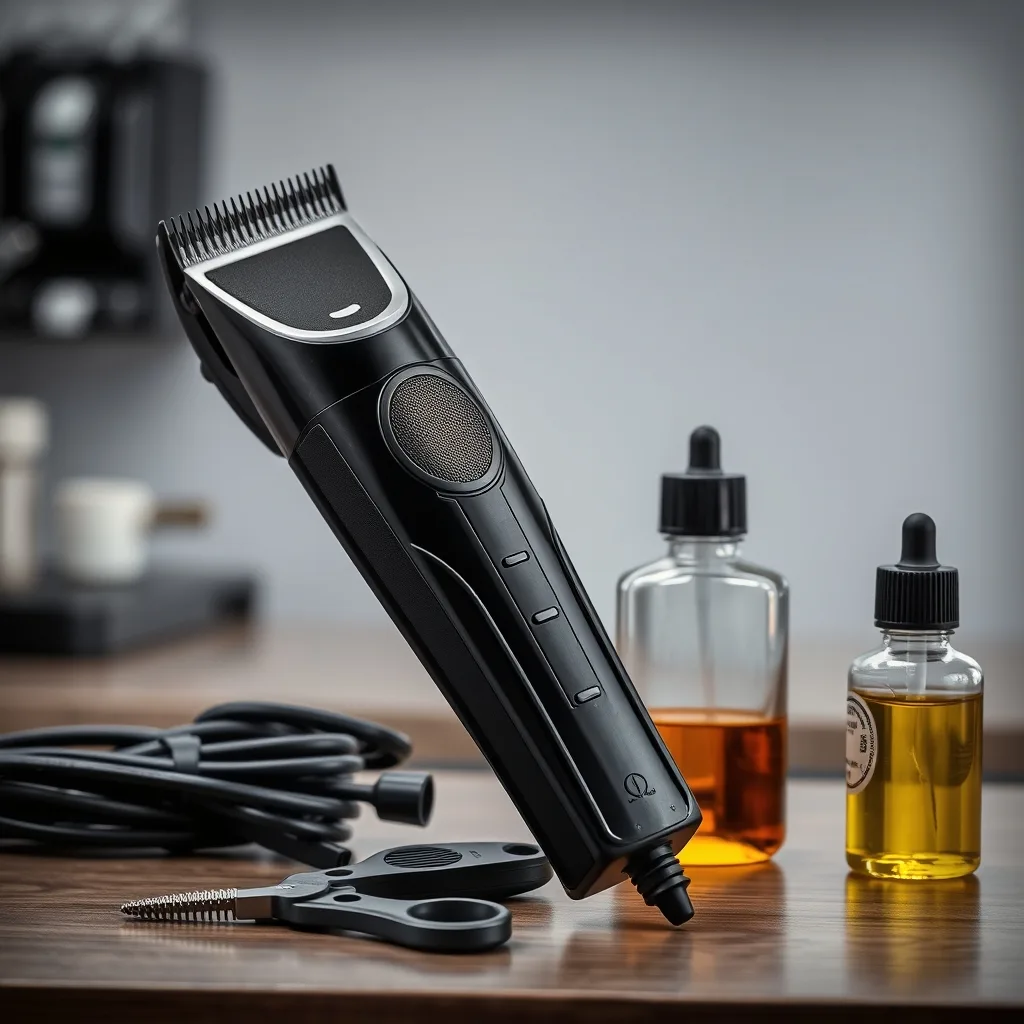
Motor type: the foundational spec
Hair clippers use one of three motor designs: magnetic, pivot, and rotary. These differ in power delivery, heat generation, and suitability for sustained use.
Magnetic motors use an electromagnet vibrating a spring-loaded blade drive. They're the simplest construction, lightest, and quietest at idle — but they're sensitive to load. Dense or wet hair causes magnetic motors to slow noticeably, which increases heat and pull on hair. Magnetic motors are found almost exclusively in budget consumer clippers and are not suited for sustained, frequent cuts or thick hair types.
Pivot motors use an electromagnetic pivot mechanism to drive the blade. They deliver more consistent torque under load than magnetic motors and run cooler under sustained use. Mid-range consumer clippers typically use pivot motors — they're the practical sweet spot for regular home haircuts on average to moderately dense hair.
Rotary motors are electric motors (similar in principle to a drill motor) geared to drive the cutting blade. They deliver high, consistent torque under any hair density and run well in continuous professional use over hours. Rotary motors are found in professional barber clippers and generate more heat than pivot motors over the same duration, but handle all hair types without bogging.
| Motor type | Power delivery | Heat under load | Best use case |
|---|---|---|---|
| Magnetic | Inconsistent — slows on thick hair | High if strained | Light, infrequent home use |
| Pivot | Consistent — handles moderate density | Moderate | Regular home haircuts, weekly salon |
| Rotary | High and consistent under any load | Higher sustained (manageable) | Professional barbering, thick/dense hair |
Blade type: taper vs standard, and zero-gap
Clipper blades come in two primary configurations: taper blades (the standard consumer format, with a leading tooth that cuts and a following tooth) and T-blades (a narrow, T-shaped blade used for edging and detail work on hairlines and beards). Most clippers ship with a taper blade. T-blade trimmers are a separate tool category used by barbers for outline work.
Within taper blades, the important spec is zero-gap adjustability. The gap between the moving and fixed blade determines the effective cutting closeness at blade level (before any guard). Consumer clippers typically allow a range from a slightly open gap (less aggressive) to a tighter gap. Professional clippers allow adjustment to a literal zero gap, enabling very close skin-fade cuts. If you want skin fades, zero-gap adjustability on a rotary motor is effectively required.
Blade material follows the same pattern as beard trimmers: stainless steel is standard, with chromium or titanium coating increasing hardness and edge longevity. Carbon steel blades are sharper initially but require more maintenance to prevent rusting.
Guard set: sizes and what they deliver
Clipper guards (also called comb attachments) attach to the blade and set the cutting length. Guard sizes follow a standardized numbering system for most brands, though the exact millimeter equivalents vary slightly by manufacturer. The approximate equivalents for major brands:
- #0 / 0.5mm: Near-skin cut, no guard or a specialty 0.5mm guard
- #1 / 3mm: Very short, close buzz cut
- #2 / 6mm: Short buzz
- #3 / 10mm: Standard buzz
- #4 / 13mm: Medium length
- #5–8 / 16–25mm: Longer, used for taper blending and longer styles
A complete home kit should include at minimum guards 1–4 for core buzz lengths plus a selection of half-guards (0.5 increments) for taper work. If you want to do fades, half-size guards in the 1–3 range are critical for blending transitions.
Shopping for hair clippers? Browse current eBay listings → (we earn a small commission; your price is unchanged).
Corded vs cordless
Corded clippers deliver constant power — no runtime fade, no recharging. They're the professional standard for sustained barbering. The limitation is cable management, which can be awkward for self-haircuts or when moving around a client.
Cordless clippers have improved substantially at mid-tier. Most quality cordless models also run corded when needed — the best arrangement for home use. Cordless runtime for hair clippers is typically 90–120 minutes, adequate for several full haircuts before recharging.
For home use, a mid-tier pivot or rotary motor clipper with dual corded/cordless operation is the most flexible choice. For professional use, a corded rotary clipper is the standard for reliability over a full day.
Noise and vibration
Clipper noise matters for home use and for use on children or sensitive users. Magnetic motor clippers are often cited as quieter at idle but can buzz loudly under load. Rotary motors are the quietest under load at equivalent power because the motor runs smooth rather than oscillating. Vibration transmitted to the hand correlates with motor type and blade alignment quality — well-aligned blades on a quality rotary motor have minimal vibration.
Common buying mistakes
- Choosing motor type by price tier alone. A budget rotary motor clipper can outperform an expensive magnetic one for dense hair, despite lower overall brand positioning.
- Ignoring guard size gaps. A kit with guards 1, 2, 4, 8 doesn't cover the transition lengths needed for fades. Verify half-sizes are included if blending is required.
- Skipping blade oiling. The single fastest way to degrade any clipper, regardless of price.
- Assuming cordless means equivalent power. Entry-tier cordless clippers often have magnetic motors; step up to pivot or rotary for reliable performance.
- Buying barber-grade for home monthly use. A pivot motor mid-range clipper handles weekly or biweekly home cuts without justifying professional-tier cost.
Related searches on eBay
 Professional hair clippers
Rotary motor, barber-grade, sustained use
Cordless hair clippers
Li-ion, dual corded/cordless, 90–120 min runtime
 Hair clipper sets
Full guard range, oil, cleaning brush included
Hair clippers for men
Home-use range, practical price tiers
 Barber clippers
Zero-gap adjustable, professional brands