Shaft flex — swing speed vs tempo vs transition, when stiff actually costs you distance

The flex rating chart is where most golfers start and stop. Swing speed over 95 mph, play stiff. Under 85, play regular. The problem: tempo and transition are just as predictive as speed, and no chart accounts for them.
Every box set, every golf website, every first-time fitting usually produces the same chart: a table of swing speeds mapped to shaft flex labels. It's clean. It's simple. And for a meaningful percentage of golfers, it produces exactly the wrong recommendation.
A player who swings at 92 mph with a quick, abrupt transition — the kind where they change direction from backswing to downswing in under a third of a second — may genuinely perform better with a stiff shaft. Another player at the same 92 mph who takes a long, smooth, rhythmic tempo with a late transition may lose 10-15 yards playing that same stiff shaft. The number alone doesn't tell the story.
This matters more than most golfers realize, because shaft flex directly affects energy transfer. Get it wrong in the stiff direction, and you're leaving distance on the course with every swing.
The standard flex ratings and what the speed ranges actually mean
The five standard shaft flex categories are Ladies (L), Senior or Amateur (A), Regular (R), Stiff (S), and Extra Stiff (X). Most manufacturers use roughly the same speed breakpoints, though the labels aren't standardized across brands — one company's "stiff" can play like another's "regular."
| Flex | Driver swing speed | Typical carry distance |
|---|---|---|
| Ladies (L) | Under 60 mph | Under 150 yards |
| Senior (A) | 60–72 mph | 150–180 yards |
| Regular (R) | 72–83 mph | 180–200 yards |
| Stiff (S) | 84–96 mph | 200–240 yards |
| Extra Stiff (X) | 97+ mph | 240+ yards |
These are consensus ranges from clubfitting literature — not any one manufacturer's chart. Your actual carry will depend on launch angle, loft, and contact quality, but the speed-to-flex correlation holds as a starting point.
The problem isn't that these ranges are wrong. They're a reasonable statistical approximation. The problem is that they treat swing speed as the only variable that matters for shaft loading. It isn't.
Where the chart fails: tempo
Tempo is the ratio of your backswing time to your downswing time. Tour players average roughly 3:1 — three units of time on the backswing for every one unit on the downswing. The exact number varies: some players are 2.5:1, some are 4:1. What matters is consistency, not any particular number.
A slow, long tempo (4:1 or higher) gives the shaft more time to flex and recover during the swing. The shaft bends under the weight shift and releases through impact. A player with slow tempo tends to load shafts more effectively at a given speed, because they're letting the shaft do more of the work.
A fast, short tempo (2:1 to 2.5:1) rushes the shaft through the swing. There's less time for the shaft to flex and recover before impact. This player often needs to play a slightly firmer flex to prevent the shaft tip from lagging too far behind and producing high, weak shots or shots that go right.
Practical result: two golfers at identical 88 mph swing speed can legitimately need different shaft flexes based on tempo alone. The slow-tempo player may perform better in regular; the fast-tempo player may perform better in stiff. The swing speed chart has no way to capture this.
The transition: the piece clubfitters look at first
If tempo is about the duration of the swing, transition is about what happens at the top — specifically, how hard and how fast you change direction from backswing to downswing.
A smooth transition means a brief pause or gradual change of direction at the top. The club changes direction gently. The shaft flexes gradually and has time to load properly. A smooth transition generally means you can play a softer shaft than the speed chart suggests, or at least that a softer shaft will feel easier to control.
An aggressive transition — a quick, forceful "grab" at the top — immediately loads the shaft with significant force. The shaft bends sharply early in the downswing. If the shaft is too soft for this kind of loading, it kicks too early, the face is open or the angle is wrong at impact, and shots scatter. Aggressive transition players tend to do better with stiffer shafts, even when their speed says they shouldn't need them.
This is why high-tempo, aggressive-transition players often end up in stiff shafts at 88-90 mph swing speeds, while smooth, rhythmic players can stay in regular well into the 90s. Watch video of your transition to see which camp you're in — slow motion reveals it immediately.
When stiff actually costs you distance
The shaft is not just a connection between your hands and the clubhead. It's a spring. During the downswing, the shaft bends slightly — tip lags behind butt — and then releases through impact, which is part of what transfers energy efficiently into the ball. The technical term is "kick" or "release."
If the shaft is too stiff for your swing, it doesn't bend enough. The spring stores less energy. You get less release through the ball. The result is exactly what you'd expect from a weak spring: less distance, because the energy transfer is less efficient.
For a player at 85 mph with a smooth, slow tempo, playing extra stiff may cost them 10-20 yards of carry simply because the shaft never properly loads. They're working harder and getting less out of it. The clubs feel "boardy," like hitting into a solid post.
The tell for a shaft that's too stiff: low ball flight with no spin, shots that leak right (for right-handers), inconsistent distance — especially shorter carry than expected. Conversely, a shaft that's too soft: high, balloony flight, shots that miss left, inconsistent direction.
Shaft weight: the variable most golfers overlook
Shaft weight has a bigger impact on swing performance for most recreational golfers than the flex label does, and it's far less discussed. A 65-gram graphite shaft and a 100-gram graphite shaft in the same "stiff" designation will feel very different to swing, produce different paths, and suit different players.
Heavier shafts (90-130 grams) are harder to swing fast. They tend to suit players with slower tempos and deliberate, in-control swings. Steel iron shafts fall here — most are 110-130 grams. Lighter shafts (50-75 grams) suit players who want to swing faster and benefit from the lower total weight generating more speed.
The mistake many recreational golfers make is buying a driver shaft that's 80+ grams because it's labeled "stiff" and they want control, when a 65-gram shaft in the same or slightly firmer flex would actually give them more speed without losing accuracy. Shaft weight and flex interact — always look at both specifications together.
Kick point and its effect on ball flight
Kick point (also called bend point) is where the shaft bends most during the swing. A high kick point — bending closer to the grip — produces a lower, more boring ball flight with less spin. A low kick point — bending closer to the tip — produces a higher, more spinny ball flight.
For irons, this matters because trajectory directly affects how high the ball lands and whether it stops on greens. High kick point irons work well for golfers who already hit the ball high and don't need help getting it airborne. Low kick point irons help players who hit it too low or who struggle to stop the ball on greens.
Drivers follow the same logic. If you want a high, soft-landing driver shot, look for a low-to-mid kick point. If your driver already balloons too high, a higher kick point brings the flight down.
Kick point and flex interact. A low-kick-point regular shaft doesn't behave the same as a mid-kick-point regular shaft. When comparing shafts, pay attention to both variables.
How to self-assess without a launch monitor
The ideal scenario is a fitting with a launch monitor (TrackMan, FlightScope, or similar), where you can hit the same clubhead with different shaft flexes and see dispersion and distance data. That's not always accessible. Here's how to assess without one:
- Video your transition. Set up your phone behind you at waist height, record your swing at 1080p/60fps, and watch the top in slow motion. Do you pause at the top, or do you immediately fire down? A pause or gradual direction change is a smooth transition. An immediate, forceful move down is aggressive.
- Watch ball flight. High, balloony shots with a loss of distance to the left (right-hander) suggest the shaft is too soft. Low, spinless shots that fade right suggest too stiff.
- Feel the shaft through impact. Too soft: the clubface feels "flippy" or like it's closing. Too stiff: the club feels heavy and unresponsive through the ball, like there's no energy in the strike.
- Borrow and compare. Playing partners or pro shop demo clubs let you hit different flexes side by side. Consistency of contact is often a more honest indicator than distance, because distance fluctuates with strike quality.
The honest decision framework
Rather than using swing speed as the single variable, run all three filters:
| Variable | Pushes toward regular | Pushes toward stiff |
|---|---|---|
| Swing speed | Under 88 mph | Over 92 mph |
| Tempo | Slow/smooth (3.5:1+) | Fast/abrupt (2.5:1 or less) |
| Transition | Gradual, late start | Aggressive, early load |
| Ball flight issue | Low, right, weak | High, left, balloon |
If all three factors point in the same direction, the recommendation is clear. If they split — say, 92 mph with slow tempo and smooth transition — the speed suggests stiff but the mechanics suggest regular. In that case, try regular first and see if ball flight improves. A session with a teaching pro who can evaluate tempo and transition live will resolve this faster than any chart.
Gear worth looking at
eBay searches we'd start with ourselves. Small commission on qualifying purchases through these links; price is the same for you. Full disclosure.
 Driver shaft (regular flex)
Aftermarket graphite shafts in R flex for 65–75g weight class. Fujikura, Mitsubishi, and Project X are the reliable names.
Driver shaft (regular flex)
Aftermarket graphite shafts in R flex for 65–75g weight class. Fujikura, Mitsubishi, and Project X are the reliable names.
 Driver shaft (stiff flex)
S-flex 60–70g graphite for mid-to-high swing speed players. Mid kick point is the most versatile for most swings.
Driver shaft (stiff flex)
S-flex 60–70g graphite for mid-to-high swing speed players. Mid kick point is the most versatile for most swings.
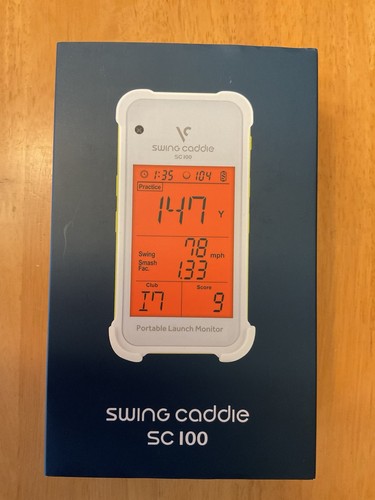 Swing speed radar
A personal radar (Swing Speed Radar by Sports Sensors, Garmin Approach R10) gives you real numbers instead of estimates at fitting.
Swing speed radar
A personal radar (Swing Speed Radar by Sports Sensors, Garmin Approach R10) gives you real numbers instead of estimates at fitting.
 Shaft puller + heat gun
If you're reshafting yourself: a shaft puller and a heat gun. Most drivers and irons can be reshafted in under 30 minutes.
Shaft puller + heat gun
If you're reshafting yourself: a shaft puller and a heat gun. Most drivers and irons can be reshafted in under 30 minutes.
 Used iron set (try a flex)
Buying a used set in a different flex is one of the cheapest ways to test whether a flex change actually helps your game.
Used iron set (try a flex)
Buying a used set in a different flex is one of the cheapest ways to test whether a flex change actually helps your game.