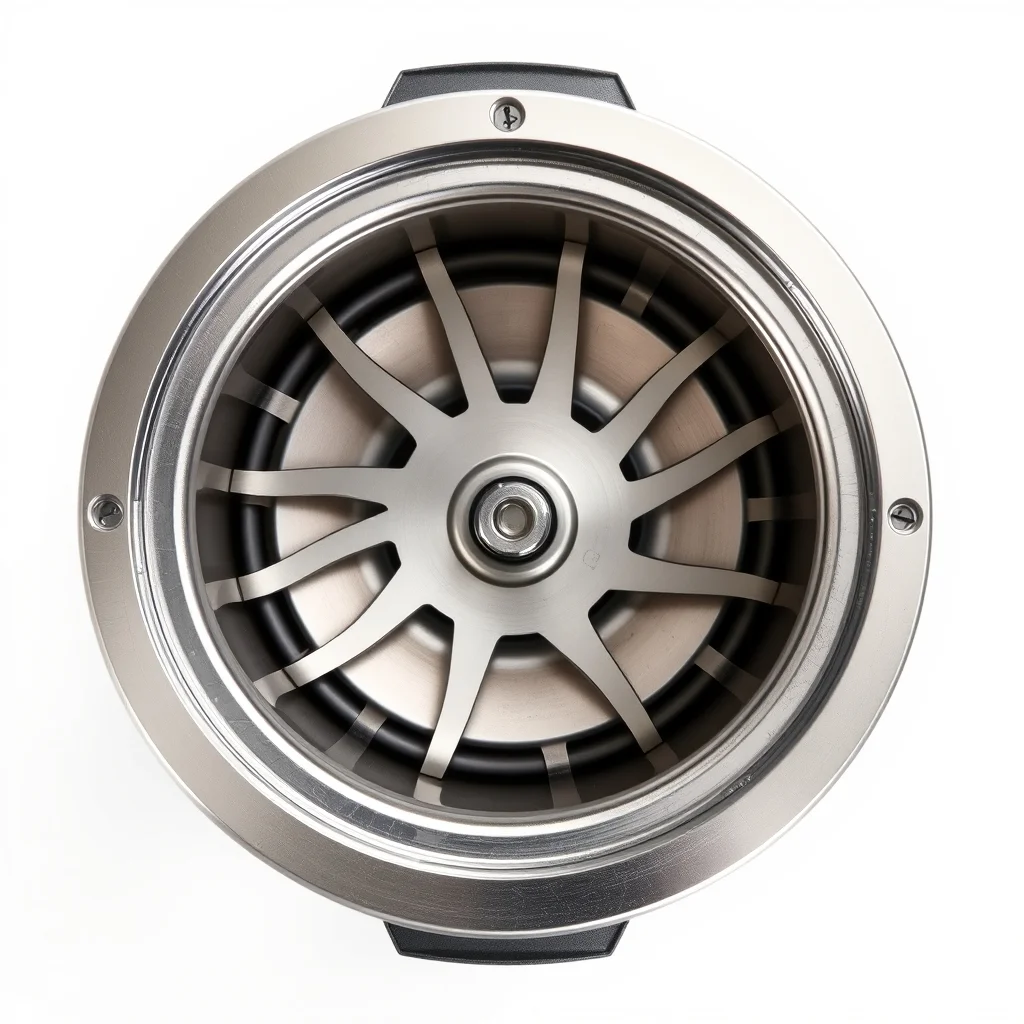
Horsepower: The Right Range for Each Use Case
Garbage disposal motors are rated in horsepower (HP) across a range from about 1/3 HP to 1.25 HP. Horsepower determines how much torque the motor can sustain without stalling or tripping the overload protector. More horsepower does not automatically mean better grinding — but it does mean more headroom before the motor struggles.
1/3 HP (0.33 HP): Entry-level. Suitable for light use — soft food scraps, small quantities, minimal fibrous material. Prone to jamming on potato peels, celery, artichoke leaves, and similar fibrous or starchy waste. Adequate for a single person or couple with minimal cooking. Typically 1,725 RPM (induction motor).
1/2 HP (0.5 HP): The most common category for mid-range models. Handles general family cooking waste comfortably. Better than 1/3 HP on fibrous material but still struggles with repeated heavy loads or tough waste like small fruit pits. Typically 1,725 RPM (induction) or 2,600 RPM (permanent magnet).
3/4 HP: Good all-purpose choice for households that cook regularly. Handles most kitchen waste including moderate fibrous material. Multi-grind models in this range produce better results than single-grind 1 HP units.
1 HP and above: Heavy-duty range. Appropriate for large households, heavy cooking frequency, and use cases where occasional small bones or hard material (fruit pits, shellfish shells — though manufacturer guidance varies) will be ground. Best sound insulation packages are typically found in this range. 1.25 HP is the top of the residential tier.
Grind Stages: Single vs Multi-Stage
Grind stage refers to how many sets of grinding components the waste passes through before exiting into the drain. Single-stage disposals have one set of impellers and a grinding ring. Multi-stage disposals add additional grinding chambers or pre-shredding components.
Single-stage grinding produces particles that are coarser and less uniform. This is adequate for most soft kitchen waste, but it results in larger particles reaching the drain, which can gradually build up in older or narrow drain pipes.
Multi-stage grinding (InSinkErator labels this "MultiGrind" technology; other brands use different terminology) passes waste through multiple levels, producing finer and more uniform particles. This is meaningfully better for drain health over the long term and significantly better on fibrous, tough, or starchy waste that a single pass would only partially break down.
The practical implication: for homes with older plumbing, narrow drain lines, or septic systems (check your local code — disposals are prohibited with some septic systems), multi-stage grinding reduces the risk of accumulation problems. For newer plumbing and standard waste lines, single-stage is usually adequate.
Continuous Feed vs Batch Feed
These terms describe how the disposal is operated and loaded.
Continuous feed disposals are activated by a wall switch (or air switch) and run continuously while switched on. You can add waste during operation — the disposal processes whatever drops in. This is the standard configuration in US homes and the more convenient choice for routine kitchen cleanup. The risk is accidental entry of non-food items when the unit is running.
Batch feed disposals require you to load the grinding chamber, then insert and turn a stopper to activate the unit. The stopper physically closes the drain opening and triggers the motor. This means the disposal cannot run with the opening uncovered, which some users and households (particularly with young children) prefer for safety. Trade-off: you must load, close, grind, wait, then load again for the next batch. This is slower for clearing waste after large meals.
Batch feed models are less common and typically cost more than equivalent continuous feed units. If child safety is the primary concern, a wall switch with a lockout feature is a lower-cost alternative on many continuous feed models.
Shopping for garbage disposals? Browse current eBay listings → (we earn a small commission; your price is unchanged).
Sound Insulation: What "Quiet" Actually Means
Garbage disposal noise is a genuine quality-of-life consideration — an uninsulated 1/2 HP unit running in an open-plan kitchen is audible in adjacent rooms. Better units reduce this through a combination of insulated grinding chambers, anti-vibration mounts, and sealed motor housings.
Noise levels are measured in decibels (dB). Typical ranges:
- Budget single-stage disposals: ~80–85 dB during operation
- Mid-range insulated models: ~60–75 dB
- Premium sound-insulated models (InSinkErator Evolution Excel, Moen GX series): ~45–55 dB — roughly conversation level
Anti-vibration mounts reduce the mechanical noise transmitted through the sink and countertop. Some premium models include isolation mounts that prevent the disposal body from making hard contact with the mounting assembly. This is a significant noise contributor that insulation alone does not address.
Installation quality also affects perceived noise. A disposal that is not firmly seated in its mounting ring vibrates against it during operation. Proper torque on the mounting screws and a snug drain connection reduce this. A new quiet disposal installed poorly can be louder than an older noisy model installed correctly.
Plumbing Compatibility and Installation Considerations
Most residential garbage disposals in the US use a standard mounting system originally developed by InSinkErator (the three-bolt twist mount). This means the vast majority of InSinkErator replacements, and many Moen and Waste King models, are compatible with an existing sink flange — making replacement easier if the flange is already installed.
Check these before buying:
- Drain outlet direction: Most disposals have a side outlet; some have a rear outlet. Your under-sink plumbing configuration determines which works without replumbing.
- Power supply: Hardwired or cord-and-plug. Cord-and-plug models are easier to install (plug into an existing outlet under the sink). Hardwired units are permanent installations requiring an electrical connection — typically 120V, 15A circuit in the US.
- Septic compatibility: Some manufacturers offer "septic-assist" disposals with bio-charge injectors. More importantly, check your local code — disposals are prohibited on some septic systems entirely.
- Dishwasher drain connection: If your dishwasher drains through the disposal, verify the new unit has a dishwasher inlet port (most do) and that the knockout plug is removed during installation (a common oversight on first installs).
What to Skip
- Disposals rated for bones as a primary selling point: While higher HP units can handle small soft bones (chicken), manufacturers typically disclaim hard bones. Using any disposal regularly for bones is outside design intent and accelerates wear.
- Overly complex digital displays or app connectivity: A garbage disposal runs when you switch it on. Connectivity features add cost and failure points to a component that should last 8–12 years with no user interface needed.
- "Lifetime warranty" marketing without examining the terms: Most disposal warranties cover defects, not wear from normal use or jams caused by improper items. Read what is actually covered — 5-year and 8-year limited warranties from major brands are more meaningful than "lifetime" terms that carve out most real failure modes.
What Not to Put In
Regardless of HP or grind stages, these items damage disposals or create downstream problems and should go in the trash:
- Fibrous vegetables in large quantities (celery, artichokes, asparagus, corn husks) — they wrap around impellers
- Expandable starches (rice, pasta, oatmeal) — they absorb water and swell in the trap
- Grease, fats, and cooking oil — they solidify downstream and accumulate
- Coffee grounds in large quantities — accumulate in traps
- Hard shells (nuts, hard fruit pits) unless the manufacturer explicitly rates the unit for them
- Non-food items (bottle caps, utensils, glass)
The Decision in Plain Terms
For a household of 2–4 people with regular cooking: a 3/4 HP or 1 HP multi-stage continuous feed disposal is the right spec. Add sound insulation if the kitchen is open-plan or the disposal is near living spaces. Batch feed is worth the premium if you have young children and want the safety interlock. Confirm mounting compatibility and power supply type before ordering — the grind specs are irrelevant if the unit does not fit your sink or electrical setup.
Search eBay for garbage disposals
We earn a small commission on qualifying sales; your price is unchanged. Full disclosure.
 Garbage disposal
All horsepower ranges from InSinkErator, Waste King, and Moen
1 HP garbage disposal
Heavy-duty models for high-frequency kitchen use
Garbage disposal
All horsepower ranges from InSinkErator, Waste King, and Moen
1 HP garbage disposal
Heavy-duty models for high-frequency kitchen use
 Quiet garbage disposal
Sound-insulated models with anti-vibration mounts
Continuous feed disposal
Wall-switch operated — the standard US home configuration
Quiet garbage disposal
Sound-insulated models with anti-vibration mounts
Continuous feed disposal
Wall-switch operated — the standard US home configuration
 Food waste disposer
UK/EU market and alternate-labeled US models
Food waste disposer
UK/EU market and alternate-labeled US models