Two drag systems, one fundamental tradeoff
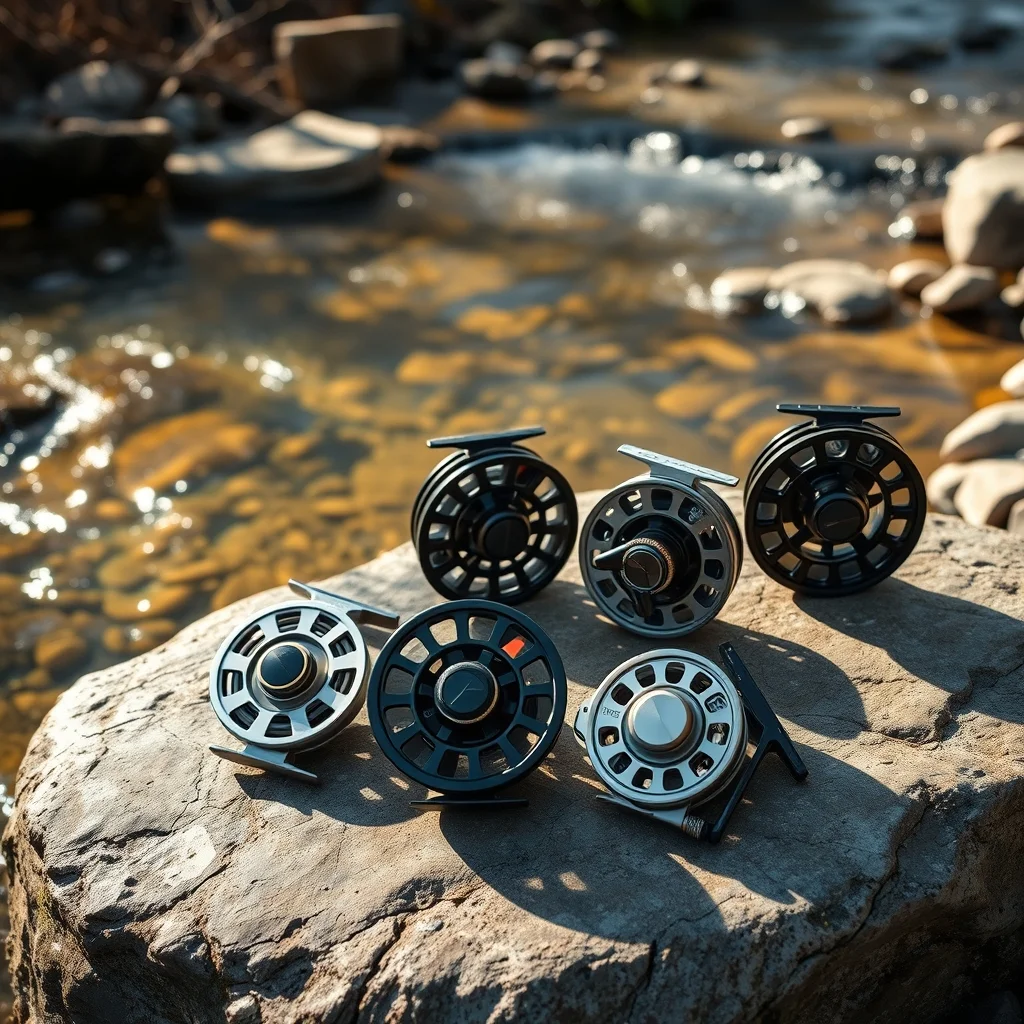
Every fly reel drag system reduces to two categories: click-pawl (spring-and-pawl) and disc drag. Both create resistance on the spool to tire a running fish and keep line under tension. The engineering difference determines how that resistance behaves across speed and temperature.
A click-pawl drag uses a metal or composite pawl that clicks against a ratcheted gear on the spool arbor. Resistance is largely binary — set by the spring tension, with limited modulation. The characteristic clicking sound is mechanical feedback. Drag is not perfectly smooth; it offers pulses of resistance rather than a linear curve. For small to medium trout on light tippet, this is entirely adequate and the tactile feedback is genuinely useful. For large fish making fast runs — steelhead, bonefish, permit — the lack of drag modulation and the limited drag range are real limitations.
A disc drag interposes friction material between the spool and a stationary plate. Higher-end reels use cork, carbon fiber, or composite discs. The drag curve is smooth and adjustable across a wide range. A sealed disc drag (as on the Ross Evolution and upper-tier Lamson models) adds a watertight housing so saltwater, grit, and temperature changes cannot alter friction-material behavior mid-fight.
Arbor size and what it actually changes
Arbor diameter — the inner core of the spool around which line winds — affects two things: line retrieve rate per turn, and line memory (coiling).
A large-arbor reel picks up roughly 10–14 inches of line per revolution. A traditional narrow-arbor reel picks up 4–7 inches. On a 50-foot run by a fish, the large-arbor reel gets line back under control in meaningfully fewer cranks. Under high-speed retrieval, fewer revolutions also means less chance of line bunching or overriding on the spool.
The second effect is memory reduction. Line that winds around a smaller arbor takes on the set of that curve. After sitting in a vest pocket in cold weather, narrow-arbor line comes off in tight coils that need stretching before presentation. Large-arbor line has gentler curves, less memory, and typically a straighter presentation out of the reel.
The tradeoff: large arbors are heavier and wider, which adds mass to the butt end of a lighter rod and shifts the balance point. On a 3-weight bamboo or fiberglass rod, a large-arbor reel can feel clunky. Mid-arbor — the dimension used on most Abel and some Hardy configurations — splits the difference.
Hardy Marquis: the click-pawl benchmark
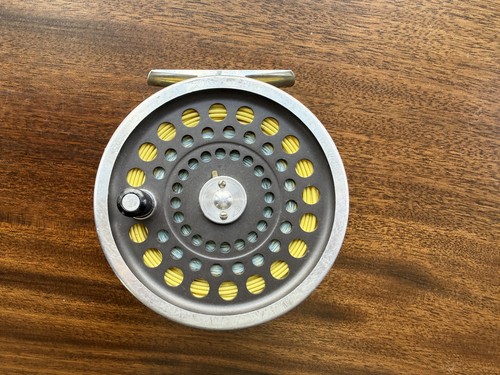
The Hardy Marquis has been in continuous production since the late 1960s. It uses Hardy's traditional click-pawl mechanism — a sprung pawl engaging a hardened steel gear. The frame and spool are bar-stock machined aluminum. The design has been updated over the decades (the current Marquis L uses a larger spool diameter than early models), but the drag mechanism is recognizably the same.
The Marquis is a mid-arbor reel. Current production typically covers line weights from 3/4 to 10/11, with spool dimensions matched to those ranges. The drag range is narrow by modern standards — enough for stream trout and modest Atlantic salmon, not enough for serious saltwater species.
Why buy one? The drag feel — that graduated click under a running trout — is a sensory experience that disc drags do not replicate. The machining quality is high. Spools interchange across the same size designation, and extra spools are available. The Marquis holds its value well on the used market, which makes it a reasonable second-hand purchase. Verify the spool size designation matches your intended line weight; designations have changed across production runs and early Marquis spools designated "7/8" are narrower than current versions.
Abel TR: cork disc drag in a mid-arbor frame
Abel has manufactured fly reels in Camarillo, California since 1987. The TR (Trout Reel) series uses cork/stainless disc drag — cork in contact with a stainless disc. Cork provides a naturally smooth surface that does not stick-slip at low drag settings. The drag range runs from near-zero up through settings appropriate for 10- to 12-pound class fish, making the TR usable from small trout to steelhead without drag system limitations becoming the binding constraint.
The machining tolerance on Abel reels is tight — parts are CNC-machined from 6061-T6 aluminum billet, not die-cast. The arbor is mid-sized, not true large-arbor, which keeps the reel compact on lighter rods. Abel offers the TR in sizes that typically cover 4/5 through 8/9 line weights; verify the current size chart from Abel directly as model configurations have been updated.
One honest note: Abel reels carry premium prices new. The used market is active and authenticated Abel reels retain value well. An Abel TR in good mechanical condition is a reasonable used purchase; check that the drag knob turns smoothly through its full range without binding and that the spool seats with no wobble.
Ross Evolution LT: large-arbor sealed disc drag
Ross Reels has made reels in Montrose, Colorado since 1973. The Evolution LT (Lightweight) is their current flagship freshwater/light-saltwater line. It uses a sealed, ported disc drag — sealed against water and particulate ingress, ported to reduce weight. The large-arbor format gives fast line pickup (typically around 10–12 inches per revolution depending on size) and reduced line memory.
The LT designation reflects meaningful weight reduction compared to earlier Evolution models. Ross achieves this through a skeletonized frame and spool design with porting. Weight reduction at the reel matters more than most anglers acknowledge: on a 9-foot 5-weight rod balanced at the grip, adding 0.5 oz to the reel shifts the balance point and increases perceived rod weight through a full day of casting.
The Evolution LT covers sizes appropriate for line weights from approximately 3/4 through 8/9. The sealed drag is the right choice for anglers who fish in conditions with silt, sand, or saltwater exposure — environments that degrade unsealed drag systems over time.
Lamson: conical drag geometry
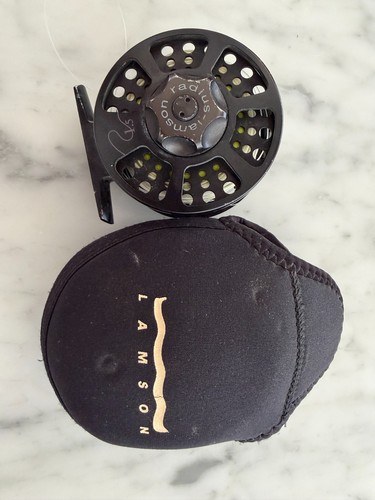
Waterworks-Lamson, based in Twin Falls, Idaho, uses a conical drag geometry rather than a flat disc. In a conical drag, the friction surfaces are angled rather than parallel — the spool's inner face mates against a conical housing. The claimed advantage is more drag surface area for a given reel diameter, and a self-centering tendency that maintains consistent engagement.
Lamson's current lineup covers a wide price range. The Liquid series is die-cast with a conical drag, designed as a value-priced alternative without sacrificing the drag type. The Guru HD and Force SL use machined construction and a sealed version of the drag. The upper-tier Force SL has been used in tarpon and other demanding saltwater contexts where drag performance under sustained load matters.
For most freshwater trout applications, the Liquid performs the drag function without a meaningful gap versus machined options. The difference shows under hot, sustained runs by large fish — a scenario that doesn't occur on most trout streams. Match the model tier to the species and conditions honestly rather than buying maximum capacity for average use.
Orvis Battenkill: accessible click-pawl
The Orvis Battenkill occupies the entry point of the click-pawl category. It is die-cast rather than bar-stock machined, which affects surface finish and tight tolerances but does not affect the drag mechanism's function for its intended use case: small to mid-sized trout on light lines in freshwater.
The Battenkill is a mid-arbor reel, typically available in configurations from 3/4 through 7/8 line weights. The click-pawl drag is lighter and quieter than the Hardy Marquis — those who prefer a softer click find the Battenkill more suitable; those who want the classic Hardy sound find it insufficient. Neither is objectively superior; it is a preference.
The Battenkill's value case is straightforward: it provides a genuine click-pawl experience at a price point below machined alternatives. If the application is dry-fly fishing for trout in sizes that won't run 40 yards of backing, the Battenkill's drag system is not the limiting factor in the fishing experience.
Matching reel to line weight: the practical table
| Reel | Drag type | Arbor | Typical line weight range | Best use case |
|---|---|---|---|---|
| Hardy Marquis L | Click-pawl | Mid | 3/4 – 10/11 (by size) | Stream trout, Atlantic salmon, classic aesthetic |
| Abel TR | Cork/stainless disc | Mid | 4/5 – 8/9 (by size) | Trout to steelhead, light saltwater |
| Ross Evolution LT | Sealed disc | Large | 3/4 – 8/9 (by size) | Freshwater, light saltwater, silt/sand environments |
| Lamson Liquid | Conical drag (unsealed) | Large | 3/4 – 7/8 (by size) | Freshwater trout, value-priced large-arbor |
| Lamson Force SL | Conical drag (sealed) | Large | 5/6 – 12 (by size) | Steelhead to saltwater species |
| Orvis Battenkill | Click-pawl | Mid | 3/4 – 7/8 (by size) | Light trout, freshwater, entry click-pawl |
What to check when buying used
Click-pawl reels: rotate the spool by hand and listen. The click should be consistent in rhythm and volume through a full revolution. An irregular or intermittent click suggests a worn or damaged pawl. Check the drag spring by pressing the pawl manually — it should spring back crisply. Check the spool seat for wobble; a spool that shifts laterally means worn tolerances in the seat or frame.
Disc drag reels: turn the drag knob slowly from minimum to maximum. It should move smoothly without sticking points or gritty texture. Sticking indicates debris in the drag stack or a worn friction surface. Apply light drag and pull line off the spool — it should come off with even resistance, not in pulses. On sealed drag reels, inspect the port openings for cracks in the seal; a cracked seal ring on a "sealed" reel negates the sealed designation.
On any used reel: check the frame for cracks, especially around the foot mounting holes and at the pillars. A cracked frame is not a cosmetic issue — it will propagate under the stress of a hard-running fish. Inspect the spool for deep gouges in the arbor area where line beds; grooves there can cut braided backing under tension.
Search these reels on eBay
 Hardy Marquis fly reel
Classic click-pawl, British made, active used market
Hardy Marquis fly reel
Classic click-pawl, British made, active used market
 Abel TR fly reel
Cork disc drag, CNC machined, Camarillo CA
Abel TR fly reel
Cork disc drag, CNC machined, Camarillo CA
 Ross Evolution LT
Sealed large-arbor disc drag, made in Colorado
Ross Evolution LT
Sealed large-arbor disc drag, made in Colorado
 Lamson fly reel
Conical drag, wide model range from value to premium
Lamson fly reel
Conical drag, wide model range from value to premium
 Orvis Battenkill
Entry click-pawl, mid-arbor, freshwater trout
Orvis Battenkill
Entry click-pawl, mid-arbor, freshwater trout