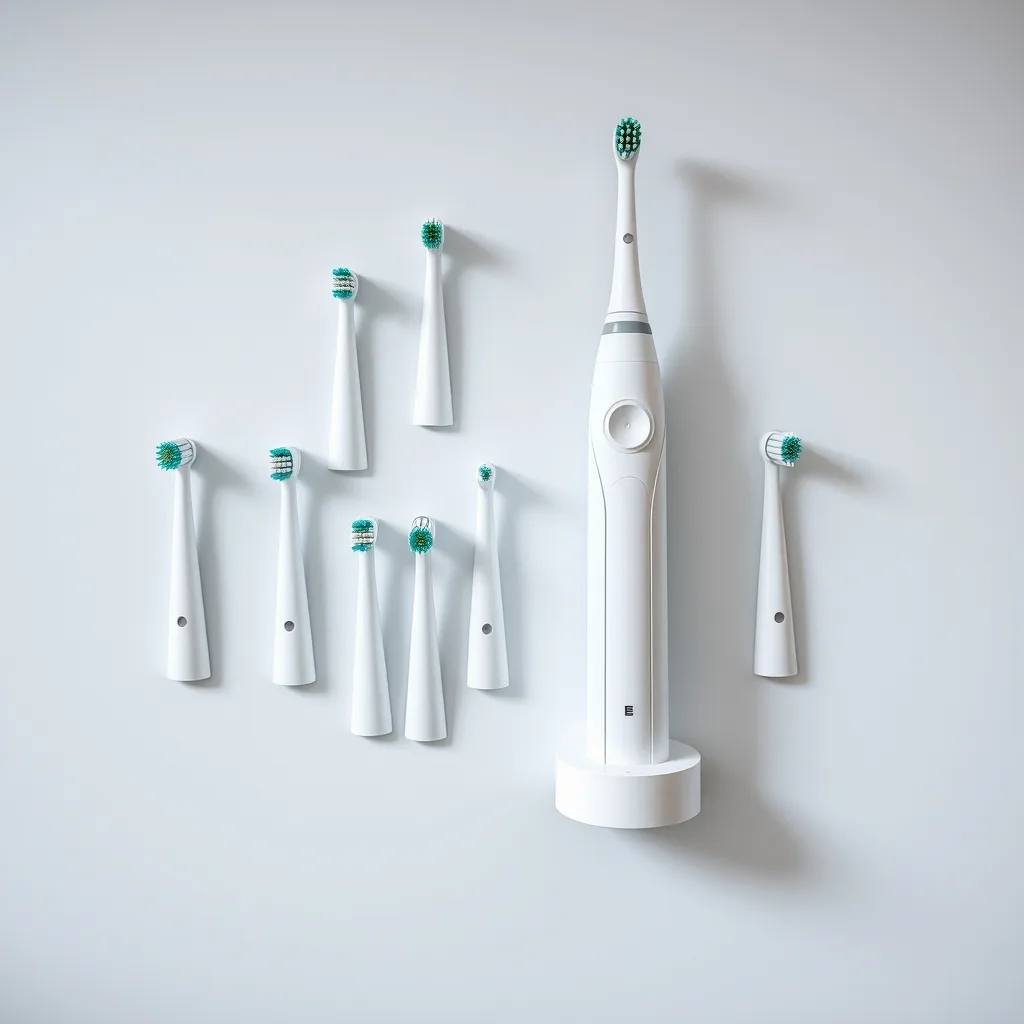
Sonic vs oscillating-rotating: what the difference actually is
The two dominant electric toothbrush technologies — sonic and oscillating-rotating — work differently and have different research profiles. Understanding the distinction helps cut through brand positioning.
Oscillating-rotating (O-R) brushes (the Oral-B technology) use a small round brush head that spins back and forth in short arcs, typically 7–9mm diameter. The motion directly mechanically disrupts plaque at the tooth surface. O-R brushes operate at relatively low frequencies — typically 8,800 oscillations per minute — but the small round head concentrates motion precisely on each tooth surface when the user follows the proper technique (pausing at each tooth).
Sonic brushes (the Philips Sonicare technology) use a side-to-side sweeping brush head operating at much higher frequencies — 31,000–62,000 brush strokes per minute. Beyond the direct mechanical action, the high frequency is claimed to create a hydrodynamic cleaning effect in the fluid around the brush, extending effective cleaning slightly beyond the bristle contact area. The brush head is larger and shaped closer to a manual toothbrush.
| Feature | Oscillating-rotating (Oral-B) | Sonic (Sonicare and others) |
|---|---|---|
| Head size | Small round (~7–9mm) | Larger, elongated |
| Motion type | Back-and-forth arc oscillation | Side-to-side vibration |
| Frequency | ~8,800 opm | 31,000–62,000 bpm |
| Technique required | Tooth-by-tooth pause | Sweeping motion, section by section |
| Sensitivity feel | More intense direct contact | Gentler feel, some users prefer |
| Primary brand | Oral-B | Philips Sonicare (+ others) |
The pressure sensor: the feature that matters most
Over-brushing — applying too much force to teeth and gums — is a clinically documented cause of gum recession and enamel abrasion. The pressure sensor is the electric toothbrush feature most directly designed to prevent this. When pressure exceeds a threshold (typically around 150–250g), the sensor triggers a visible or vibration alert.
Budget electric toothbrushes frequently omit the pressure sensor. Mid-tier models typically include a basic sensor. Premium models include multi-axis pressure sensors and often a dedicated indicator light that shows not just downward pressure but lateral pressure.
If you're a known brusher with gum sensitivity, or if your dentist has noted recession, a pressure sensor is the one feature worth paying for. The marginal cost between a basic model with a sensor and one without is often modest.
Cleaning modes: useful or just count-padding?
Entry electric toothbrushes have one mode. Premium models sometimes feature five or six. The commonly offered modes:
- Daily clean / regular: The standard mode. The base from which all other modes are variants.
- Sensitive / gentle: Reduced intensity. Genuinely useful for recent dental work, gum inflammation, or new users adapting to electric brushing.
- Whitening: Typically a pulsing variation on the standard motion. Evidence for incremental whitening over standard brushing is weak.
- Gum care / massage: Pulsing motion claimed to stimulate gum tissue. Minimal independent clinical evidence distinguishing it from regular mode.
- Tongue cleaning / deep clean: Typically highest intensity. Occasionally useful for thorough sessions.
For most users, daily clean and sensitive modes are the only ones used. Don't pay a premium for a long mode list unless the specific modes address a genuine need (e.g., post-surgery sensitivity mode during recovery).
Shopping for electric toothbrushes? Browse current eBay listings → (we earn a small commission; your price is unchanged).
Battery life and charging
Battery life is quoted in days of twice-daily 2-minute brushing sessions. At mid-tier, expect 2–3 weeks. At premium tier, 4–6 weeks is common.
Charging methods:
- Inductive charging base: Standard at all price points above budget. Brush sits on a pad. No connector to degrade, fully waterproof integration. Charges slowly (typically 12–22 hours for a full charge).
- USB-C charging: Appearing in newer mid-tier and premium models. More travel-convenient than the proprietary stand cable.
- Travel case charging: Some premium models include a USB-charging travel case. Useful if battery anxiety on travel is a real concern.
The charging base cable is typically a long-term commitment — you'll take it everywhere. Inductive bases with USB-A cable are standard but inconvenient if your travel kit is USB-C only. Check before purchasing if this matters.
Brush-head replacement cost: the real long-term number
Dentists recommend replacing brush heads every 3 months — 4 times per year. The cost per replacement head varies widely by brand and tier, and is the number most buying guides fail to surface.
Approximate head cost ranges (brand-genuine heads, not third-party):
- Budget tier brushes: Heads typically $3–6 each. Low ongoing cost.
- Oral-B premium series: Compatible heads range from approximately $5–10 each brand-genuine; third-party compatible heads often available at lower cost.
- Philips Sonicare premium series: Premium heads can run $10–15+ each from Philips. Third-party compatible options exist but compatibility varies by generation.
Over 3 years of use, the head replacement cost can easily exceed the initial purchase price of a mid-tier brush. Calculate the 3-year total cost — handle price plus 12 heads — before comparing models.
Third-party replacement heads are available for most major platforms and are significantly cheaper, but compatibility and quality vary. Reviews specifically comparing third-party heads for your brush model are worth checking before committing.
App connectivity: worth it?
Premium models from Oral-B and Sonicare include Bluetooth connectivity to smartphone apps tracking brushing duration, pressure, and coverage by mouth zone. The apps provide real-time coaching and brushing history.
App connectivity is genuinely useful for:
- Children who need coaching to brush adequately (many kids' apps gamify 2-minute sessions)
- Adults who have been told by a dentist they miss specific zones consistently
- New electric toothbrush users learning correct technique
For established routine brushers who are confident in technique, app connectivity adds friction without changing outcomes. The handle functions identically without the app; the connectivity is a layer on top, not a requirement.
Kids' electric toothbrushes
Kids' electric toothbrushes operate at lower intensity, use smaller heads, and typically feature 2-minute timers with 30-second quadrant signals more consistently than adult models. Softer bristles are standard. The timer function is the most useful feature — children consistently under-brush without it.
Most major brands offer kids' versions with app-based reward systems. These work for some children and are ignored by others. The brush itself (timer, appropriate size, softer bristles) is more universally valuable than the app layer.
Related searches on eBay
 Sonic electric toothbrushes
High-frequency side-to-side vibration
 Electric toothbrushes
Both sonic and oscillating, all price tiers
 Rechargeable toothbrushes
Long-battery, inductive and USB charging
 Electric toothbrush heads
Replacement heads, brand-genuine and compatible
 Kids electric toothbrushes
Timer, soft bristles, smaller head