Class 1 vs 2 vs 3 e-bikes — the actual legal differences by state, where each can go
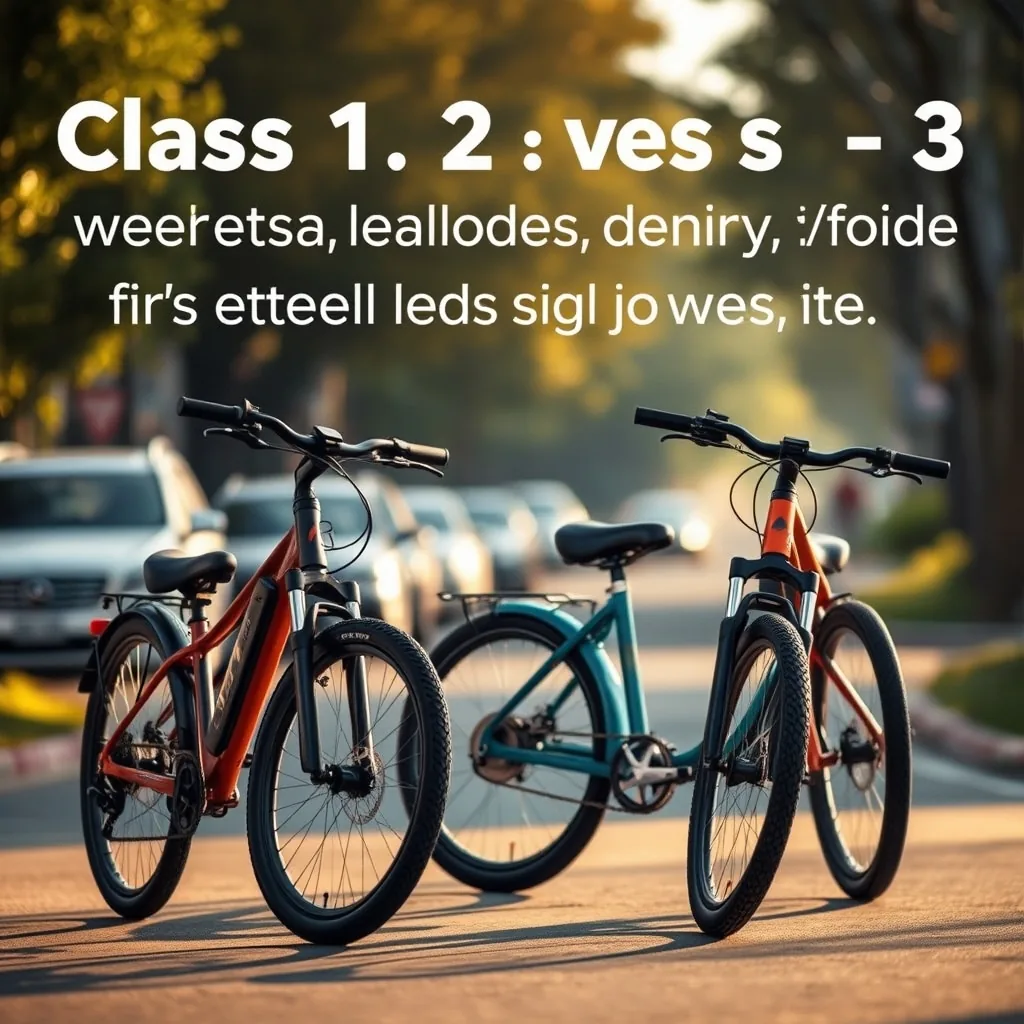
The three-class system is a state-level legal framework, not a universal standard. About 40 states have adopted it. The definitions control where you can ride, whether you need a license, and whether a trail is legal for your bike.
When a retailer sells you a Class 3 e-bike, they're referring to a category that has a specific legal meaning in most states — but not all, and not consistently. The definitions originate from model legislation developed by cycling advocacy organizations around 2014–2015, and individual states adopted it with varying modifications.
Before you ride a new e-bike on a trail, a multi-use path, or through a park, you need to know what class it is, what your state says about that class, and what the land manager says about that specific location. All three can differ. This guide walks through all three layers.
The three class definitions
The model legislation defines each class by two variables: how the motor activates (pedaling required vs. throttle) and what speed triggers motor cutoff.
| Class | Motor activation | Max assisted speed | Speedometer required |
|---|---|---|---|
| Class 1 | Pedal assist only (no throttle) | 20 mph | No |
| Class 2 | Throttle or pedal assist | 20 mph | No |
| Class 3 | Pedal assist only (no throttle) | 28 mph | Yes |
A few important clarifications that often get missed:
- Class 1 and 3 do not have a throttle at all — the motor only runs while you're actively pedaling. Class 2 can have a throttle that propels the bike without pedaling.
- Motor wattage is not part of the class definition. A 250W motor and a 750W motor can both be Class 1 if they're pedal-assist only and cut off at 20 mph. Some states cap motor wattage separately (commonly 750W or 1000W).
- Class 3 bikes that also have a throttle exist but technically become Class 2 under the model legislation. Some bikes are marketed as "Class 3 with throttle" — this creates legal ambiguity that individual states resolve differently.
- The bike's own electronics determine the class, not the rider's intent. If the motor cutoff is set at 28 mph, it's Class 3 regardless of how you ride it.
Where each class can go: the general rules
In states that have adopted the three-class system, access follows a rough pattern. This is not universal — individual land managers can be more or less permissive — but these are the defaults in most adopting states.
Class 1: broadest access
Class 1 is permitted wherever regular bicycles are permitted in the vast majority of adopting states. That means:
- Paved bike lanes and protected bike infrastructure
- Multi-use paved paths (trails shared by pedestrians and cyclists)
- Most shared-use trails open to non-motorized bikes
- Roads where cycling is legal
The rationale for this broad access is that Class 1 behaves like a bicycle: you have to pedal, and it won't go faster than 20 mph under motor power. From a trail user's perspective, a Class 1 e-bike in pedal-assist mode is essentially the same as a conventional bicycle.
Class 2: nearly the same as Class 1, with trail exceptions
Class 2 access is usually the same as Class 1 on paved infrastructure. The throttle capability becomes an issue on natural-surface trails and multi-use paths, where some land managers restrict throttle-activated bikes.
The practical distinction: if you're commuting on paved paths and roads, Class 2 and Class 1 access is almost identical in most states. If you want to ride unpaved trails managed by a local parks system, nature conservancy, or similar organization, check specifically — some explicitly say "pedal assist only" and exclude Class 2.
Class 3: most restricted access
Class 3 has the most restricted access of the three classes. Most states that have adopted the framework specifically prohibit Class 3 from:
- Multi-use paths shared with pedestrians
- Sidewalks
- Shared-use trails where speed differential creates safety concerns
Class 3 is generally permitted on:
- Bike lanes on public roads
- Roads where cycling is permitted
- Protected bike lanes where posted speed limits allow 28 mph
The 28 mph speed limit is the governing concern. A bike traveling 28 mph on a multi-use path shared with pedestrians is a safety liability. Most adopting states reflected this in their legislation.
Additional Class 3 restrictions common in adopting states:
- Minimum age: Most states require riders to be at least 16 years old to operate a Class 3 e-bike.
- Helmet requirement: Many states require helmets for Class 3 riders regardless of age, even when they're optional for other cyclists.
State adoption: who has the three-class system and who doesn't
As of 2024, approximately 39–41 states have adopted legislation based on the three-class model. California was among the first with its 2015 law (AB 1096). Colorado, Washington, Oregon, Arizona, Texas, Florida, Michigan, Minnesota, Wisconsin, Indiana, Virginia, Utah, Idaho, Maine, New Hampshire, Tennessee, Georgia, and most of the Southeast and Mountain West have followed with similar frameworks.
The states that have not adopted the three-class system — or adopted significantly different rules — include several states that classify some or all e-bikes as mopeds or motor vehicles. This means:
- You may need a driver's license to ride
- You may need to register the vehicle
- You may need liability insurance
- The bike may not be street-legal without meeting motorcycle equipment standards
New York has its own distinct classification history. The state legalized e-bikes under separate categories (low-speed electric bicycle definitions) that broadly align with Class 1 and 2 behavior, but the definitions and local enforcement especially in New York City operated differently for years before being harmonized.
Federal lands: Forest Service, BLM, and National Parks
Federal land management agencies have each addressed e-bikes separately, and the rules vary significantly by agency and by specific unit.
U.S. Forest Service (USFS)
A 2019 USFS directive generally allowed Class 1 and Class 2 e-bikes wherever non-motorized bicycles are permitted. Class 3 was placed in the motorized vehicle category and is restricted to roads and trails designated for motor vehicles. Individual National Forests can issue local orders that are more restrictive than this directive. Before riding any Forest Service trail, check the specific Forest's motor vehicle use map (MVUM) and any trail-specific orders.
Bureau of Land Management (BLM)
BLM followed a similar framework, generally treating Class 1 and Class 2 as non-motorized for trail access purposes. As with USFS, local Field Offices can adopt different rules, and BLM trail managers have latitude to designate trails as e-bike-prohibited.
National Park Service (NPS)
Each National Park operates under a superintendent's authority to make specific regulations. Some parks have explicitly welcomed e-bikes on paved multi-use paths (Acadia National Park, for example, allows e-bikes on its carriage roads). Others restrict all motorized vehicles on backcountry and natural-surface trails. There is no uniform NPS rule — you must check the specific park's regulations before visiting.
Wilderness areas
E-bikes of any class are not permitted in designated Wilderness areas. The Wilderness Act prohibits all mechanical transport. The legal status of e-bikes as "mechanized" has been debated, but all federal agencies currently treat e-bikes as mechanized vehicles and prohibit them from Wilderness-designated trails.
The practical decision: which class to buy
The access rules above point to a framework for choosing a class based on where you'll actually ride:
| Primary use case | Best class | Why |
|---|---|---|
| Paved bike paths, rail trails, road commuting | Class 1 or 2 | Broadest access; no helmet/age restrictions |
| Road commuting at higher speeds | Class 3 | 28 mph is viable in bike lanes; limited path access |
| Natural-surface trails, national forest singletrack | Class 1 | Pedal-assist without throttle has widest trail access |
| Cargo hauling, errands with heavy loads | Class 2 | Throttle assist helps when load is heavy and momentum is needed |
| Mixed — trail riding and commuting | Class 1 | Versatility across contexts; fewest access restrictions |
If you're in a state that hasn't adopted the three-class system, the class label on the bike may not correspond to any legal category in your jurisdiction. Check your state's DMV or transportation department for the actual e-bike definition used in state law, and confirm whether your bike meets it as a bicycle (rather than a moped or motor vehicle).
Gear worth looking at
eBay searches we'd start with ourselves. Small commission on qualifying purchases through these links; price is the same for you. Full disclosure.
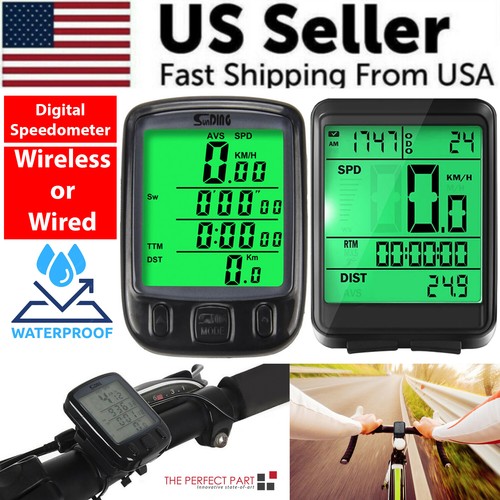 Bike speedometer / cycle computer
Class 3 bikes legally require a speedometer. Wireless cycle computers mount cleanly and show speed, distance, and cadence.
Bike speedometer / cycle computer
Class 3 bikes legally require a speedometer. Wireless cycle computers mount cleanly and show speed, distance, and cadence.
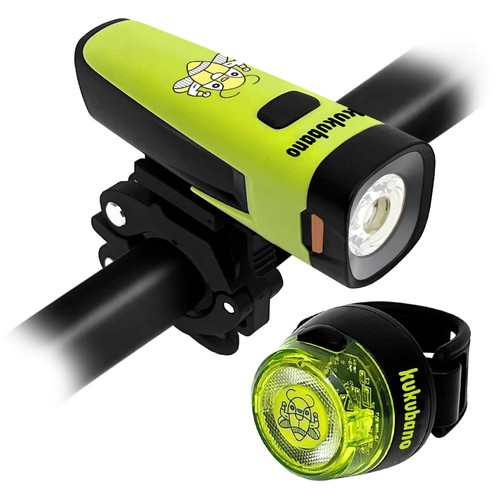 Front + rear light set
Most state road access rules require lights at night. USB-rechargeable sets from Lezyne, Cygolite, and Bontrager are reliable.
Front + rear light set
Most state road access rules require lights at night. USB-rechargeable sets from Lezyne, Cygolite, and Bontrager are reliable.
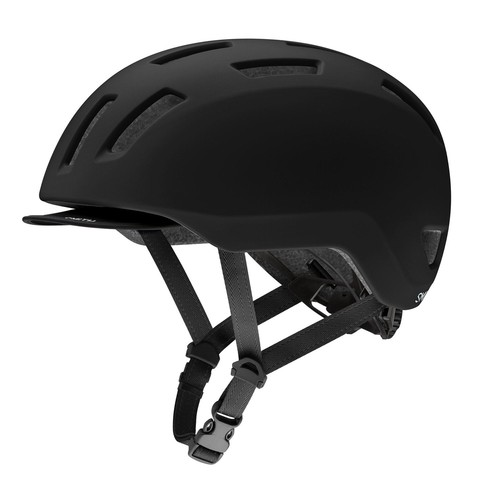 MIPS commuter helmet
Many states require helmets for Class 3 riders. MIPS liner is worth the price premium — rotational impact protection matters most at higher speeds.
MIPS commuter helmet
Many states require helmets for Class 3 riders. MIPS liner is worth the price premium — rotational impact protection matters most at higher speeds.
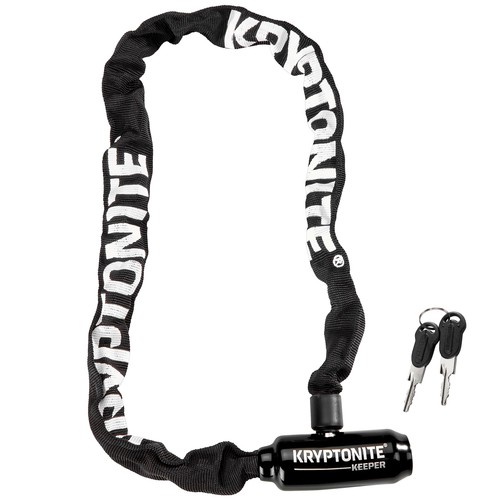 Heavy-duty bike lock
E-bikes are more valuable theft targets than regular bikes. Kryptonite New York chain + disc lock is the standard commuter setup worth having.
Heavy-duty bike lock
E-bikes are more valuable theft targets than regular bikes. Kryptonite New York chain + disc lock is the standard commuter setup worth having.
 Hi-vis cycling vest
Class 3 riders spend more time at road speeds mixed with motor traffic. A high-visibility vest is the cheapest safety upgrade available.
Hi-vis cycling vest
Class 3 riders spend more time at road speeds mixed with motor traffic. A high-visibility vest is the cheapest safety upgrade available.