FAA Part 107 vs recreational: when you legally need the cert and where the line is
Most drone pilots know there are rules. Many believe the rules only apply to professional operators. The actual FAA framework is simpler and broader than that: the determining factor is whether your flight has any commercial purpose — and "commercial" covers more situations than most people think.
The two legal categories the FAA uses
The FAA divides drone operations into two categories with different regulatory requirements. The category that applies to you is determined entirely by the purpose of your flight, not by the drone itself, not by where you fly, and not by how much money changes hands.
Recreational or hobby operations are flights conducted purely for personal enjoyment with no commercial purpose. The FAA defines this as flying "solely for recreational purposes." Under the FAA Reauthorization Act and its implementing rules, recreational flyers must register their drones (if over 0.55 lbs), follow community-based safety guidelines from an FAA-recognized organization (like the AMA), and use the LAANC system or DroneZone to get airspace authorization in controlled airspace. You do not need a remote pilot certificate to fly recreationally.
Commercial operations under 14 CFR Part 107 apply to any flight that isn't purely recreational. If you're being paid, if you're producing footage for a business purpose, if you're doing inspections or real estate photography — you need a Part 107 Remote Pilot Certificate. The FAA's position is clear: when there is any commercial nexus, recreational rules no longer apply.
What actually counts as "commercial"
This is where most drone pilots get it wrong. Commercial doesn't just mean "someone paid me to fly." The FAA interprets "commercial" broadly, and the agency's guidance documents make clear that benefit doesn't have to be direct or immediate.
Clearly commercial: direct payment
You're hired to shoot aerial footage for a real estate listing. A construction company contracts you to do roof inspections. A wedding couple hires you for aerial video. These are unambiguous. Part 107 applies.
Clearly commercial: business benefit without direct pay
You shoot aerial footage of your own business property to use in your company's marketing materials. You're a contractor who uses drone photos to document a job site for billing purposes. You work for a nonprofit that pays you a salary and you fly a drone for the organization. All of these are commercial operations under the FAA's interpretation. You don't have to invoice a separate drone-flying fee for the flight to be commercial.
The gray area: monetized content
This is where it gets contentious. If you post drone footage to YouTube and your channel has AdSense monetization enabled, the FAA's historical position is that this is a commercial operation — the flight has a commercial purpose (generating ad revenue). The same logic applies to stock footage platforms: uploading drone footage to a site where it could be licensed for money, even if it hasn't sold yet, is considered commercial.
In practice, enforcement of this interpretation against individual YouTubers is nearly nonexistent. But legally, the FAA's framework puts you in the commercial category the moment you turn on monetization for a channel that includes drone content.
Not commercial: personal use with incidental sharing
You shoot vacation footage, share it with family, and post it on social media for personal expression with no monetization. You document a camping trip for your own records. You fly to practice flight skills with no intention of producing any content. These are recreational. The key is that there is no current or anticipated business benefit.
What Part 107 actually requires
Getting a Part 107 Remote Pilot Certificate involves three main steps:
1. Pass the aeronautical knowledge test
You take a 60-question multiple-choice exam at an FAA-approved testing center (CATS or PSI network). The test covers airspace classification, weather, drone performance, regulations, emergency procedures, and crew resource management. A score of 70% is passing. The exam costs around $175.
The test is harder than most people expect if they haven't studied. The airspace section in particular — understanding Class B, C, D, E, and G airspace, VFR sectional charts, airport traffic areas — requires real study time. The FAA's official study guide and the free practice tests available through third-party providers are the two most useful prep resources. Expect 15–30 hours of study for someone with no prior aviation background.
2. Register your drone
Part 107 commercial drones must be registered with the FAA through the DroneZone portal. Registration costs $5 per drone and is valid for three years. You must mark your drone with its registration number.
3. Follow Part 107 operational rules
Once certified, the core operational rules are:
- Fly below 400 feet AGL (above ground level) in uncontrolled airspace, or at or below the top of any structure within 400 feet
- Maintain visual line of sight (VLOS) with your drone at all times, or use a visual observer who does so
- Fly only during daylight or civil twilight (with anti-collision lighting)
- Do not fly over moving vehicles, people not directly involved in the operation, or covered structures without a waiver
- Do not operate from a moving aircraft or vehicle (with exceptions in sparsely populated areas)
- Yield right-of-way to manned aircraft
- Do not fly under the influence of alcohol or drugs
- Obtain airspace authorization for flights in controlled airspace (Class B/C/D/E surface areas) via LAANC or DroneZone
Many of these rules can be waived for specific operations through the FAA's Part 107 waiver process — flying beyond visual line of sight, flying over people, flying at night (the night rule was relaxed in 2021 if the drone has anti-collision lighting) — but waivers require a safety case and FAA approval.
Is Part 107 worth getting if you only fly recreationally?
Arguably yes, for two reasons beyond legal compliance.
First, the aeronautical knowledge you gain studying for the test makes you a materially safer pilot. Understanding airspace classifications, reading sectional charts, knowing how to check NOTAMs and TFRs, and understanding weather phenomena that affect drone operations — all of this reduces the risk of incident even if you never fly commercially. The FAA designed the test content around actual risk factors.
Second, Part 107 certification opens options that recreational flying doesn't. You can take on paid work without legal exposure. You can fly in Class B/C/D airspace with authorization. If your flying evolves — if you start shooting content for a local business, or document an event someone asks you to cover — you're already covered.
The $175 test fee and 20 hours of study is a reasonable investment even for pilots who plan to stay recreational but want to understand the airspace they operate in.
Where enforcement actually happens
The FAA enforces Part 107 primarily through complaint-based investigation and through accidents or incidents that generate reports. Flying commercially without a certificate and being reported, having a collision or near-miss, or operating in ways that trigger attention from local authorities are the scenarios that lead to enforcement action. Civil penalties for violations can reach $32,666 per incident under current schedules.
The practical risk for a recreational flier who occasionally posts monetized YouTube content is low. The practical risk for someone operating a drone photography business without a certificate — doing real estate, construction, or event photography for paying clients — is much higher. Clients in those industries increasingly ask to see your Part 107 certificate before they'll hire you.
Visit the drone tools and calculators for the FAA compliance checker and flight time by payload calculator.
Gear actually worth buying
Smart eBay searches we'd start with ourselves. We earn a small commission on qualifying sales through these links; the price you pay is the same. Full disclosure.
 DJI Mini 4 Pro (under 250g)Under 250g means lighter registration requirements in some countries and fewer restrictions in many airspace contexts. The Mini 4 Pro is the current benchmark — 4K/60fps, obstacle avoidance, serious camera for its size.
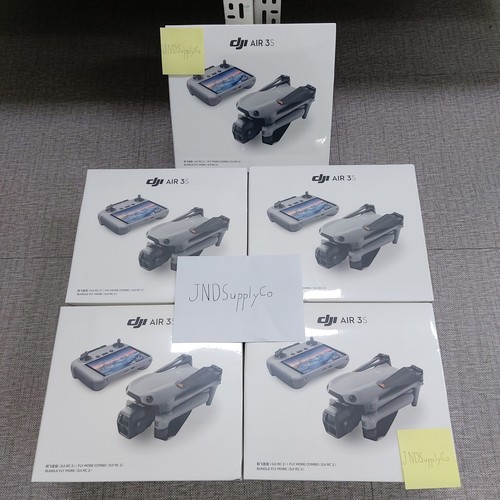 DJI Air 3 (commercial workhorse)Dual cameras (main + telephoto), better low-light, longer range. The step up for Part 107 operators who need reliable image quality for paying clients. More drone than the Mini but meaningfully better output.
 Extra intelligent flight batteriesTwo extra batteries (three total) is the minimum for a working commercial session. Fly More combos are almost always better value than buying batteries separately.
 Tablet sun hood for controllerScreen visibility in bright sun is the practical limit on situational awareness. A sun hood for your phone or tablet controller is cheap and makes a material difference to maintaining visual contact.
 ND filter set (4/8/16/64)For Part 107 commercial video work, matching shutter speed to double the frame rate (the 180° rule) requires ND filters in bright conditions. The full set covers most outdoor lighting situations.