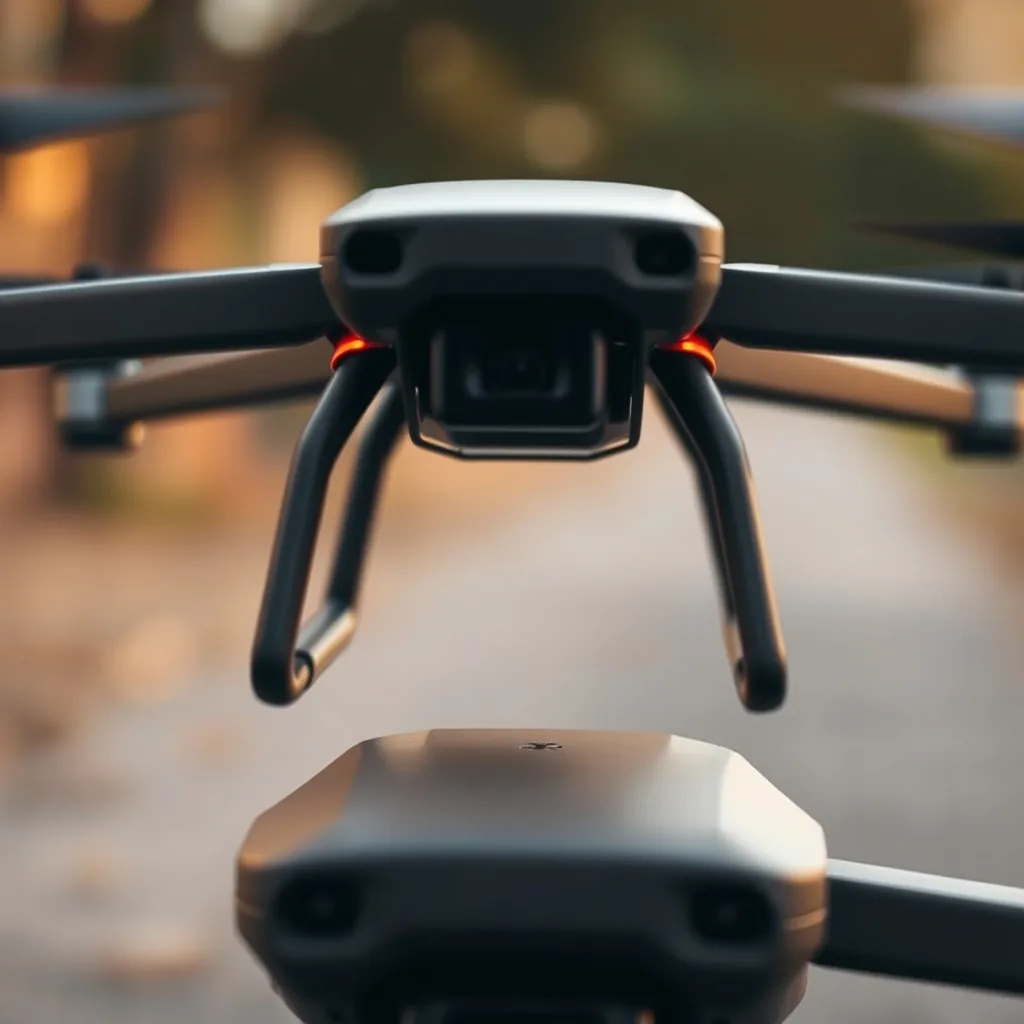
Latency is the most-debated spec in FPV video systems, and it generates more strong opinions than almost anything else in the hobby. Analog purists say digital latency makes gate racing impossible. Digital converts say the image quality difference is worth any latency cost. HDZero claims the best of both worlds. All of these positions have some truth to them — and which one matters to you depends entirely on what you're doing with the drone.
This article covers what the latency numbers actually mean, how they translate to real flying situations, and the honest tradeoffs between the three main system types.
What "Latency" Means in FPV Systems
FPV latency is the time delay between what the drone's camera sees and what appears on your goggle screen. It accumulates from several sources:
- Camera sensor readout: how long the image sensor takes to capture and output a frame
- Encoding and transmission: in digital systems, video must be encoded, modulated, and transmitted; analog skips most of this
- Receiver processing: demodulation and (for digital) decoding at the goggle end
- Display latency: the goggle screen itself adds a few milliseconds of display lag
When manufacturers quote latency figures, they typically measure end-to-end: camera input to goggle pixel output. The figures you see cited most often in the community:
| System | Typical Latency | Notes |
|---|---|---|
| Analog (e.g., Foxeer, Runcam) | 15–25ms | Varies by camera; NTSC/PAL frame timing factors in |
| DJI O3 Air Unit | ~30–40ms | O3 mode with DJI Goggles 2; low-latency mode available |
| HDZero | ~22–28ms | Marketed as "analog latency" — genuinely close |
| Walksnail Avatar | ~20–30ms | Improved over earlier Avatar versions; mode-dependent |
These numbers come from community measurements using frame-accurate camera-to-screen testing. Manufacturer specs are often measured under ideal conditions; real-world performance can be slightly higher, especially under RF congestion or at range limits.
The Total Loop: Where Camera Latency Actually Sits
Camera latency is only one part of the total control loop. When you see something in your goggles and react with a stick input, the full sequence is:
- Scene changes (e.g., gate appears) — 0ms baseline
- Camera captures and transmits — +15–40ms (system-dependent)
- You perceive the change in goggles
- Brain processes and decides to react — ~100–200ms (human reaction time)
- Hand moves stick — +20–50ms
- Radio transmitter sends signal — +5–15ms
- Flight controller processes and adjusts motors — +5–15ms
- Drone physically changes trajectory
Total loop time for a typical pilot: approximately 200–350ms. Of that, camera latency contributes 15–40ms — roughly 10–15% of the total. Human reaction time alone (step 4) dominates everything else in the chain.
When Latency Matters: Competitive Racing
In organized racing — Tiny Whoop, mini quad gates, MultiGP-style courses — competitors are threading obstacles at 80–120 km/h with gates sized to have 10–20 cm clearance on either side of the drone. At those speeds and margins, every millisecond of latency has a physical consequence.
The math: at 100 km/h (~27.8 m/s), 17ms of additional latency means you're seeing the world as it was 47 cm ago. If your gate has 15 cm of margin on each side and you're committing to a correction based on a stale image, the margin for error is smaller than the additional latency introduces.
This is why competitive racers, particularly at the top of national and international circuits, have historically used analog. The pilots who win at MultiGP or Drone Champions League events are not flying DJI O3. They are flying analog — Fat Shark Dominator V3, analogue cameras tuned for minimum latency — because those 15–20ms saved compound across a 20-gate track where every gate decision is made at high speed.
HDZero is the notable exception. Its ~22–28ms latency is close enough to analog that some competitive racers use it, and it has the image quality advantage of a digital signal with none of the severe latency penalty of DJI. The HDZero system uses a different encoding approach (closer to analog OFDM than the H.264/H.265 encoding DJI uses), which is why its latency stays low even though the output is digital.
When Latency Doesn't Matter Much: Freestyle and Cinematic
Freestyle flying — flowing lines, proximity flying, power loops, Split-S maneuvers — is not a latency-constrained activity for most pilots. The movements are smoother and more anticipatory, and the obstacles (trees, buildings, gaps) are much larger than racing gates. A 20ms latency gap between analog and DJI O3 is not what's limiting your freestyle performance.
What freestyle pilots actually care about is image quality. Flying through a forest with analog means watching what looks like a VHS tape from 1987. Flying the same line with DJI O3 means a 1080p near-HD image that you can actually see branches with. The visual richness of the digital feed makes proximity flying easier, not harder, because you can see detail at distance and distinguish obstacles more clearly.
The same logic applies even more strongly to cinematic FPV — long-lens shots, smooth-head builds, cinewhoops. These applications have low speed, wide margins, and heavy emphasis on footage quality. Nobody is flying a cinewhoop at 80 km/h through a 20 cm gap. DJI O3 is the obvious choice, and the latency discussion is essentially irrelevant.
The Skill Threshold Question
Most intermediate pilots — flying a year or less, still developing smooth inputs — cannot exploit the latency advantage of analog over DJI O3 even in racing contexts. Their reaction time variability (200–300ms on a normal distribution) swamps the 17ms latency difference entirely. The latency conversation becomes relevant above a skill threshold where control inputs are precise, consistent, and rapid enough that the video feed timing actually constraints them. Below that threshold, the pilot is the bottleneck, not the system.
DJI O3: The Latency Tradeoffs in Practice
The DJI O3 Air Unit (and its predecessor O3) introduced several latency modes:
- Normal mode: higher image quality, higher latency (~35–40ms in real-world measurements)
- Low-latency mode: reduces video quality slightly to cut encode/decode time; most competitive flying with DJI happens in this mode
- High-quality mode: prioritizes image quality over everything; not for time-sensitive flying
Running DJI O3 in low-latency mode gets you into the ~30ms range, which narrows the gap to HDZero significantly. The tradeoff is some video quality reduction and, depending on your setup, reduced range margin at the edges of the link budget.
DJI's ecosystem advantage is significant outside of latency: better obstacle avoidance integration for DJI-native systems, excellent DVR quality for capturing footage, robust 2.4/5.8 GHz dual-band operation, and a large community of pilots running the same firmware version.
HDZero: The Case for Low-Latency Digital
HDZero occupies an interesting position: it's a digital system with latency that approaches analog, making it attractive to pilots who want digital image quality without the full latency cost of DJI. The system uses a chip (Realtek RTL8852) with a fundamentally different approach to encoding than DJI, prioritizing latency over compression efficiency.
The tradeoffs:
- Image quality is lower than DJI O3 at equivalent range — HDZero artifacts differently under RF stress (block artifacts appear before signal is lost, unlike DJI's smoother degradation)
- Range at full quality mode is shorter than DJI O3 in most real-world tests
- Goggle options are narrower — the HDZero Goggles are the primary choice; the ecosystem is smaller
- Latency is genuinely excellent — 22–28ms depending on configuration — and this is the reason racing-oriented pilots adopt it
Analog: Still the Standard for Competitive Racing
Analog FPV is a mature, predictable technology. The signal is uncompressed — what the camera sees is what the receiver demodulates, with minimal processing in between. Latency is limited by camera sensor timing and the analog signal path, not by encoding or decoding pipelines.
The image quality is genuinely poor by modern standards. Analog NTSC is 480 lines of interlaced video with noise that scales with distance and interference. Flying in the pits of any organized race event will stack many analog systems on the same spectrum, causing significant interference. This is actually one of the practical arguments for going digital even for racing — cleaner channels.
But for latency, analog remains the benchmark that digital systems are measured against. If you're serious about competitive racing and trying to make gate decisions at 100 km/h with minimal margin, analog or HDZero are the technically correct choices. DJI O3 is close enough for most recreational racing and for pilots below a competitive elite threshold.
A Note on Goggle Latency
The camera unit is only half the latency equation. The goggles themselves add processing delay:
- OLED and LCD displays have different panel latency characteristics (OLED generally faster)
- Goggle processors performing image sharpening, DVR encoding, or OSD rendering add time
- Goggle firmware version can affect latency — some updates add features that increase processing time
When comparing system latency, test the full system — camera unit through goggles — rather than relying on camera unit specs alone. Community-run latency tests (Oscarliang and others have done thorough frame-accurate measurements) are more useful than manufacturer data sheets because they measure the whole chain under real conditions.
FPV video gear worth buying
The systems this article covers. Full disclosure.
 DJI O3 Air Unit
The dominant digital FPV system for freestyle and cinematic. ~30–40ms latency in normal mode; better in low-latency mode. Image quality is genuinely impressive compared to any analog camera.
DJI O3 Air Unit
The dominant digital FPV system for freestyle and cinematic. ~30–40ms latency in normal mode; better in low-latency mode. Image quality is genuinely impressive compared to any analog camera.
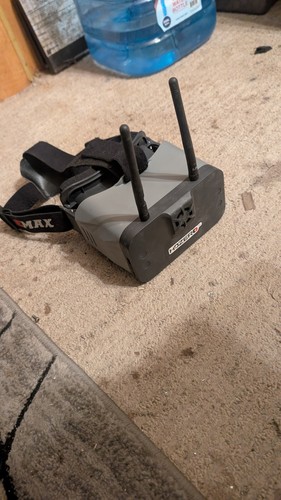 HDZero goggles + VTX
The low-latency digital option. ~22–28ms end-to-end puts it in analog territory while delivering a digital signal. The choice for racing pilots who want digital without DJI latency.
HDZero goggles + VTX
The low-latency digital option. ~22–28ms end-to-end puts it in analog territory while delivering a digital signal. The choice for racing pilots who want digital without DJI latency.
 Analog FPV camera (Foxeer / Runcam)
Foxeer Razer and Runcam Phoenix are the low-latency analog cameras most racing pilots use. Get one tuned for NTSC and minimum shutter delay.
Analog FPV camera (Foxeer / Runcam)
Foxeer Razer and Runcam Phoenix are the low-latency analog cameras most racing pilots use. Get one tuned for NTSC and minimum shutter delay.
 Analog FPV goggles
Fat Shark Dominator or Skyzone SKY04X for analog. These offer the lowest total system latency available. Necessary for competitive racing where every millisecond counts.
Analog FPV goggles
Fat Shark Dominator or Skyzone SKY04X for analog. These offer the lowest total system latency available. Necessary for competitive racing where every millisecond counts.
 Walksnail Avatar kit
Caddx's alternative to DJI O3, with comparable latency and a slightly different image character. Active development and a competitive price point make it worth considering alongside DJI.
Walksnail Avatar kit
Caddx's alternative to DJI O3, with comparable latency and a slightly different image character. Active development and a competitive price point make it worth considering alongside DJI.