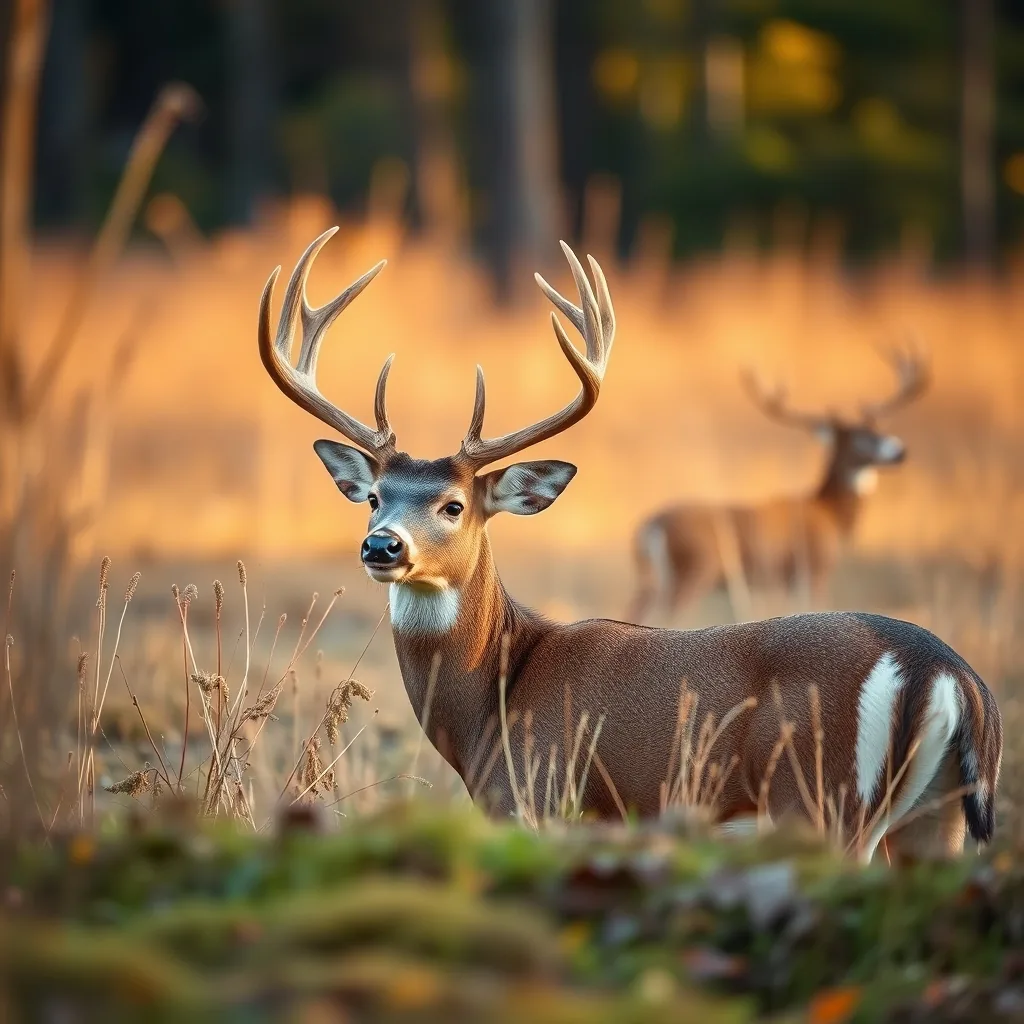
Finding a rub line or a fresh scrape is the kind of discovery that makes hunters want to hang a stand immediately. The instinct is correct — these are genuine indicators of buck activity — but the interpretation matters as much as the find. A rub in September tells you something different than a rub in October. A scrape on a field edge tells you something different than a scrape under a licking branch on an interior trail. Reading the sign correctly changes where you set up and when.
This guide covers what rubs and scrapes actually indicate about buck behavior and timing, and how to use that information to make stand placement decisions rather than just confirming that deer are in the area.
What Rubs Are and What They Indicate
A rub is created when a buck works his antlers against a sapling or small tree, stripping bark and sometimes scarring the wood down to the heartwood. Bucks rub for two primary reasons: velvet removal in late summer and early fall, and scent communication and dominance expression throughout the pre-rut and rut.
Velvet-removal rubs (late August through mid-September)
The first rubs of the season appear when a buck's antlers harden and the velvet dries and begins to peel. Velvet removal rubs are often frantic and scattered — the buck is simply shedding the velvet, not making a deliberate statement. These rubs do not indicate a travel route and have limited stand-placement value. They tell you a buck with at least some antler growth was in the area during daylight, which is worth knowing but is not actionable for stand placement without supporting trail camera data.
Signpost rubs (October onward)
As testosterone levels rise entering October, rubs shift from mechanical necessity to communication behavior. A buck rubbing a tree on a consistent travel corridor is depositing scent from the forehead glands and the preorbital (eye) glands pressed against the wood, creating an olfactory signpost that other deer can read. These rubs are on the travel route the buck is actually using, and the direction of the bark damage tells you which way he was moving — bark is stripped on the side he was facing, so the exposed wood faces toward him and the bark is pushed toward the direction he was traveling.
Rub size matters as a general indicator but is not a reliable individual buck signature. Larger diameter trees are worked by larger, more dominant bucks — a rub on a 6-inch diameter cedar is almost certainly from a mature deer, since younger bucks tend to work smaller saplings. Multiple rubs in a line (a rub line) indicates a travel route, which is more actionable than a single rub in isolation.
Reading freshness
Fresh rubs have bright white or pale yellow exposed wood that may still be moist. The cambium layer (the green inner bark) is visibly bright. Older rubs darken to grey or brown as the exposed wood weathers. In a hunting season, a rub with fully darkened wood may be weeks old; one with fresh white wood may be from the last day or two. Rub lines that show both old and fresh rubs indicate a route that is being used consistently across multiple trips.
What Scrapes Are and What They Indicate
A scrape is a pawed-out oval or circle of bare earth, typically 18 to 36 inches in diameter, almost always located under a licking branch — an overhanging branch at approximately deer head-height that the buck mouths, licks, and rubs his forehead and preorbital glands on before pawing out the ground below. The scrape itself is secondary to the licking branch; the licking branch is the primary communication point, and the pawed ground beneath it confirms a buck worked the site.
Bucks urinate in the scrape as they rub-urinate (urine passed over the tarsal glands on the hocks), leaving a compound scent deposit that does allows other deer to assess the buck's presence, health, and status.
Pre-rut scrapes (late October in most of the eastern US)
Scrape activity peaks in the two to three weeks before the primary breeding window — the period when bucks are beginning to range more widely, checking for the first does to come into estrus. This is often called the pre-rut. Pre-rut scrapes are often visited multiple times, making them more predictable than rut scrapes. A scrape that is being worked actively — fresh pawed earth, a visibly used licking branch with chewed-down growth tips and dried saliva — is being checked by at least one buck on a semi-regular basis.
Not all scrapes are equal. Field-edge scrapes and scrapes in open areas are often made during night movement and worked primarily after dark. Interior scrapes — in woods, along trails, near bedding areas — are more likely to see daylight activity because the buck is traveling his core area and working scrapes opportunistically as he moves.
Rut scrapes (peak breeding)
During peak breeding, scrape activity often drops or becomes erratic. Bucks are following does rather than maintaining signpost routes. An active scrape that suddenly goes cold during mid-November (in most northern states) is not necessarily a sign the buck left the area — it may mean he is locked down with a doe. Scraping often resumes in the post-rut as bucks check for late-cycling does.
Community scrapes
Some scrapes under persistent licking branches are worked by multiple bucks and does over months. These community scrapes accumulate heavy use evidence — deep paw depressions, a heavily used branch, sometimes hair from the forehead rubs. Community scrapes attract multiple deer and are high-value camera locations, but they can make it harder to pattern a specific individual buck based on scrape sign alone.
Stand Placement Based on Rub Sign
A rub line is a directional travel indicator. The practical stand placement question is: where on this travel route does the buck move during legal shooting light?
Identify the destination and origin
Deer move between bedding areas and food sources. A rub line connects somewhere to somewhere. Following the rub line in both directions often reveals a bedding area (thickets, elevated ridges, standing corn, or other thermal and security cover) at one end and a food source (agricultural fields, oak flats, food plots) at the other. The direction of travel, read from the rubs, tells you which way the buck is typically moving at dawn and dusk.
Afternoon stands set up closer to the food source are more productive when you know the buck is traveling from bed to feed in the evening. Morning stands closer to the bedding area intercept bucks returning from night feeding — but only if you can enter without blowing deer out of their beds. Morning access on a tight bedding-area stand is one of the harder logistics in deer hunting.
Transition zones and terrain features
Bucks using a travel route tend to follow terrain features: ridge lines, creek bottoms, property edges, transition lines between timber types. These are the constriction points where a deer following the path of least resistance is funneled through a predictable area. A rub line that intersects with a saddle in a ridge, a creek crossing, or a fence gap is pointing you directly at a high-percentage stand site.
The best rub line stand is not necessarily directly on the densest rubs. It is at the point in the terrain where the rub line narrows to a chokepoint — a location where the terrain forces the buck through a specific area rather than a broad zone where he could pass at any of a hundred points.
Stand Placement Based on Scrape Sign
Scrape hunting strategy depends on whether you are working the pre-rut or the rut, and whether the scrape is an interior scrape or an edge scrape.
Interior scrapes: the actionable ones
An interior scrape along a trail, near bedding, or at a trail intersection is a genuine candidate for a stand. These are worked during movement hours, not exclusively at night. The stand should be set downwind of the scrape at a distance that provides a shot angle on the scrape and on the approach trail. Setting up directly on the scrape is usually too close — you need to be able to draw your bow or shoulder your firearm while the deer is still approaching.
Wind is non-negotiable. Bucks circle downwind of scrapes before committing to them — they approach from downwind to scent-check the scrape before presenting themselves at it. A stand directly downwind of the scrape will be checked by the buck before he steps into the scrape, and he will not commit if he winds you. Set up crosswind or quartering crosswind of the scrape, where your scent cone does not intersect his downwind approach.
Mock scrapes
Creating a mock scrape under an existing licking branch, or hanging an overhanging branch and starting a scrape beneath it, can generate new scrape activity in a location you choose rather than a location a buck chose. This is a legitimate pre-rut setup technique that allows you to place the scrape in a stand-favorable location — one with better wind angles and shooting lanes than where bucks are naturally scraping. Mock scrapes are more effective when started in October before peak rut behavior, giving bucks time to find and incorporate them into their routes.
Field-edge and open-area scrapes
Scrapes in open locations — along field edges, powerlines, forest roads — are typically worked primarily at night. A stand set up directly on a field-edge scrape will often show nocturnal camera activity and no daylight visits. The better strategy for a field-edge scrape hunter is to back off into the timber and intercept the buck on his approach to the field, not wait for him at the scrape itself.
Using Rubs and Scrapes Together
Rubs and scrapes provide complementary information. Rubs show you the route; scrapes show you the behavior. The highest-value stand setups combine both: a stand on a rub line that also has a scrape nearby is positioned on an actual travel route with confirmed buck behavioral activity in the same zone.
A rub line without scrapes is a travel route — the buck is moving through but not spending time. A scrape without a rub line nearby may be in the right zone but without the directional travel data to position a stand at the optimal chokepoint.
Trail cameras resolve the interpretation ambiguity. A camera set on a licking branch above a scrape with a shooting card in the background (which shows time-of-day data alongside the image timestamp) will tell you whether the scrape is being worked during legal light and at which times. Camera data on a scrape that looks high-value based on sign alone often reveals that all activity is nocturnal — saving you from a stand setup that would educate the buck without producing a shot opportunity.
Timing Your Sit: Sign Age and Phase
Sign age and the current behavior phase determine when to sit a stand, not just where.
- Fresh rubs and active scrapes in October: Pre-rut sign in the heart of pre-rut period. This is when to sit interior scrape stands and rub-line chokepoints. The buck is on a semi-predictable pattern.
- Fresh sign but erratic visitation in early to mid-November (most northern states): Rut onset. Bucks are moving more but less predictably. All-day sits near doe concentration areas become more valuable than pattern-based scrape sits. Buck sign is still present but does not reliably indicate where the buck is right now.
- Post-rut sign (late November into December): Secondary rut activity as late-cycling does come into estrus. Buck activity picks back up. Interior scrapes near bedding are again productive. Bucks are recovering from the rut and feeding heavily.
- Old rubs and cold scrapes in-season: Sign that was made early and has not been refreshed since. Worth noting for next-year scouting. Not worth hanging a stand on during the current season without supporting current evidence from trail cameras or fresh tracks.
What Rubs and Scrapes Cannot Tell You
Sign reading has limits worth stating plainly:
- Rubs cannot reliably identify a specific individual buck. Rub diameter is a general indicator of antler mass, not a fingerprint. Multiple bucks may use the same travel corridor and make similar-sized rubs.
- Scrapes do not guarantee the maker will return during daylight. Even an active interior scrape may be visited exclusively at night depending on hunting pressure, moon phase, weather, and buck bedding location.
- A high density of sign does not mean the area is better for hunting. A heavily rubbed area may be a buck's core zone where he feels secure and moves predictably — or it may be the area he moves through quickly en route from bedding to feeding. Dense sign needs context about terrain and adjacent land use to interpret correctly.
- Scrape activity timing varies by region and year. Peak scraping in Georgia is several weeks later than in Michigan. A generalized timeline is a starting framework, not a rule. Local observation and trail camera data calibrates the general model to your specific landscape.
The Honest Summary
Rubs tell you about travel routes and buck size class. Scrapes tell you about phase-specific behavior, communication points, and whether a buck is spending time in the area. Neither alone is sufficient for a complete stand placement decision; together with terrain reading and trail camera confirmation, they provide enough information to identify the stands worth committing to.
The decision to hang a stand based on ground sign should pass two tests: the sign tells you the deer is moving during legal light (or you have reason to believe it could), and the terrain allows you to set up with a favorable wind that does not intersect the buck's downwind approach. Ground sign that fails either test is better noted for next-year scouting than hunted aggressively this season.
Gear actually worth buying
Smart eBay searches we'd start with ourselves. We earn a small commission on qualifying sales through these links; the price you pay is the same whether you use them or go direct to eBay. Full disclosure.
 Cellular trail cameraA cellular camera on a licking branch sends you images without a site visit. No entry pressure on a scrape you're actively hunting.
 Deer grunt tubeA grunt call near an active scrape during the pre-rut can pull a buck that is circling downwind rather than committing to the scrape directly.
 Scrape-specific deer scentTarsal gland or buck urine scent applied to a mock scrape or active scrape site adds olfactory traffic without your own scent at the site.
 Lightweight hang-on treestandScouting-based hunting requires flexibility. A lightweight hang-on stand you can relocate without help lets you respond to fresh sign quickly.
Topo / aerial map toolsTopographic and aerial maps let you identify saddles, creek crossings, and terrain funnels on paper before you ever walk the property — saves scouting time.
Lightweight hang-on treestandScouting-based hunting requires flexibility. A lightweight hang-on stand you can relocate without help lets you respond to fresh sign quickly.
Topo / aerial map toolsTopographic and aerial maps let you identify saddles, creek crossings, and terrain funnels on paper before you ever walk the property — saves scouting time.