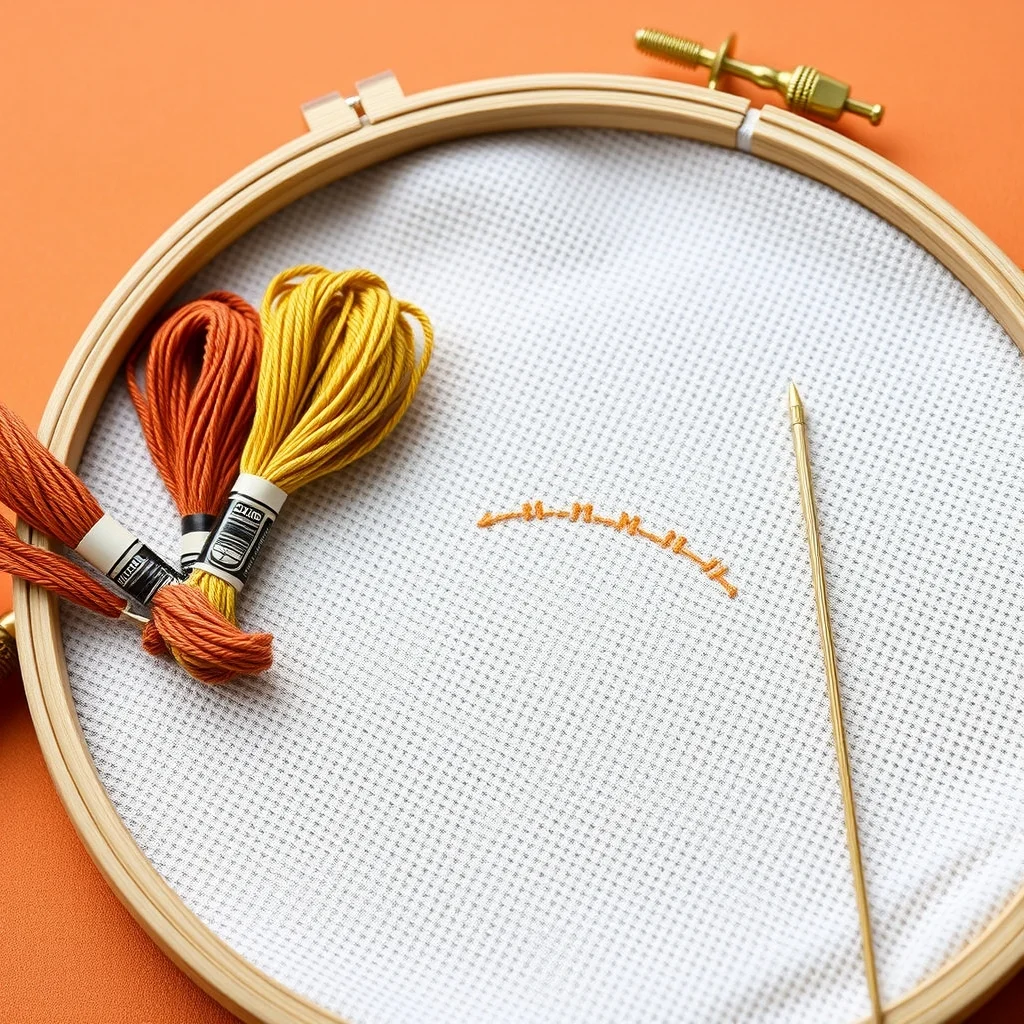
Fabric count: the number that controls everything
Cross-stitch fabric is sold by "count" — the number of holes (or stitches) per inch. A 14-count fabric has 14 holes per linear inch; an 18-count fabric has 18. Higher count means smaller stitches, more detail possible in a given physical area, and more demanding visual work.
The practical implication: a 100×100 stitch design stitched on 14-count Aida produces a roughly 18×18 cm (7×7 inch) finished piece. The same design on 18-count produces a roughly 14×14 cm (5.5×5.5 inch) piece. On 28-count evenweave stitched over two threads (which is the typical method), the finished size matches 14-count but the fabric texture is finer and smoother.
| Count | Stitches/inch | Typical use | Needle size |
|---|---|---|---|
| 11-count | 11 | Large decorative pieces, beginning children's kits | Size 22–24 |
| 14-count | 14 | Standard adult kits, most published patterns | Size 24–26 |
| 18-count | 18 | Finer detail, smaller finished size | Size 26–28 |
| 28-count evenweave | 28 (stitched over 2) | Equivalent to 14-count but softer hand | Size 24–26 |
| 32-count linen | 32 (stitched over 2) | Heirloom and miniature work | Size 26–28 |
Aida vs evenweave vs linen
Aida cloth is the most common cross-stitch fabric. It's woven with distinct, countable squares formed by groups of threads, making each hole clearly defined. The open-weave structure guides the needle naturally into the correct holes without counting individual threads. Aida is available in 11, 14, 16, 18, and 20-count versions and is the right choice for beginners and most kit projects.
Evenweave is a plain-weave fabric where threads are woven individually. Unlike Aida, there's no grouped-thread structure — you count individual threads and typically stitch over two threads per stitch. A 28-count evenweave stitched over two threads produces the same stitch density as 14-count Aida, but the fabric drapes and feels different (softer and more flexible). Many stitchers prefer evenweave for framed pieces because it blocks (stretches flat) more cleanly.
Linen is a premium evenweave variant made from flax fiber. It has slight natural slubs (thickness variations) that give finished pieces a hand-woven character, but the irregular weave makes exact thread counting harder than Aida. Linen is typically used for heirloom pieces where the fabric's character is part of the design intent.
Floss: DMC, Anchor, and what actually matters
DMC and Anchor are the two dominant floss standards, and almost all published cross-stitch patterns list colors in DMC numbering. DMC is the de facto standard — if you're buying a kit or working from a downloaded pattern, the color codes are almost certainly DMC numbers. Anchor and DMC colors don't directly correspond to each other, so mixing brands on a single piece creates visible color inconsistencies.
Floss construction and strand count
Standard 6-strand cotton floss is sold in 8-meter skeins. For most cross-stitch on 14-count Aida, you work with 2 strands. On 18-count or higher, 1 strand is typical. On 11-count or for chunky coverage, 3 strands. The pattern you're working from should specify the strand count; if not, 2 strands is the safe default on 14-count.
Colorfastness and dye consistency
Generic "200-color assortment" floss sets from unbranded sources typically have inconsistent dye lots — shades labeled with the same color number can vary skein to skein, and some colors run when the finished piece is washed. If you plan to frame and protect your work it may never be washed, which reduces this risk. If the piece will be used (pillows, clothing, table linens), invest in branded DMC or Anchor floss.
Shopping for cross-stitch supplies? Browse current eBay listings → (we earn a small commission; your price is unchanged).
Hoops vs frames: tension and ergonomics
An embroidery hoop holds fabric under tension while you stitch, which keeps stitches even and prevents puckering. A frame (scroll frame or stretcher bar frame) holds fabric flat at all four edges without the circular compression of a hoop.
Hoops
Round hoops with a screw tension adjustment are the most common tool. Diameters from 5 to 10 inches cover the majority of sampler and kit designs. A 7-inch hoop is a useful starting size — large enough for most intermediate designs but comfortable to hold. The key issue with hoops is that the inner ring leaves a compression ring in the fabric; removing the hoop between sessions and covering work-in-progress with tissue paper reduces this.
Plastic hoops (specifically spring-tension or gripper designs) maintain tension more consistently than inexpensive wood hoops. The $3 wooden hoop from a craft store works but requires frequent re-tensioning as the screw mechanism loosens during use.
Scroll frames and stretcher bars
Scroll frames attach fabric along two parallel rollers at top and bottom, letting you advance the work area as you complete sections. They're well-suited for large pieces (over 40×40 cm) where repositioning a hoop repeatedly across a large canvas would leave many compression marks. Stretcher bar frames are rigid wooden frames over which fabric is pinned or stapled taut — used primarily for very large display pieces and heirloom work.
Needles: the overlooked spec
Tapestry needles have a blunt tip and a large eye — the blunt tip pushes through the fabric hole without splitting threads, and the large eye accommodates 2–3 strands of floss. For 14-count Aida with 2 strands, a size 24 or 26 tapestry needle is typical. Larger needles (size 22) work for 11-count fabric with 3 strands. Smaller needles (size 28) are used for 18-count work with 1 strand.
Gold-coated needles are sometimes advertised as gliding more smoothly through fabric. The functional difference is minimal on modern Aida; it matters more on tightly woven linens where needle resistance is higher.
Evaluating starter kits
A well-specified starter kit lists: fabric count, finished design dimensions, DMC color list, and needle size. Kits that don't specify fabric count are buying a gamble — many budget kits ship 11-count fabric (which feels easy but produces coarse results) while the product photography suggests a finer, more detailed piece.
- Fabric count should be listed explicitly, not just "high-quality fabric."
- Floss brand or at minimum a DMC color list confirms the pattern was designed to a standard.
- Stitch count (e.g., 120W × 90H) tells you the actual complexity of the design.
- Pattern format — printed on paper or printed directly on the canvas? Canvas printing makes the work easier but can bleed color into the fabric behind lighter stitches.
- Hoop included or not? Many kits omit the hoop; verify before buying.
Shop cross-stitch supplies on eBay
Fabric, floss, hoops, and kits. We earn a small commission on qualifying sales; your price is unchanged. Full disclosure.
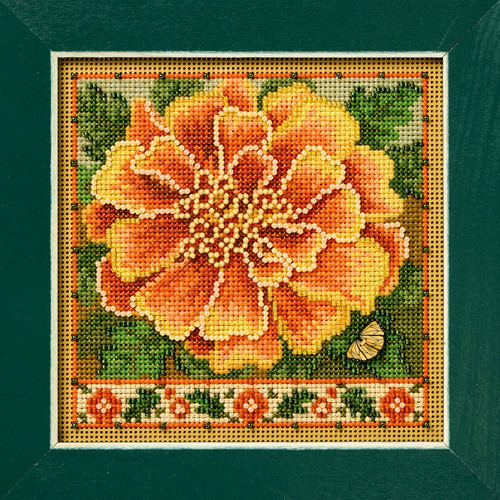 Cross stitch kit
Complete kits with pre-sorted floss and printed pattern. Check the listing for fabric count and stitch count before purchasing.
View on eBay →
Cross stitch kit
Complete kits with pre-sorted floss and printed pattern. Check the listing for fabric count and stitch count before purchasing.
View on eBay →
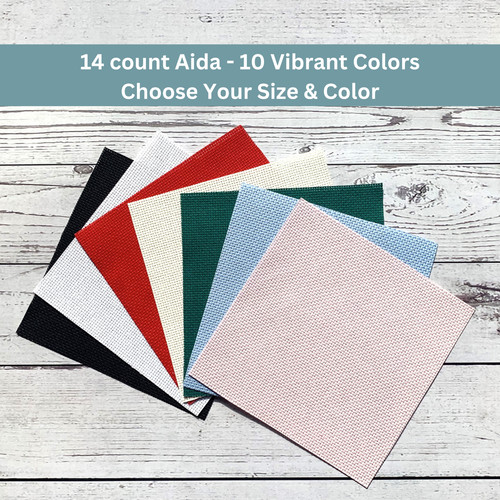 Aida cloth 14 count
The standard beginner and intermediate fabric. White and antique white are versatile for most patterns. Available in sheets and by the yard.
View on eBay →
Aida cloth 14 count
The standard beginner and intermediate fabric. White and antique white are versatile for most patterns. Available in sheets and by the yard.
View on eBay →
 Embroidery floss set
DMC-numbered sets ensure color consistency with published patterns. Full 447-color sets let you source any published chart without substitution.
View on eBay →
Embroidery floss set
DMC-numbered sets ensure color consistency with published patterns. Full 447-color sets let you source any published chart without substitution.
View on eBay →
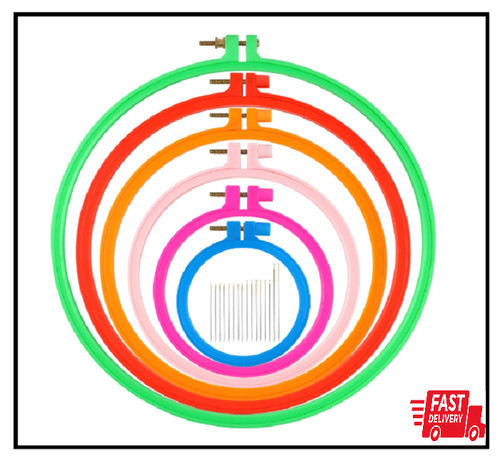 Cross stitch hoop
7–10 inch hoops cover most sampler and kit designs. Plastic or quality-wood hoops maintain tension better than budget wood versions during long sessions.
View on eBay →
Cross stitch hoop
7–10 inch hoops cover most sampler and kit designs. Plastic or quality-wood hoops maintain tension better than budget wood versions during long sessions.
View on eBay →
 Cross stitch pattern
Printed charts with full DMC color keys. Look for patterns that list stitch count and recommended fabric count to confirm the finished size before you buy fabric.
View on eBay →
Cross stitch pattern
Printed charts with full DMC color keys. Look for patterns that list stitch count and recommended fabric count to confirm the finished size before you buy fabric.
View on eBay →