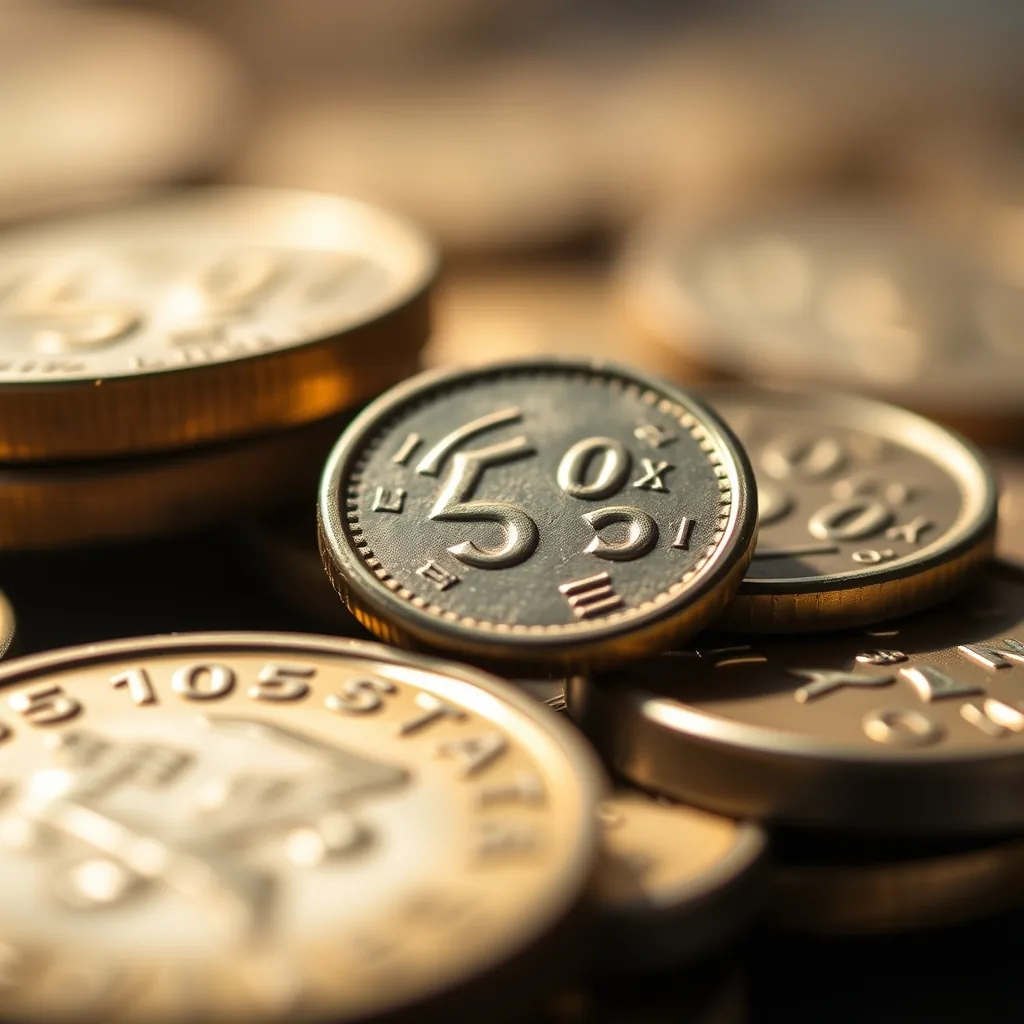
A genuine No-S proof coin can be worth thousands of dollars. A coin with its S mintmark filed off is worth face value. Under a naked eye, both look like a proof coin with no mintmark. Under a 10x loupe, they tell completely different stories — if you know where to look and what you're comparing against.
This article covers how mintmarks are produced, which No-S varieties actually exist and why, and the specific diagnostic signs that distinguish a genuine mint error from an altered coin. We're focusing on the United States proof series from the 1960s through 1990s, where the most valuable No-S errors occur and where the most counterfeiting pressure exists.
How Mintmarks Are Produced
Understanding why a genuine No-S looks different from a removed S requires understanding how mintmarks get onto coins in the first place. The process changed significantly in 1990, and the change matters for authentication.
Hand-Punched Mintmarks (Pre-1990)
Before 1990, mintmarks were added to working dies individually by hand. A mintmark punch — a steel tool with the letter in relief — was hammered into the working die's field. This process was done one die at a time, after the hub design had been impressed but before the die was hardened.
Hand punching introduced natural variation: mintmarks could be off-center, tilted, weakly struck, doubled (if the punch slipped), or accidentally omitted. The 1990 date is the relevant threshold — if a coin was struck before that year, any No-S proof could plausibly result from a die that was accidentally sent to the press without having its S applied.
Hub-Punched Mintmarks (1990 and After)
From 1990 onward, mintmarks were added to the master die (or hub) rather than to individual working dies. This means every working die made from that hub carries the mintmark, and genuine No-S errors became essentially impossible for modern-era coins. Authentication questions about No-S proof coins almost exclusively involve coins dated before 1990.
The No-S Proof Series: Which Coins Actually Exist
Several genuine No-S proof varieties are recognized in standard catalogs. The most well-known:
| Coin | Year(s) | Estimated Surviving Population | Approximate Value (Fine-Proof) |
|---|---|---|---|
| Lincoln cent, No S | 1968, 1969, 1970, 1971, 1983 | Varies; 1983 ~100 known | $500–$15,000+ depending on year and grade |
| Roosevelt dime, No S | 1968, 1970, 1975, 1983 | Varies; 1975 ~2 known | $500–$10,000+ |
| Jefferson nickel, No S | 1971, 1983 | Varies | $500–$3,500+ |
| Washington quarter, No S | 1970 | ~36 known | $10,000–$30,000+ |
Values are approximate and fluctuate with market conditions. The 1975 Roosevelt No-S dime is particularly rare — only two have been authenticated — making any purported example highly suspicious. The 1983 Lincoln No-S cent, with roughly 100 specimens known, is the most commonly encountered.
What a Genuine No-S Looks Like Under 10x
The field of a coin is the flat background area between the raised design elements. On a proof coin, the field is mirror-polished to a high reflective sheen by the polished die surface. On a genuine No-S coin, the field in the mintmark area looks exactly like the rest of the field:
- Uniform mirror surface: the die polish lines, if visible under magnification, run continuously and uniformly across the entire field, including the area where the mintmark would be on an S coin
- No interruption in the die flow lines: the radial die polish marks (cartwheel luster on proofs) continue uninterrupted through the mintmark area
- No localized texture change: the reflectivity is consistent — no dull spot, no area of different micro-texture within the expected mintmark zone
- Sharp field-to-design transitions: the edges where raised design elements meet the field are crisp and undisturbed throughout the coin
In essence, the genuine No-S coin looks like a proof coin that never had a mintmark. The die it was struck from never received a punch, so there is no evidence of a mintmark in the die surface and therefore none in the coin surface.
What a Removed S Looks Like Under 10x
Removing a mintmark from a coin requires physically altering the coin's surface. Metal must be removed from the field in the area of the S. No matter how carefully done, this leaves diagnostic traces that a 10x loupe reveals.
Tooling and Filing Marks
The most common removal method is filing or polishing the field with abrasives. Under magnification this produces:
- Parallel scratches: fine, directional scratches in the mintmark area that run in the direction of the filing stroke; these do not match the cartwheel die polish lines of the surrounding field
- Non-radial texture: proof die polish marks radiate outward from the coin's center; filing marks typically run in a fixed direction because the person is moving the tool in one direction
- A localized matte or satin finish: removing metal disturbs the mirror polish; even after re-polishing, the treated area will have subtly different reflectivity under raking light (light held at a low angle to the coin surface)
Recessed or Raised Areas
Removing metal creates a depression in the field (or, if poorly done with a graver, raised burrs). On genuine No-S coins, the field is flat and continuous at the level of the original die surface. On a removed-S coin:
- The treated area may be slightly recessed compared to surrounding field
- Under raking light, the depression catches and holds shadow differently from the flat field
- At exactly the right angle, you can see the outline of the original letter as a ghost — a slight tonal variation in the field corresponding to the S's shape
Ghost Image of the Letter
Even after competent removal work, the base metal in the area where the mintmark was struck is work-hardened differently from the surrounding field. The S punch compressed the metal grain structure. After removal and re-polishing, that area may still reflect light at a fractionally different angle, leaving a faint ghost of the letter visible under specific lighting conditions. This is one of the most reliable authentication signs and requires only a 10x loupe and a good light source.
The Raking Light Technique
Most collectors examine coins under overhead light, which minimizes the visibility of surface alterations. Graders and authenticators use raking light: hold the light source (a small flashlight or a focused lamp) nearly parallel to the coin's surface, at a low angle of perhaps 5–15 degrees from the plane of the coin.
Under raking light, any disturbance in the mirror field becomes dramatically visible. The genuine No-S field is featureless in the mintmark zone — just clean metal. A removed S reveals itself as a region of different texture, with the scratches, ghost impressions, or flatness changes jumping out in sharp relief.
Practice this technique on common coins first. Examine a known good 1970-S proof cent under raking light and see what the S looks like — the raised letter's base meeting the field, the die-polish around it. Then examine a circulated coin with the same date and look at wear patterns. The wear on genuine circulated coins occurs on high points first (portrait, design relief) and does not touch the field; an altered proof field will show alteration regardless of where the design wear falls.
Other Mintmark Alteration Types
Removed S is one of two directions of mintmark fraud. Added mintmarks are the other:
Added Mintmarks
A common coin (say, a 1916-P Mercury dime) gets an S or D added to simulate a rare variety (the 1916-D is one of the most valuable Mercury dimes). Added marks are applied by soldering, gluing, or laser-welding a miniature S onto the field. Under 10x:
- The mark sits slightly proud of the field — look for a shadow at its base when using raking light
- The letter's surface texture differs from genuine mintmarks — cast or machined marks lack the flow lines characteristic of a die-struck letter
- The boundary between the added mark and the field may show a thin seam or adhesive residue
- The mintmark position may be off from known die-position data (numismatic references document exact mintmark positions for major varieties)
Mintmark Repositioning
A rarer and more sophisticated alteration: the original mintmark is removed and a different mintmark is added (e.g., D replaced with S to simulate a more valuable variety). This combines both types of alteration evidence — the field shows removal marks, and the new mark shows addition evidence.
Reference Tools for Authentication
You cannot authenticate a potential No-S coin in isolation. You need comparison data:
- PCGS CoinFacts and NGC Coin Explorer: both have population data showing how many No-S specimens have been authenticated for each variety
- The Red Book (A Guide Book of United States Coins): documents known varieties and rough values by grade
- Cherrypicker's Guide to Rare Die Varieties: the specialist reference for varieties, with die-position data for mintmarks that helps identify genuine vs. added marks
- CONECA (Combined Organizations of Numismatic Error Collectors of America): maintains the authoritative list of recognized error varieties
If you believe you've found a genuine No-S proof, the most valuable step is immediate submission to PCGS or NGC before attempting to sell or even show the coin extensively. Handling, cleaning, or storing improperly can reduce value significantly. Submit in the original proof packaging if you have it; inclusion with original government packaging increases confidence and value.
Coin authentication tools worth buying
What you need to do what this article describes. Full disclosure.
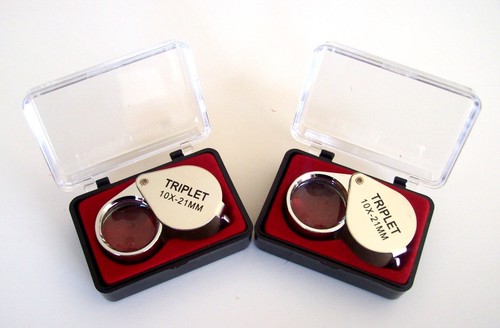 10x triplet loupe
A triplet-lens 10x loupe gives clear edge-to-edge magnification without the chromatic distortion of cheaper doublet lenses. Standard tool for coin authentication and mintmark examination.
10x triplet loupe
A triplet-lens 10x loupe gives clear edge-to-edge magnification without the chromatic distortion of cheaper doublet lenses. Standard tool for coin authentication and mintmark examination.
 USB digital microscope (40–200x)
For detailed mintmark and surface examination, a USB microscope lets you view the field under raking light at high magnification and capture images for comparison.
USB digital microscope (40–200x)
For detailed mintmark and surface examination, a USB microscope lets you view the field under raking light at high magnification and capture images for comparison.
 Red Book (A Guide Book of US Coins)
The standard reference for US coin varieties, mintmarks, and approximate values. Updated annually; includes No-S proof variety listings and value estimates by grade.
Red Book (A Guide Book of US Coins)
The standard reference for US coin varieties, mintmarks, and approximate values. Updated annually; includes No-S proof variety listings and value estimates by grade.
 Cherrypicker's Guide to Rare Die Varieties
The specialist variety reference. Documents die-position data for mintmarks on every major variety — essential for distinguishing genuine mintmark positions from added marks.
Cherrypicker's Guide to Rare Die Varieties
The specialist variety reference. Documents die-position data for mintmarks on every major variety — essential for distinguishing genuine mintmark positions from added marks.
 Slab storage boxes
PCGS and NGC slabs fit standard long boxes. If you're buying certified No-S coins, proper slab storage protects both the coin and the holder from environmental damage.
Slab storage boxes
PCGS and NGC slabs fit standard long boxes. If you're buying certified No-S coins, proper slab storage protects both the coin and the holder from environmental damage.