Development time ratio — DTR — is the percentage of total roast time that occurs after first crack begins. A 10-minute roast where first crack starts at 8:30 and you drop at 10:00 has a DTR of 15%: 90 seconds out of 600 total. That's the arithmetic. The harder question is what it means.
DTR is a proxy for how much structural and flavor development happened after the bean began its exothermic phase. It's not a target to copy from someone else's profile; it's a diagnostic tool. The same DTR on two different coffees, or on two different roasters, can produce completely different results. What it will tell you is whether your development time is proportionate to your total roast time — and that proportion matters a lot.
What First Crack Is (and Isn't)
First crack is the audible popping that happens when the steam and CO2 pressure inside the bean cell walls exceeds what the structure can contain and the walls fracture. It's not a single event — it's a rolling series of pops that typically starts with a few isolated cracks and builds to a rapid volley before tapering off.
The bean temperature at first crack varies with roaster type and probe placement, but for most drum roasters it falls somewhere between 385°F (196°C) and 410°F (210°C) bean probe. That range is wide enough to be nearly useless as an absolute number. What matters is the behavior: the exothermic release during crack means the beans are producing their own heat, and your roaster's heat input needs to be managed accordingly.
A common mistake at first crack is dropping heat too aggressively. Reducing the flame or airflow sharply to avoid barreling past light roast risks a "stall" — the temperature rise slows dramatically, the crack drags on too long, and you get baked, flat-tasting coffee. The bean still needs some momentum to develop. The skill is in how much momentum, not in eliminating it.
How to Calculate DTR
DTR = (time from start of first crack to drop) ÷ (total roast time from charge to drop) × 100
The ambiguity is in "start of first crack." Some roasters count from the first audible pop. Others wait until the crack is clearly rolling (the dense volley phase). Be consistent with whichever you choose — the DTR number only means something across your own batch history, not as an absolute comparison to numbers from other roasters who may define the start differently.
If you're logging with software like Artisan, it marks first crack as a manually logged event (you press a button when you hear it). Your consistency in marking that moment is what makes DTR useful over many batches.
What DTR Range Actually Means
Research by coffee professionals and published profiles from specialty roasters converge on a rough DTR range of 20–25% as a target for light to medium roasts on most washed coffees. That said, this range comes with significant caveats.
| DTR | What it typically produces | When it might be right |
|---|---|---|
| Under 15% | Underdeveloped: thin, grassy, astringent, flat sweetness | Rarely intentional; sign of a stall or too-fast total roast |
| 15–20% | Lightly developed: high acidity, delicate, more origin character | Some naturals and very high-quality washed coffees where brightness is the goal |
| 20–25% | Well-developed: balanced acidity and sweetness, clean finish | Most specialty washed single-origins at light to medium roast |
| 25–30% | Roast-forward development: richer body, reduced brightness, caramel notes emerge | Espresso blends, naturals with heavy fruit, medium roasts targeting broader audience |
| Over 35% | Roast character dominates: dark roast, low origin character | Intentional dark roast; also the result of a slow, drifting post-crack phase |
Notice that "20–25% is good" assumes the total roast time is reasonable. A 20% DTR on a 6-minute roast is 72 seconds of development after first crack. A 20% DTR on a 14-minute roast is 168 seconds. The absolute development time — in actual seconds — matters alongside the ratio.
The Total Roast Time Problem
DTR becomes misleading when total roast time is outside a normal range. A very fast roast (under 7 minutes for a standard 200–250g batch) doesn't give the bean enough time to develop internally regardless of what happens after first crack. A very slow roast (over 13–14 minutes) typically bakes the coffee even if the DTR percentage looks fine, because extended time at intermediate temperatures causes flavor degradation before first crack ever arrives.
The practical range for most home and small-batch roasters on batches of 200–500g:
- Total roast time: 8–12 minutes
- Time to first crack: typically 7–9 minutes of that
- Development time: 90–150 seconds (absolute) with DTR between 18–25%
These numbers are for drum roasters. Fluid-bed roasters (hot air popcorn-popper style) run significantly faster and the absolute times above don't apply. The ratio principle still does.
DTR by Coffee Type
Washed / wet-processed coffees
Washed coffees show origin character most clearly and are most sensitive to underdevelopment. They benefit from DTRs in the 20–25% range, sometimes nudging toward 22–26% if the coffee has particularly high density (high-grown Central Americans, for instance). Underdeveloped washed coffees taste like bright-but-empty: aggressive acidity with no sweetness behind it.
Natural / dry-processed coffees
Natural-process coffees carry more residual sugar and fruit character from processing. They're more forgiving at lower DTRs because the sweetness is partially in the bean before roasting starts. A natural at 18% DTR may taste better than a washed coffee at the same ratio. Many natural roasters pull slightly shorter development times intentionally to preserve fruit volatiles that disappear with extended heat exposure.
Honey / pulped natural
Honey-processed coffees fall between washed and natural in most profile parameters. They respond well to DTRs similar to washed coffees (20–24%) but are somewhat more forgiving. Pay more attention to total roast time and rate of rise into crack than to DTR alone for these.
Robusta and high-density blending components
Robusta has a denser structure than arabica and a higher first crack temperature. It typically needs more development time both in absolute seconds and as a DTR percentage. Profiles that work for washed arabica will underdevelop robusta. If you're roasting robusta-containing blends, add 15–20% more absolute development time as a starting point.
What DTR Can't Tell You
DTR tells you the shape of the development phase relative to total roast time. It tells you nothing about:
- Rate of rise going into first crack. A fast rate of rise (above 20°F/minute on the bean probe) going into crack means the bean is carrying momentum into development, which affects how much heat it needs to continue. A flattening rate of rise approaching crack is a warning sign for a baked profile ahead.
- Bean temperature at drop. Two roasters can hit the same DTR and drop at very different temperatures. Color and temperature at drop are separate variables.
- Charge temperature and Maillard phase development. The early part of the roast — from charge through Maillard browning — builds the precursors that development time transforms. A poorly managed Maillard phase produces baked coffee no matter what DTR you hit at the end.
- Roast color. DTR and color are correlated but not interchangeable. Measure color with a colorimeter or color tiles if you need to hit a specific Agtron or SCA color spec.
Using DTR as a Diagnostic Tool
The most practical use of DTR for home and small-batch roasters is batch-to-batch consistency. Once you have a profile that produces a coffee you like, logging first crack time and drop time on every batch lets you compare DTR across batches and identify drift.
If your DTR is consistent but the coffee tastes different batch to batch, the variable is earlier in the roast — charge temperature, drying phase duration, or rate of rise into crack. DTR being stable rules it out as the cause.
If your DTR varies significantly batch-to-batch on the same bean, you're getting inconsistent first crack starts — possibly because the charge temperature varies, or because you're marking first crack at different points in the rolling phase. Fix the marking consistency first, then look at whether the profile itself needs adjustment.
Adjusting DTR in Practice
To increase DTR: extend time after first crack, either by reducing heat slightly to slow the rate of rise (without stalling), or simply by dropping later. The risk is over-development — watch color and aroma. The smell shifts from bright/floral to caramel/bread as development extends.
To decrease DTR: either drop sooner after crack starts, or increase heat through the Maillard phase so the bean arrives at first crack with more momentum and the crack progresses faster. The second approach is more controlled; the first risks underdevelopment.
When adjusting DTR, change one variable at a time and log the result. Total roast time, charge temperature, and airflow all interact. Changing two things in the same batch makes it impossible to know which variable produced the result.
Roasting gear actually worth buying
What you actually need to log and improve your roast profiles. Full disclosure.
 Home drum roaster
A drum roaster gives you the consistent heat contact needed to actually use DTR as a repeatable metric. Fluid-bed works too but has different timing dynamics.
Home drum roaster
A drum roaster gives you the consistent heat contact needed to actually use DTR as a repeatable metric. Fluid-bed works too but has different timing dynamics.
 Thermocouple / bean probe
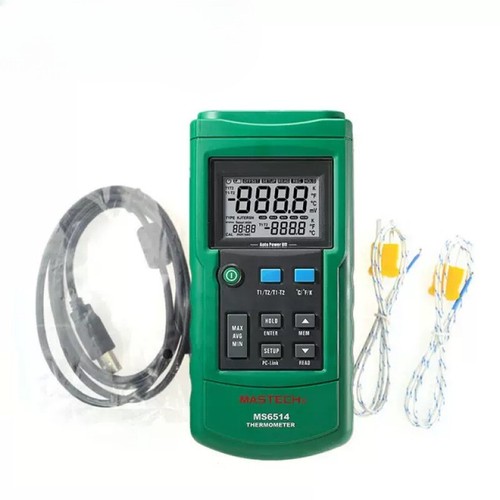
A K-type thermocouple with a USB interface that feeds Artisan logging software. Without temperature data, DTR tracking is blind.
Thermocouple / bean probe
A K-type thermocouple with a USB interface that feeds Artisan logging software. Without temperature data, DTR tracking is blind.
 Green coffee sample packs
Practicing DTR adjustment requires running multiple batches. Sample packs in 1–2 lb sizes let you dial in a profile without committing to a large bag of one origin.
Roast color reference tiles
Visual color matching tools calibrated to the SCA/Agtron scale. DTR and color are correlated but not the same — track both.
Green coffee sample packs
Practicing DTR adjustment requires running multiple batches. Sample packs in 1–2 lb sizes let you dial in a profile without committing to a large bag of one origin.
Roast color reference tiles
Visual color matching tools calibrated to the SCA/Agtron scale. DTR and color are correlated but not the same — track both.
 Cooling tray with fan
Fast cooling after the drop stops development and locks the roast. Inadequate cooling means the roast continues past where you intended to stop it.
Cooling tray with fan
Fast cooling after the drop stops development and locks the roast. Inadequate cooling means the roast continues past where you intended to stop it.