
"Numbers-matching" is one of the most inflated terms in classic car collecting. A seller calls a car numbers-matching and means something different than a buyer does, which leads to real money changing hands under a misunderstanding. This guide lays out what the term means specifically — not as a marketing phrase but as a mechanical and documentary claim — and what it does and does not imply about a car's restoration history or current condition.
What Numbers-Matching Actually Means
A numbers-matching car is one in which the major driveline components — specifically the engine, transmission, and rear axle — carry identification stampings that can be cross-referenced to the vehicle identification number (VIN) and build documentation, confirming they were installed at the factory when the car was assembled.
The concept exists because classic car values depend heavily on originality. A 1969 Camaro Z/28 with its original 302 DZ engine is worth significantly more than the same body with a 302 that was installed later, even if the replacement engine is mechanically superior. The matching numbers confirm you have the actual car the factory built, not a shell with a similar engine dropped in later.
Three components carry the core stamping data that defines matching-numbers status:
- Engine block: Carries a partial VIN stamp on a machined pad — typically on the front passenger side of the block, below the cylinder head. The partial VIN matches the last six to eight digits of the car's full VIN. There is also a separate casting number on the block that identifies the block's production specifications, and a date code that confirms the block was cast before the car was assembled (a block cast after the vehicle assembly date cannot be factory original).
- Transmission: Manual transmissions carry a date code and sometimes a partial VIN. Automatics carry a transmission ID tag on the side cover or case. Date codes here must also precede the vehicle assembly date.
- Rear axle (differential): Carries a date code and often a gear ratio code. Less scrutinized than the engine but part of a complete numbers evaluation at judged shows.
A car is genuinely numbers-matching when all three of those components can be documented as factory-installed through matching stampings and date codes. If any one of them is a replacement, the car is not a numbers-matching car — it may be an excellent, well-restored car with a correct replacement component, but it is not numbers-matching.
The Casting Number vs the Partial VIN Stamp
This is where a lot of confusion enters. Engine blocks carry two different identifiers, and they mean different things.
The casting number identifies what the block is — its design, displacement, and intended application. A 302 small-block Chevy from 1969 has a specific casting number shared by every 302 block made that year for that application. The casting number tells you the block is the right type of engine for the car. It does not tell you this specific block came with this specific car.
The partial VIN stamp is different. It is stamped on the block at the factory after casting, during the assembly process, and it ties that specific block to the specific vehicle being assembled. This is what defines matching numbers. A block with the correct casting number but no partial VIN stamp — or a partial VIN stamp that does not match the car — is a correct replacement block, not an original block.
Some engines, particularly high-value options like the Corvette L88 or the Z/28 DZ 302, were also stamped with a "suffix code" that identifies the engine option package (horsepower rating, intake manifold, compression ratio). These suffix codes are another layer of authentication that judges and sophisticated buyers check. An engine with the right partial VIN but the wrong suffix code — perhaps from a low-performance application — raises questions about whether the original engine was replaced and the block was re-stamped, which does happen.
What the Trim Tag (Cowl Tag) Tells You
The trim tag — often called the cowl tag or data plate — is a stamped metal tag attached to the firewall or cowl area. It is not part of the engine matching-numbers evaluation, but it is the primary source document for the car's factory-ordered specifications. On most American muscle cars from the 1960s and 1970s, it records:
- Body style and model: The specific body configuration — coupe, convertible, fastback — confirmed against the VIN.
- Paint code: The factory exterior color code. This is what a show judge uses to verify the car is wearing its original color or a correct repaint. A car with a different exterior color and no documentation of a factory or dealer color change has an unresolved question.
- Interior trim code: Seat color, material (standard vinyl, bucket seats, leather where offered), and carpet color. A car with its original interior or a documented correct replacement interior shows the trim code matching the actual interior.
- Build date: The week and plant the car was assembled. This is cross-referenced against component date codes. A block cast in the sixth week of 1969 in a car assembled in the fourth week of 1969 is impossible — that block cannot be factory original.
- Option codes: Specific factory-installed options, which varies by make. GM cars record option codes; Ford and Chrysler use different documentation formats. These codes confirm whether the car left the factory with a specific engine option, transmission, axle ratio, or trim package.
The trim tag is not replaceable — a missing or damaged trim tag is a significant deduction at any judged show and a credibility question in private sales. A tag that shows evidence of modification or replacement removes the primary source document for the car's factory build specification.
Broadcast Sheet and Protect-O-Plate: Additional Documentation
Some cars still have their original broadcast sheet — the assembly plant production document that traveled with the car through the assembly line and was sometimes hidden in the seat cushion or under the carpet. A surviving broadcast sheet is the highest-level documentation of factory build spec, listing every option in manufacturing language. Finding one is genuinely valuable and confirming it against the trim tag and VIN is the gold standard for authentication.
For GM cars from the late 1960s through mid-1970s, the Protect-O-Plate — the warranty card — is another period document that records the car's original dealer, delivery date, and some build data. These are secondary to the trim tag and broadcast sheet but add to a complete documentation file.
Where Restoration Can Deviate Without Misrepresenting the Car
A numbers-matching car is not necessarily an all-original car. These are different claims. All-original means every component on the car is the factory-installed part. Numbers-matching means the major driveline components are factory original. The distinction matters because restoration always involves some deviation from factory condition, and most buyers understand this.
Components that can be replaced without affecting matching-numbers status
- Exterior sheet metal (fenders, hood, doors, quarter panels) — these carry no stampings that define matching-numbers. Replacing rusted or damaged body panels does not affect the matching status of the driveline.
- Interior trim — seats, carpet, headliner, door panels can all be replaced with correct-pattern reproductions. The trim tag records the original specs so the replacement can be authenticated as correct.
- Suspension and steering components — control arms, spindles, springs, shocks, tie rods. These are service items. Replacing them with correct-specification parts is expected in a restored car.
- Electrical components — wiring harnesses, switches, gauges. Originals deteriorate. Correctly specified reproductions are acceptable for restoration.
- Engine ancillaries — carburetor, distributor, alternator, water pump, power steering pump. These carry their own date codes and casting numbers, and concours judges check them, but they do not define the matching-numbers claim itself. A correct-date carburetor adds value; a reproduction carburetor does not disqualify the matching-numbers designation.
- Exhaust system — manifolds, pipes, mufflers. These rust and are routinely replaced in restoration. Correct-specification replacements are the standard.
What does affect the matching-numbers claim
Replacing the engine block — even with a correct casting number, even with a higher-quality unit — ends the matching-numbers claim. The same is true for the transmission case and the rear axle housing. Date codes must also remain consistent. An engine block that has been re-decked (machine-planed to remove warping) will show reduced deck height, which a meticulous inspector will catch, but this does not change the stamping-based matching status as long as the pad was not damaged.
Rebuilding is different from replacing. A factory engine block that has been rebuilt — bored over, fitted with new pistons and rings, balanced — retains its original stampings and remains matching numbers. The engine has been rebuilt, which should be disclosed and is expected in any car that has been driven for decades, but it is still the original block.
How Matching-Numbers Status Affects Value
The premium for matching numbers is real and car-specific. High-production cars — a base V8 Mustang, a standard Camaro — carry a smaller matching-numbers premium because the engine is less distinctive and alternatives are plentiful. Low-production option cars — LS6 Chevelles, Boss 429 Mustangs, HEMI Barracudas — carry a very large premium because the specific factory engine defines the car's identity. A HEMI car without its HEMI is a different car.
Mid-tier muscle — a 396 Chevelle, a 390 Mustang, a 440 B-body — falls in between. The matching numbers add meaningful value but the car is not valueless without them. The market distinguishes between a correct-engine replacement (right casting number, wrong partial VIN) and a wrong-engine replacement (different displacement or option level). Both are not matching numbers, but the correct-replacement car sells better.
For driver-quality cars — cars bought to be used, not shown — matching numbers matter less in practice because the owner is not competing for trophies. But they still affect resale. A car represented as numbers-matching that turns out not to be is a misrepresentation, which has legal implications in private sales in some states and always has reputational implications.
Verification Before Purchase
The steps for verifying matching numbers are straightforward but require access to the car and some reference material:
- Obtain the VIN decoder for the specific make, model, and year. VIN decoding varies significantly between manufacturers and model years. Published decode guides are available for most popular muscle cars.
- Locate and photograph the trim tag. Confirm it matches the VIN and has not been altered.
- Locate the partial VIN stamp on the engine block. Photograph it. Compare it against the car's VIN.
- Locate the engine casting number and date code. Confirm the casting number is correct for the application and the date code precedes the trim tag build date.
- Check the transmission date code in the same way.
- For high-value cars, hire a third-party appraiser or take the car to a marque registry representative before finalizing the purchase.
Make-specific enthusiast registries — the Mustang Club of America, the Camaro Research Group, the Mopar Collector's Guide network — maintain documented knowledge of correct casting numbers, date code ranges, and suffix codes for their marques. These are the primary references for any serious authentication question.
The Honest Summary
Numbers-matching is a specific claim: the engine block partial VIN stamp matches the car's VIN, and the date codes on the engine, transmission, and rear axle confirm factory assembly sequence. It says nothing about whether the car has been rebuilt, repainted, or re-trimmed. It does not mean every component on the car is original. It means the major driveline components are the ones the factory installed.
A car described as numbers-matching should be verified, not taken on a seller's word. The stamping is there. It either matches or it does not. If a seller cannot produce or locate the partial VIN stamp, that is information worth having before the transaction closes.
Gear actually worth buying
Smart eBay searches we'd start with ourselves. We earn a small commission on qualifying sales through these links; the price you pay is the same whether you use them or go direct to eBay. Full disclosure.
 Inspection light + borescopeA flexible borescope lets you read the partial VIN stamp on an engine block that hasn't been pulled from the car — often hidden under the exhaust manifold.
 10x loupe for stamping detailA 10x loupe lets you examine stamp depth, character consistency, and any machining evidence around the VIN pad — the markers of a possible re-stamp.
Appraisal documentation folderA documented appraisal with photographs of the trim tag, partial VIN stamp, and date codes is the standard for high-value matching-numbers cars.
10x loupe for stamping detailA 10x loupe lets you examine stamp depth, character consistency, and any machining evidence around the VIN pad — the markers of a possible re-stamp.
Appraisal documentation folderA documented appraisal with photographs of the trim tag, partial VIN stamp, and date codes is the standard for high-value matching-numbers cars.
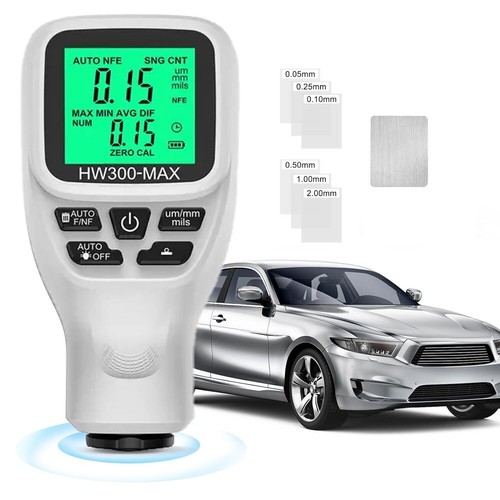 Paint thickness gaugeA paint depth meter identifies repainted panels, body filler, and prior bodywork that sellers may not disclose — essential for any pre-purchase inspection.