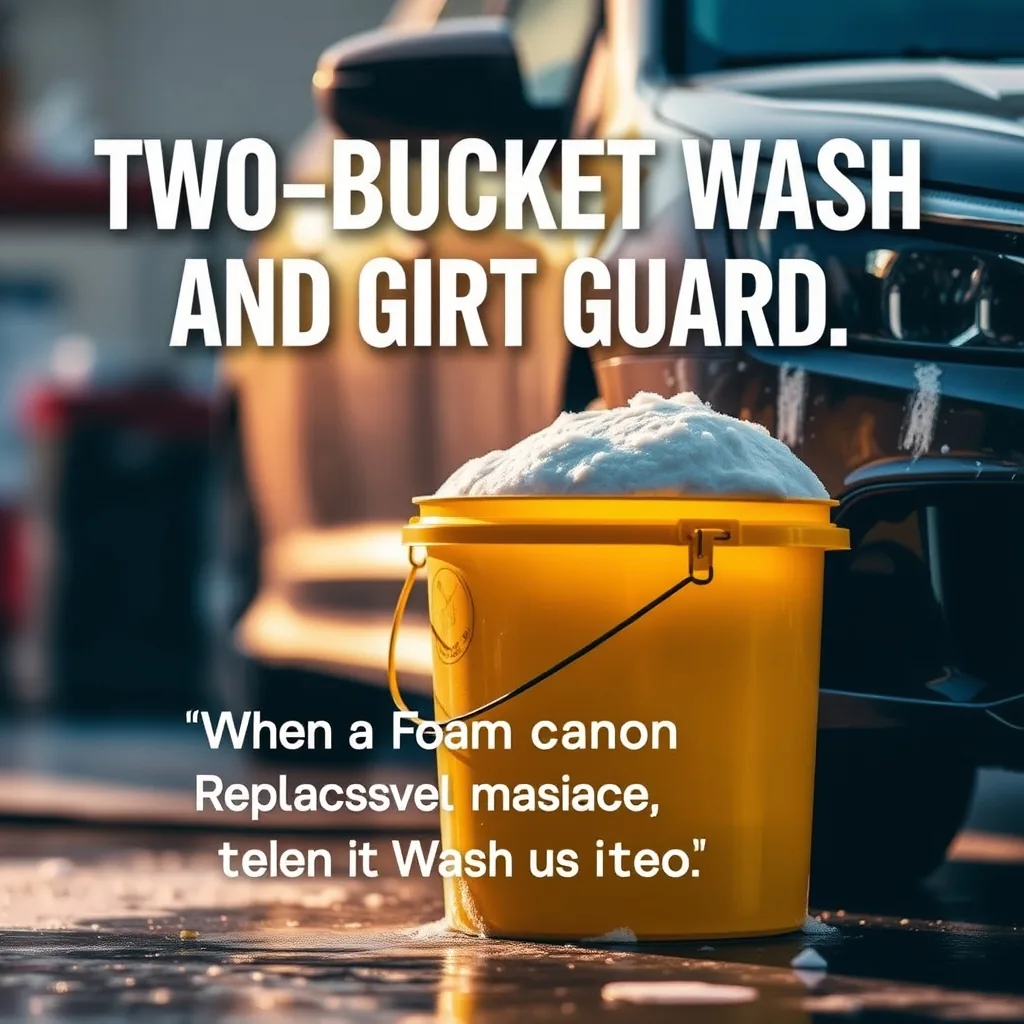
Paint damage from washing is one of the most common causes of swirl marks and fine scratches on daily drivers. Most of it is self-inflicted — not by aggressive products but by technique that drags grit across the paint surface repeatedly during the wash itself. The two-bucket method is the standard process for preventing this, and it is straightforward enough that anyone can implement it with a modest equipment investment.
This guide explains how the method works mechanically, what the grit guard contributes, and where the foam cannon workflow fits in — when it is a genuine improvement and when it is an expensive substitution for something the two-bucket method already handles well.
Why Swirl Marks Happen During Washing
Swirl marks are fine circular scratches in the clear coat, visible as spiderweb-like patterns under direct light or in sunlight at certain angles. They are almost always caused by abrasion: something with grit dragging across the paint surface. The wash stage is one of the most common points of introduction because the wash mitt accumulates dirt and grit from the panel surface, and if that grit is re-deposited back onto the paint without being removed from the mitt first, the next stroke drags it across the paint.
This happens in a single-bucket wash when:
- The mitt is rinsed in the same water bucket it was loaded from
- The rinse water becomes progressively dirtier as the wash continues
- Grit dislodged from the mitt sinks but then gets agitated back into suspension when the mitt is plunged back in
The result is that you are loading a wash mitt from progressively dirtier water throughout the wash, dragging accumulated grit across the paint on every pass.
How the Two-Bucket Method Addresses This
The two-bucket method uses two separate buckets: a wash bucket containing shampoo solution and a rinse bucket containing clean water only.
The workflow for each panel section:
- Load the wash mitt from the wash bucket (shampoo solution)
- Wash a section of the panel in straight-line strokes from top to bottom
- Rinse the wash mitt in the rinse bucket, agitating it to release the dirt and grit picked up from the panel
- Return the clean mitt to the wash bucket to reload with shampoo solution
- Move to the next panel section
The separation matters because dirty grit stays in the rinse bucket — it is never introduced into the wash solution. The wash mitt is always loaded from relatively clean soapy water. Over a full wash, the rinse bucket accumulates a visible layer of grit and debris; the wash bucket remains noticeably cleaner.
What the Grit Guard Actually Does
A grit guard is a rigid plastic insert that sits at the bottom of a wash bucket. It has a grid pattern that elevates the mitt above the bucket floor and separates the rinse zone into cells. When you agitate the mitt against the grit guard, the grit and particles fall through the grid and are trapped below it, below the water line. The grid design limits convection — the grit does not easily get stirred back into suspension when the mitt is plunged in again.
The grit guard goes in the rinse bucket, not the wash bucket, though some detailers use them in both. Its primary function is keeping the rinse bucket's grit at the bottom rather than in suspension where it could recontaminate the mitt.
Without a grit guard, agitating the mitt in the rinse bucket stirs the bottom sediment back into suspension, so the rinse bucket water gets progressively worse throughout the wash — the same problem the two-bucket method is designed to solve, now occurring in the rinse bucket. The grit guard breaks this pattern.
Wash Mitt Material and Technique
The wash mitt itself determines how effectively grit is held away from the paint surface during contact. The two common materials are:
- Microfiber wash mitts: Long-pile microfiber mitts hold grit in the fiber pile, away from the paint contact surface. They are the standard for paint-safe washing. Wash them frequently — a heavily loaded microfiber mitt needs to be rinsed more often than the "one panel per rinse" guideline suggests when working on very dirty vehicles.
- Sheepskin / lambswool mitts: Natural wool is gentle and holds grit well in the pile. They are effective but require more care during washing and drying to maintain. Synthetic wool versions are more common and perform similarly.
- Sponges: A standard sponge holds grit flat against the paint surface rather than in a pile away from it. This makes a sponge significantly worse for scratch avoidance than either microfiber or wool. The two-bucket method still helps with a sponge, but switching to a proper mitt removes a fundamental problem the bucket system cannot fully solve.
Technique is also a variable. Straight-line strokes from roof to rocker panel — parallel to the direction of airflow — place any scratches in a direction that catches less light and is less visible than the circular, orbital, or diagonal strokes most people use instinctively. This is a minor point relative to proper rinsing technique, but it matters at the finish level.
When a Foam Cannon Improves on Two Buckets
A foam cannon (sometimes called a snow foam lance) connects to a pressure washer and generates a thick foam layer that is applied to the car before any contact washing begins. The foam dwell time — typically two to five minutes — softens and partially suspends road grime, brake dust, and contaminants on the panel surface before the mitt ever touches the car.
The foam cannon adds genuine value in these situations:
Heavily contaminated vehicles
A car that has been driven through significant mud, road salt, brake dust accumulation, or highway grime benefits substantially from pre-foaming. The dwell stage lifts a meaningful portion of the contamination load before contact washing, so the wash mitt is dragging less grit across the surface from the first stroke. The two-bucket method still applies after the foam is rinsed, but the contamination load the mitt encounters is lower.
Vehicles with ceramic coatings or paint protection film
Coated paint is more hydrophobic and releases contamination more readily than uncoated paint. Pre-foaming on a coated car is particularly effective because the contamination does not bond as firmly to the surface. Snow foam loosens it further, and the subsequent rinse removes more before contact washing.
High-volume professional washing
For a detailer washing multiple cars per day, the pre-foam stage reduces the risk of mitt contamination on the first pass and reduces the total time spent at the rinse bucket. At volume, the time savings and reduced correction work add up.
Winter washing with heavy road salt
Road salt is particularly problematic because it is water-soluble and will dissolve into the wash water quickly, but the crystalline structure can scratch before it dissolves. Pre-foaming and rinsing before any contact reduces the active salt load on the panel surface.
When a Foam Cannon Does Not Replace Two Buckets
The foam cannon is a pre-wash tool. It reduces contamination before contact washing begins. It does not eliminate the need for the two-bucket method during contact washing, and several common situations make its advantages marginal or its requirement impractical:
You do not have a pressure washer
Foam cannons require a pressure washer to generate adequate foam. A garden hose foam gun (which connects to a standard hose) exists, but the foam quality is thin and the pre-wash benefit is minimal. If you are washing without a pressure washer, the two-bucket method with a proper mitt is the correct and complete approach.
Lightly contaminated cars washed frequently
A well-maintained daily driver washed every one to two weeks in a dry climate does not accumulate enough contamination for the foam pre-soak to provide meaningful benefit. The contact wash stage on a lightly contaminated car is the primary risk, and the two-bucket method addresses that directly. Adding a foam stage is not harmful but provides minimal added protection relative to the effort and equipment involved.
Water-restricted environments
Foam cannons use significantly more water than bucket washing — the pressure washer pre-rinse, foam application, foam rinse, and post-wash rinse all add volume. In areas with water restrictions or when washing on a metered supply, this can be a practical limitation.
Vehicles being prepped for correction or coating
If you are washing before paint correction or applying a ceramic coating, the wash stage is followed by clay decontamination regardless of wash method. Foam pre-treatment helps, but the clay bar stage removes bonded contamination that foam and contact washing do not address. The foam cannon advantage is smaller when chemical and mechanical decontamination follows anyway.
Products: What Matters and What Doesn't
Car wash shampoo selection is less critical than technique. A pH-neutral car wash shampoo provides enough lubrication to allow the mitt to glide across the panel without dragging. Using dish soap — which strips wax and dries out rubber — is a step backward. Using a very expensive dedicated shampoo is not a significant upgrade over a mid-range product if the technique is sound.
Grit guards are inexpensive (typically $10 to $15 each) and last indefinitely. They are one of the highest-return-on-investment purchases in a detailing kit. Buying two — one for each bucket — is the correct setup.
Foam cannon quality matters more. Cheap foam cannons produce thin foam with poor dwell characteristics. The Chemical Guys, Mothers, and Adams branded foam cannons in the $30 to $60 range produce substantially better foam than the $10 to $15 import versions. For pressure washers in the 1,500 to 2,000 PSI range (the common electric pressure washer range), a cannon with an adjustable dilution ratio is useful because the optimal ratio varies with washer output and shampoo concentration.
Waterless and Rinseless Washes: Where They Fit
Waterless wash products (applied and wiped off without rinsing) and rinseless wash products (used with a single bucket and no pressure rinse) are increasingly popular for situations where full wash access is limited — apartment parking, travel, water-restricted areas. These are valid options for lightly contaminated vehicles and are not the same category as the two-bucket wash.
For a lightly dusty car — less than a week of normal driving accumulation — a rinseless wash with a proper panel wipe-down technique is safe. For anything with road grime, brake dust accumulation, or any visible contamination, the full wash method (with or without foam pre-soak) is the appropriate choice. Trying to clean a significantly dirty car with a waterless or rinseless product increases the risk of paint scratching because you are wiping contamination across the surface without the lubrication and contamination removal that a rinse provides.
The Honest Summary
The two-bucket method with grit guards and a quality microfiber mitt is the foundational correct approach to contact car washing. It is equipment that costs under $50 total and addresses the primary mechanism of wash-induced paint scratching — redepositing grit onto the panel via a contaminated mitt.
A foam cannon improves on this for dirty cars and coated cars, and it fits well into a professional high-volume workflow. It requires a pressure washer and adds equipment cost and setup time. For lightly contaminated, frequently washed vehicles without a pressure washer, the two-bucket method alone is sufficient and the foam cannon is not necessary.
Paint correction to remove swirl marks is time-consuming and, if done by a professional, expensive. Avoiding them through proper wash technique is far more efficient. The two-bucket method and grit guard are the cheapest point of intervention in the paint care process.
Gear actually worth buying
Smart eBay searches we'd start with ourselves. We earn a small commission on qualifying sales through these links; the price you pay is the same whether you use them or go direct to eBay. Full disclosure.
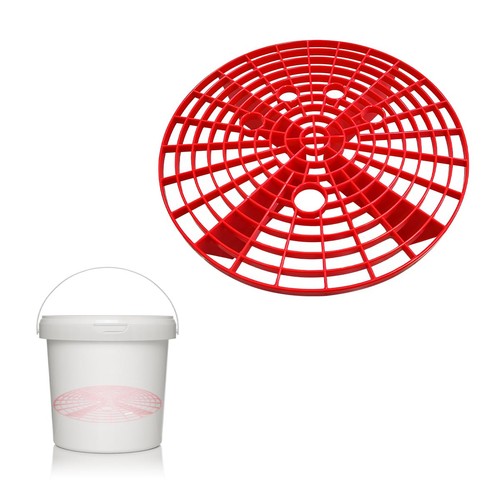 Grit guard bucket inserts (2-pack)The standard grit guard fits most 5-gallon detailing buckets. Buy two — one for the wash bucket and one for the rinse bucket. Under $15 combined.
 Long-pile microfiber wash mittsLong-pile mitts hold grit in the fiber away from the paint contact surface. Wash and replace after signs of wear — a flat mitt is a scratch risk.
 Adjustable foam cannonAn adjustable-dilution foam cannon in the $35–60 range produces substantially thicker foam than cheap imports. Connects to standard 1/4" quick-connect fittings.
 pH-neutral car wash shampoo (gallon)A pH-neutral shampoo won't strip wax or ceramic coatings. Gallon concentrate lasts a season or more at normal dilution ratios.
 5-gallon detailing buckets (2, different colors)Color-coded buckets make the two-bucket method foolproof. A different color for wash vs rinse eliminates the risk of cross-contamination mid-wash.