Root pruning schedule by species: pines, deciduous, and tropicals
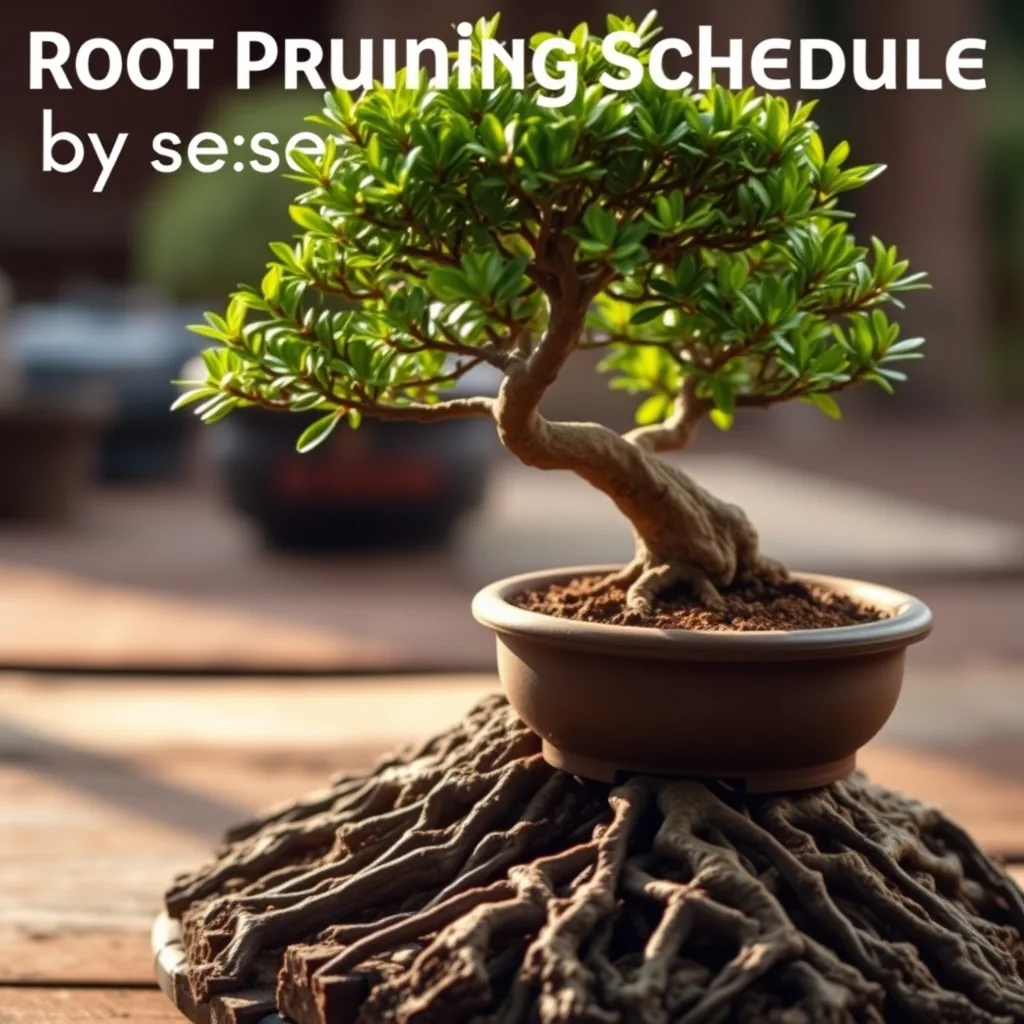
Root pruning done at the wrong time kills trees. Done at the right time, it's the most powerful developmental technique in bonsai. The timing is entirely species-dependent.
Why timing matters more than technique
Root pruning forces the tree to regenerate feeder roots. While those roots are regrowing, the tree's ability to support its canopy is reduced. If you root-prune at a moment when the canopy is simultaneously demanding energy — pushing new shoots, unfolding leaves, flowering — you've doubled the metabolic demand the tree has to meet. The result ranges from stress and dieback to full tree death, depending on species and how aggressive the root work was.
Correct timing positions the root work so the tree can replace roots before or during a growth period, not after the canopy has already pulled the reserves dry. The rule isn't complicated: prune roots when the tree is about to push growth, not when it's already mid-push. The species determines when that window falls.
There's a second reason timing matters: many species have specific dependencies that make off-season root work disproportionately damaging. Pines depend on mycorrhizal fungi in their root system. Disturbing that network at the wrong time — or too aggressively at any time — collapses the tree's ability to uptake nutrients for the rest of the season. Tropicals need warmth to regenerate roots at all; repot a tropical in cold weather and the roots won't grow back quickly enough to prevent canopy decline.
Pine bonsai: the strictest timing in the craft
Pines are the least forgiving species for root work. Juniperus (junipers) are often confused with pines in beginner literature, but true pines (Pinus thunbergii, Pinus sylvestris, Pinus mugo) have narrow windows and punish missed timing more than most trees.
When to prune: Late winter, just before bud swell. In most temperate climates, that's late February through early March. The signal is bud swelling — the buds should be visibly enlarging but the candles (new growth) must not yet be extending. Once the candles start pushing, you've missed the window for the year. Early candle extension means the tree's energy has already shifted into growth mode, and root work at that stage is genuinely dangerous.
Frequency: Every 3–5 years for mature pines. Young trees in early development can be repotted every 2–3 years, but root pruning should remain conservative. Pine feeder roots are slow to regenerate, and the mycorrhizal network in the soil — the fungal partnerships that allow pines to absorb water and nutrients efficiently — takes time to re-establish after root work. Remove no more than 25–30% of the rootball volume at a time.
Soil and aftercare: Pines need extremely fast-draining substrate. A mix of 40–50% pumice, 30% lava rock, and 20–30% akadama drains immediately and holds enough moisture for root regeneration without sitting wet. After repotting, place the tree in a sheltered location with no direct sun for 4–6 weeks. Do not fertilize until you see new bud activity — active bud growth confirms the root system has reconnected enough to support the canopy. Premature fertilizing pushes canopy growth the roots can't yet support.
Deciduous bonsai: the most rewarding window in spring
Japanese maple (Acer palmatum), trident maple (Acer buergerianum), hornbeam (Carpinus), zelkova, and most elm species all follow similar timing. These trees are considerably more forgiving than pines and can handle more aggressive root work if the timing is right.
When to prune: Just before bud break — typically late February through March for most temperate climates. The tree's stored energy is in the trunk and roots, buds are swelling, but no leaves have emerged yet. This is the single best moment to do root work on a deciduous tree: the tree is primed to push growth, which means it's primed to push new roots, but the canopy isn't yet pulling on the reserves. The window can be surprisingly short — one to two weeks — so watch your trees daily as winter ends.
Aggressiveness: A healthy deciduous tree in early spring can tolerate 30–40% rootball reduction without serious risk. Hornbeam is among the toughest — it pushes back vigorously even after aggressive pruning. Japanese maple is a bit more sensitive; limit removal to 30% unless the tree is exceptionally healthy and the root mass is severely bound. A tree that showed stress or dieback last season should receive lighter work: remove circling roots and the most pot-bound outer roots, but leave the central rootball intact.
Elm specifics: Most elm species (Ulmus parvifolia, Ulmus davidiana) tolerate root work both in early spring and in early fall after leaf drop, before the first hard frost. Spring is preferable, but a healthy elm can be repotted in September or October in most climates without significant risk. Avoid summer and deep winter.
Aftercare: After spring root work, deciduous trees can go back into a normal exposed position relatively quickly — within 2–3 weeks, especially if the spring weather is mild and moist. Keep the tree well-watered. New leaf emergence is your confirmation that the root work was successful and roots are regenerating. Fertilize lightly once buds break and leaves begin unfolding; heavier fertilization can wait until the leaves have fully hardened.
Tropical bonsai: warmth first, everything else second
Ficus (Ficus retusa, Ficus microcarpa, Ficus benjamina), Fukien tea (Ehretia microphylla), jade (Crassula), and bougainvillea all belong to the tropical group. Their timing is driven by temperature, not by calendar or dormancy state.
The rule: Repot tropical bonsai when temperatures are consistently above 65°F and the tree is actively growing. In temperate climates, that typically means late spring through summer — May through August — when you're moving the tree outdoors and warm weather is sustained. In tropical climates or for trees kept indoors under grow lights year-round, repotting can happen during any active growth period.
The reason temperature matters so much is simple: tropical roots regenerate quickly in warm conditions and barely at all in cold. A ficus repotted at 55°F in April may sit for four weeks without pushing any new roots, leaving the cut surfaces exposed to rot and the canopy unsupported. The same ficus repotted at 75°F in June pushes new white roots within 10–14 days. The difference is dramatic.
Ficus specifics: Ficus is the most tolerant tropical for root work. It can be repotted aggressively (up to 40% rootball reduction), handles being moved to a new pot without extensive shade aftercare, and regenerates roots faster than almost any other species commonly used in bonsai. Ficus in active growth — white roots visible at the pot drainage holes, new leaves regularly emerging — can be repotted at almost any point in warm weather.
Fukien tea: More sensitive than ficus. Repot in spring (May in most temperate zones) when the tree is actively pushing new growth, keep post-repot temperature consistently above 65°F, and avoid drafts. Fukien tea drops leaves in response to environmental stress, and root work amplifies that stress. Post-repot leaf drop is common and usually not fatal, but a weakened tree that's already dropping leaves should not be repotted until it stabilizes.
Bougainvillea: Repot in spring, just before the major growth and bloom period. Bougainvillea flowers on new wood and blooms most prolifically when roots are slightly restricted. Repot into only a slightly larger pot if moving up, or keep the same pot size for mature display trees. Root pruning in spring before the bloom push is the standard approach for experienced growers.
Quick reference table
| Species group | Best timing | Signal | Max root removal | Frequency |
|---|---|---|---|---|
| Pines | Late winter (Feb–Mar) | Buds swelling, candles not extended | 25–30% | Every 3–5 years |
| Junipers | Early spring or early fall | Active growth, temperature above 50°F | 30% | Every 2–4 years |
| Japanese maple | Just before bud break (Mar) | Buds swelling, no leaves yet | 30% | Every 1–3 years |
| Hornbeam, zelkova | Just before bud break | Same as maple | 35–40% | Every 1–3 years |
| Elm | Early spring or early fall | Before bud break or after leaf drop | 35% | Every 1–3 years |
| Ficus | Late spring to summer | Active growth, temperature above 65°F | 40% | Every 1–2 years |
| Fukien tea | Spring (May+) | Active growth, sustained warmth | 25–30% | Every 2–3 years |
| Bougainvillea | Spring before bloom push | Before major growth flush | 30% | Every 2–3 years |
Reading root health before you cut
Before any root work, remove the tree from its pot and assess what's there. Healthy feeder roots are white to light tan, firm, and fine-textured — they radiate outward from the rootball like capillaries. These should be retained wherever possible. Roots that are dark brown or black and feel soft or mushy are rotted and should be removed back to healthy tissue. If more than a third of the rootball is rotted, treat this as a triage situation: remove all dead roots, drench the rootball in a diluted fungicide or 3% hydrogen peroxide solution, repot into fresh fast-draining mix, and keep the tree out of direct sun in a humid location for 6–8 weeks.
Circling roots — those running laterally around the pot perimeter — should be cut back hard regardless of species or timing. Left unaddressed, circling roots eventually girdle the nebari (the surface root flare at the base), disrupting the visual line of the tree and potentially strangling the trunk over years. Cut them back to an outward-facing root branch or to the point where they begin circling. This is one situation where the species timing rules are slightly relaxed: circling root removal can happen whenever you repot, even if you're being conservative with overall rootball reduction.
Tools and aftercare that matter
A root rake or chopstick to tease apart the rootball before cutting is mandatory. Pulling at compacted roots tears healthy tissue. Work from the outside in, teasing the outer roots free first, then working toward the center. Use sharp, clean root scissors or concave cutters for the actual cuts — crushed roots from dull tools are slow to callus and are infection points.
Never return a bonsai to old, exhausted soil after root work. Remove as much old soil as you reasonably can without causing more root damage, and repot into fresh substrate appropriate to the species. Water thoroughly after potting, then keep the tree protected from wind and direct sun for the recovery period. Wind desiccates the reduced root system faster than it can replace moisture. A shaded cold frame or sheltered porch position is ideal for the first four weeks post-repot.
Gear for repotting season
Honest eBay picks. We earn a small commission on qualifying purchases — here's how that works.
 Akadama + pumice + lava mix
The standard bonsai substrate — fast draining, retains enough moisture. 1:1:1 is a starting ratio; adjust by species.
Akadama + pumice + lava mix
The standard bonsai substrate — fast draining, retains enough moisture. 1:1:1 is a starting ratio; adjust by species.
 Root rake / root hook
For teasing apart compacted rootballs without tearing. Essential for any repotting. Stainless steel holds its edge.
Root rake / root hook
For teasing apart compacted rootballs without tearing. Essential for any repotting. Stainless steel holds its edge.
 Root scissors + concave cutters
Clean cuts heal faster. Concave cutters leave a hollow that closes flush. Masakuni and Chinese Tian Bonsai are reliable brands.
Root scissors + concave cutters
Clean cuts heal faster. Concave cutters leave a hollow that closes flush. Masakuni and Chinese Tian Bonsai are reliable brands.
 Training pots (mica or grow pots)
Trees in development stay in cheap training pots. Mica pots are durable, frost-resistant, and inexpensive.
Training pots (mica or grow pots)
Trees in development stay in cheap training pots. Mica pots are durable, frost-resistant, and inexpensive.
 Bonsai fertilizer (slow release)
Solid organic fertilizer (Biogold, Hanagokoro) feeds slowly and consistently. Apply 4–6 weeks after repotting, not before.
Bonsai fertilizer (slow release)
Solid organic fertilizer (Biogold, Hanagokoro) feeds slowly and consistently. Apply 4–6 weeks after repotting, not before.