Blade material: where quality shows first
Most beard trimmer blades are stainless steel, but steel quality varies considerably within that category. The distinction that matters is blade hardness and the tooth geometry that follows from it.
Standard stainless steel blades are found across budget and mid-range trimmers. They're serviceable but typically dull over 12–18 months of regular use, and softer steel can develop microscopic chips in the tooth edge that cause snagging on coarser hair.
High-carbon or hardened stainless blades — marketed under terms like "titanium-coated," "chromium-coated," or "precision-ground" — hold a sharper edge longer. Titanium coating specifically increases surface hardness without making the blade brittle, and reduces friction as hair slides across the cutting edge.
Ceramic blades are an alternative found in some mid-to-upper-tier trimmers. Ceramic runs cooler than steel (less friction-generated heat on skin) and stays sharp longer, but chips more readily under impact than steel and is harder to resharpen.
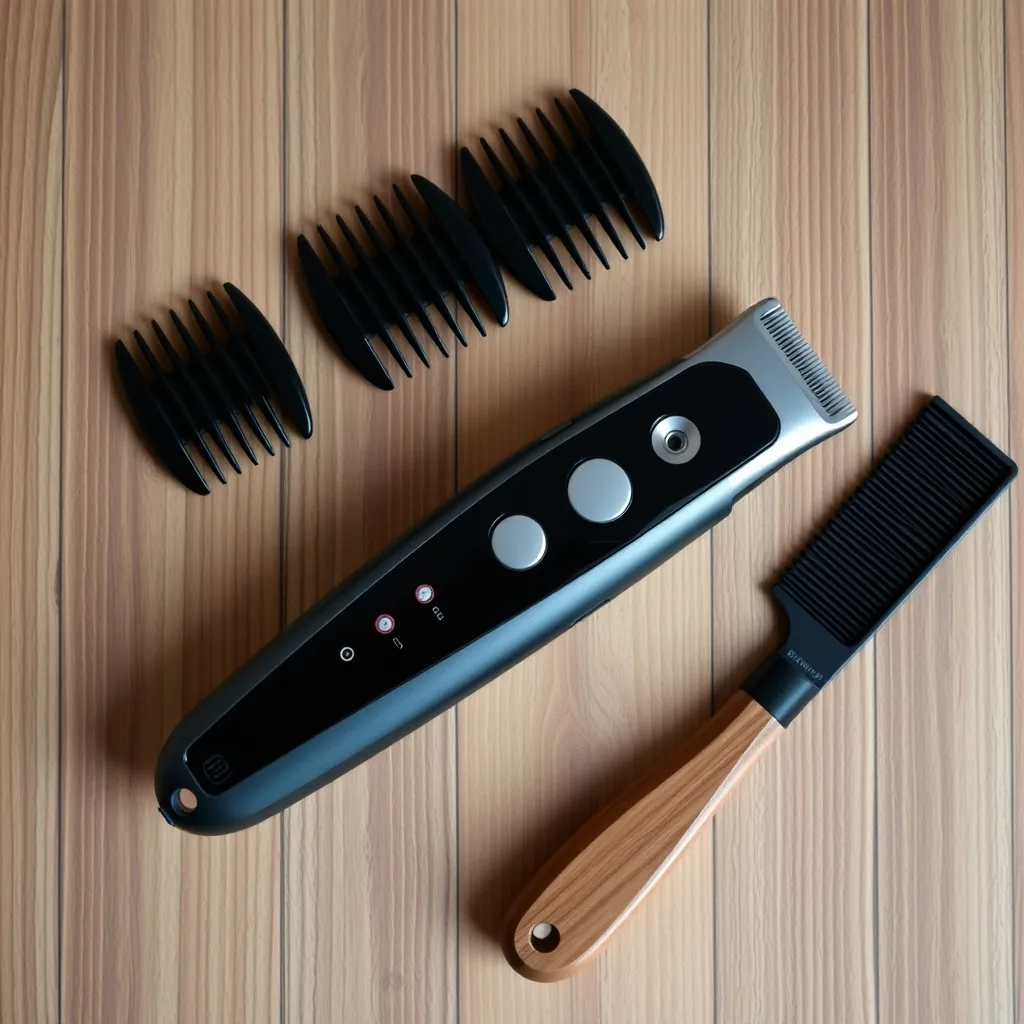
Length guard range and step increments
The length range and number of included guards determine how precisely you can maintain your specific beard style. Two numbers matter: the minimum length and the step increment.
Minimum length is typically 0.5mm or 1mm. If you maintain a close stubble look (1–2mm range), check the minimum guard carefully — some trimmers can't get below 3mm without removing the guard entirely, which requires a steady hand.
Step increments determine how finely you can tune length. A trimmer with 10 guards spanning 1–10mm has 1mm steps — adequate. A trimmer with 20 guards spanning 0.5–20mm in 0.5mm steps allows far more precision in the stubble and short-beard range where most people work.
| Beard style | Typical length range needed | Step precision needed |
|---|---|---|
| Heavy stubble / designer stubble | 1–5mm | 0.5mm ideal |
| Short beard | 3–10mm | 1mm adequate |
| Medium beard (maintained) | 5–20mm | 1–2mm adequate |
| Long/full beard (shape only) | 10–40mm+ | 2–5mm adequate |
Cordless runtime and charging
Quoted runtime figures are typically measured at mid-power on short hair — your actual runtime on dense or coarse hair at full power will be lower. As a rule of thumb, apply a 20–30% discount to quoted runtime numbers for real-world use.
A beard-only trimmer session takes roughly 5–10 minutes for most people. Even a modest 40-minute runtime provides 4–8 sessions before recharging, which is adequate for weekly maintenance. Runtime matters more if you're using the trimmer for both beard and hair, or if you travel infrequently and don't want to think about charging.
Charging method has meaningfully improved in recent mid-range products:
- Proprietary stand charge: Common but inconvenient for travel — requires the stand cable.
- Micro-USB: Being phased out but still common at budget tier.
- USB-C: Now appearing at mid-tier and up. Standardizes travel charging.
- Quick-charge: A 5-minute quick charge for one session is increasingly common and genuinely useful.
Shopping for beard trimmers? Browse current eBay listings → (we earn a small commission; your price is unchanged).
All-in-one kits: are the accessories worth it?
Beard trimmer kits bundle accessories — nose/ear trimmers, body grooming attachments, precision detail trimmers, cleaning brushes, and oil. The question is whether the accessories are separately useful or just padding.
Useful kit additions for most people:
- Nose/ear trimmer attachment or dedicated nose trimmer
- Precision detail trimmer (narrow blade for sideburns and necklines)
- Blade oil (required for blade maintenance; most brands don't include enough)
- Cleaning brush
Often-included but rarely-used kit additions:
- Full-body grooming attachment (useful only if you specifically want this)
- Multiple guard types beyond the 5–6 lengths you'll actually use
- Styling comb (redundant if you already have one)
Evaluate kit value by pricing the core trimmer separately. If the kit is priced close to the core trimmer alone, the accessories add genuine value. If the kit is priced at 50–100% more than the core trimmer, assess whether the included extras would cost that much to buy individually.
Motor type and power
Beard trimmers use one of three motor types: rotary, pivot, and magnetic. Rotary motors are high-torque and found in professional-grade hair clippers more often than consumer beard trimmers. Pivot motors are common in mid-range trimmers — consistent power delivery, good for thicker hair. Magnetic motors are found in budget trimmers and tend to degrade on coarse or dense hair.
Brands rarely disclose motor type on consumer packaging. The practical proxy is how the trimmer performs on dry, dense hair: if it hesitates or slows noticeably on thick growth, the motor is undersized. Always test on your densest beard area before committing.
Maintenance: oiling and cleaning
Blade oiling is not optional on any trimmer that doesn't self-oil. Apply one drop of blade oil across the full tooth width after every 3–4 uses, or whenever trimming feels rougher than usual. Oiling prevents corrosion, reduces friction heat, and extends blade sharpness. Most brands ship minimal oil; buy a separate bottle early.
Cleaning is straightforward: brush debris from the blade, rinse under warm water if waterproof (check IPX rating), dry before reassembling. Self-cleaning trimmers at higher price points handle this automatically but add cost.
Related searches on eBay
 Beard trimmers
Full range of corded and cordless models
Cordless beard trimmers
Li-ion, USB-C charging, long runtime
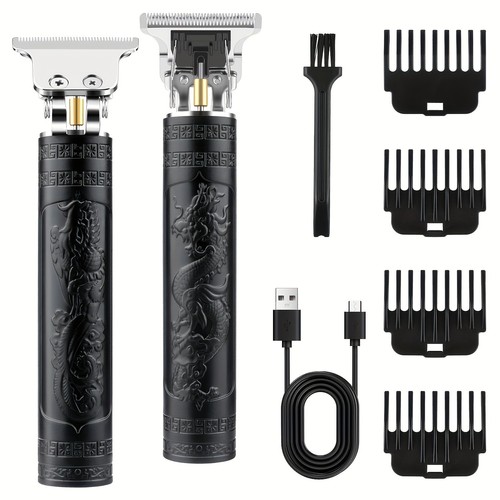
 Beard trimmer kits
With guards, nose trimmer, oil, and brush
Beard grooming kits
Complete sets with balm, oil, comb, scissors
Hair and beard trimmers
Dual-use, wide length range, stronger motor