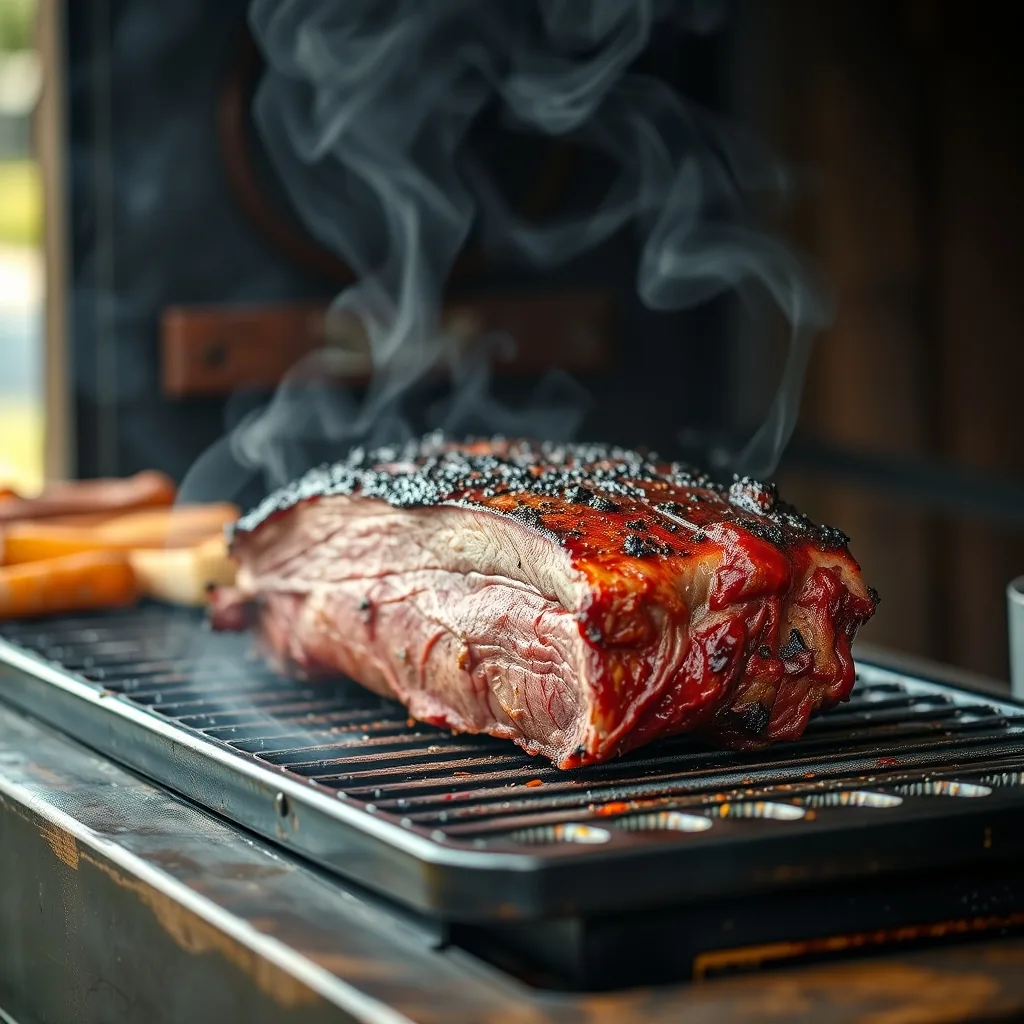
Every new brisket cook eventually stands over a smoker at 2 AM watching the temperature probe read 155°F for the third straight hour, wondering if they broke something. They did not. The brisket stall is one of the most reliable phenomena in BBQ, and it has a clear physical explanation. Understanding it makes you a better cook; not understanding it makes you panic, crank the heat, and ruin the brisket.
What the Stall Actually Is
Brisket is about 70% water by weight before cooking. As the meat's surface temperature rises, that water evaporates. Evaporation is a cooling process — the same physics that makes you cold when you step out of a pool. At some point in the cook, usually between 150°F and 170°F, the evaporative cooling from the brisket's surface exactly cancels the heat input from the smoker. The internal temperature stops rising. This is the stall.
The stall can last two to six hours. On an offset smoker at 225°F with a 15-pound whole packer brisket, a four-hour stall at 160°F is not unusual. The brisket is not done — it is wet. Every degree of temperature gain the smoker puts in is being used to evaporate surface moisture rather than raise the internal temperature. The stall ends when enough moisture has evaporated that the cooling effect no longer keeps up with the heat input.
This matters for two reasons. First, it means the stall is actually doing something useful: it is slowly drying the brisket's surface, which is where bark forms. Second, it means that speeding through the stall artificially (by cranking heat) skips the surface-drying process. You get to temperature faster but you trade bark quality to do it.
What Wrapping Does
Wrapping in foil (the "Texas Crutch") or butcher paper interrupts the evaporative process. When you seal the brisket, moisture that would have evaporated from the surface is now trapped inside the wrap. The brisket's temperature can rise without fighting evaporative cooling because the cooling process can no longer happen. The internal temp moves again. A stall that would last four hours bare can clear in 90 minutes after wrapping in foil.
This is the trade-off: wrapping is faster and the brisket retains more moisture (which reads as juicy). But it also softens bark. Bark is the crust that forms on the surface as smoke, fat, and rub bind and dry. Foil wrapping in the stall locks moisture against bark that has not yet fully set. You get a softer, darker, moister exterior — sometimes delicious, sometimes what competition BBQ cooks call "potroast" bark, meaning it has the texture of braised beef rather than smoked crust.
Foil vs. Butcher Paper: The Meaningful Difference
Foil seals moisture completely. Butcher paper (specifically pink or peach unlined butcher paper — not wax paper) is porous. Wrapping in butcher paper lets some moisture escape while still reducing the cooling effect enough to shorten the stall significantly. The result is a softer exterior than no wrap, but firmer bark than foil.
Franklin Barbecue in Austin popularized butcher paper wrapping as a middle path, and it has become standard practice in a lot of high-volume BBQ operations. The practical difference:
Foil wrap
- Fastest through the stall
- Softer, wetter bark
- Maximum moisture retention
- Good for competition where judging prioritizes slice juiciness
- Better for reheating (brisket reheats well in its own foil juices)
Butcher paper wrap
- Faster than no wrap, slower than foil
- Firmer bark with some crust preserved
- Good moisture retention, not quite foil
- Better for sliced presentation on a cutting board
- Standard for high-end Texas-style brisket
Neither is objectively better. Foil is better when you are behind on time or reheating. Butcher paper is better when bark quality is the priority and you have time to manage the cook through the stall naturally.
When to Wrap
There are two distinct decisions: whether to wrap at all, and when to wrap if you decide to.
Whether to wrap: No-wrap is a valid approach for pitmasters who prize deep bark development. A naked brisket at 225°F will get through the stall eventually — the stall is finite — but will take 2–4 hours longer than a wrapped brisket. If you have the time and the temperature stays steady, no-wrap produces excellent results. If you are on a schedule, wrapping is practical insurance.
When to wrap: The conventional advice is to wrap at an internal temperature of 165°F. This is a reasonable default, but the temperature is a proxy for the real signal, which is bark development. You want to wrap when the bark is set enough that it will not dissolve against the wrap material. A properly set bark has a dark, dry, mahogany crust that does not smear when you press it lightly. If the rub is still moist and tacky, the bark is not set. Wait.
On a real cook, "bark set" usually corresponds to somewhere between 160°F and 170°F internal temperature, but it can vary based on fat content, rub thickness, and smoker airflow. The color and texture of the surface is more reliable than the probe reading for this specific decision.
Managing the Stall Without Wrapping
If you want to go no-wrap and manage the stall, here is what actually helps:
Fat cap management before the cook. A thick fat cap on top acts as an evaporative surface that stalls the cook longer. Trimming to roughly 1/4 inch reduces stall duration without sacrificing the insulation and basting the fat cap provides. Trimming to nothing removes the stall-prolonging effect but also removes the self-basting benefit.
Dry brining in advance. Applying salt 12–24 hours before the cook and leaving the brisket uncovered in the refrigerator draws moisture to the surface, then lets it reabsorb. The drier surface you start with, the shorter the stall tends to be. A wet brisket (brined in liquid, or rinsed and not dried) has more surface moisture to evaporate before the stall ends.
Smoker temperature management. A higher pit temperature (275–300°F instead of 225°F) pushes heat input above what evaporative cooling can fully cancel. The stall still happens but is shorter and less pronounced. The trade-off is that higher temperatures also drive faster rendering, and if the heat is too high the flat can dry out before the point finishes rendering. Most pitmasters who cook hot-and-fast do wrap, because the point of hot-and-fast is throughput, and wrapping supports that.
Temperature Targets After the Stall
The stall ends somewhere in the 170–175°F range for most briskets. Once through the stall, the temperature climbs more steadily toward your probe-tender target. The target probe temperature is not a fixed number — it is feel. Most whole packer briskets probe tender (the probe slides in with no resistance, like butter) between 195°F and 205°F. Some thick packers need 210°F. Some thin flats are done at 190°F.
Use a probe in multiple locations. The flat cooks faster than the point due to lower fat content. If the flat probes at 200°F but the point reads 190°F and still has some resistance, the brisket is not done. Check both sections every 30 minutes after you think you are close.
The Rest: Not Optional
A brisket pulled from the smoker must rest before slicing. The common recommendation is one hour minimum; most serious BBQ operations rest for two to four hours in an insulated cooler (a Cambro or a good cooler with the lid shut holds temperature for hours). Resting allows the muscle fibers to reabsorb the moisture driven to the center of the brisket during cooking. Slice a brisket that has rested for 15 minutes and watch the juice run out — those are fluids that would otherwise stay in the slice during a proper rest.
If you are on a tight schedule, a one-hour rest in a closed cooler wrapped in butcher paper is the minimum. Two hours produces noticeably better slicing results. The brisket will hold above 140°F (the food safety threshold) for four-plus hours in a well-insulated cooler, so resting longer than you think you need is the safer choice.
Common Stall Mistakes
- Panicking and cranking the heat. Raising the pit temperature to 300°F+ to push through the stall rushes through the surface-drying that builds bark. You end up with a grey, steamed exterior and no crust. If you need to manage time, wrap — do not overheat.
- Wrapping too early. Wrapping with wet, unset bark produces bark that softens completely into the meat during the rest of the cook. You lose all crust texture. The bark must be set before you wrap.
- Using wax paper instead of butcher paper. Wax paper is a food safety hazard in the smoker — the wax melts above certain temperatures. Use uncoated pink or peach butcher paper only.
- Slicing before resting. Juice loss on the cutting board looks dramatic and tastes worse. The brisket is not "leaking moisture it was going to have anyway" — it is losing moisture it would have retained with a proper rest.
- Probing only the flat. The flat reads higher temperature faster than the point. Calling done based on flat temperature alone produces an underrendered point with tough, chewy fat. Probe both.
The stall is where most brisket cooks either learn patience or develop bad habits. The brisket knows what it needs to do; the stall is part of that process. Let it stall, wrap intelligently when the bark is ready, rest long enough to matter. These are the decisions that separate a good brisket from a great one.
Gear worth having for brisket
Smart eBay searches we'd start with ourselves. Small commission on qualifying sales; your price is the same either way. Full disclosure.
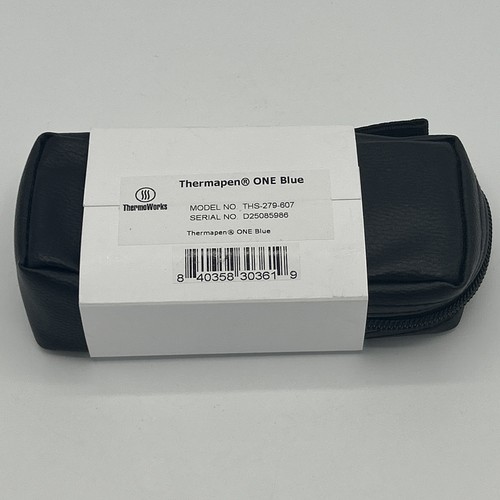 Thermapen Mk4 instant-readReads in 2–3 seconds, accurate to ±0.7°F. The single most important tool in brisket — temperature is the whole game. Worth every penny.
 Wireless probe thermometerLeave-in probes (MEATER, ThermoWorks Signals, FireBoard) let you monitor the stall from indoors without opening the smoker lid and losing heat.
 Pink butcher paper (unlined)The Texas wrap material. Porous enough to let some steam escape; tight enough to cut stall time. Buy a roll — it is cheap and useful for everything.
 Offset smokerBrisket is forgiving on temperature control; offset smokers teach fire management that transfers to everything else. Oklahoma Joe's is the honest entry-level choice.
 Brisket slicing knife (12")A long, thin, flexible slicing knife cuts clean slices without compressing the bark. A chef's knife drags and tears. Granton edge helps.