Reading a Texas-Rig Fall — When Bass Take It on the Drop vs at the Bottom

The Texas rig catches fish in two completely different moments: during the fall, and after the bait settles. Recognizing which one is happening changes your hook-set timing, your weight selection, your line choice, and how fast you fish the water column. Most anglers who miss strikes on a Texas rig are misreading one of these two windows.
Why the Fall Is Half the Presentation
A Texas rig doesn't just get cast and retrieved. The moment it hits the water, it becomes a falling bait. Depending on the weight you're using, it may fall for two or three seconds before it touches bottom — and during that window, an actively feeding bass can intercept it, take it, and start moving before you've even noticed anything happened on the surface.
The fall is not a passive transition between cast and retrieve. It's a presentation phase that deserves as much attention as any hop, crawl, or swim you do after the bait lands.
The physical motion of the fall breaks into two types depending on how you rig it:
- Free-fall: The weight is unpegged (the bullet sinker can slide on the line). On the fall, the weight drops first and the soft plastic floats down behind it slightly offset. This creates a horizontal glide — the bait pitches nose-down with the hook riding up and back. Slower, horizontal, more flutter.
- Pegged fall: The weight is pinned directly against the plastic head, either with a rubber peg or a screw-lock setup. Weight and bait fall as a single unit, nearly straight down. Faster, more direct, better penetration in heavy cover like matted hydrilla.
Bass feeding on suspended forage — shad in the water column, bluegill holding in grass — are more likely to intercept the free-fall presentation. Bass holding tight to bottom structure are more likely to hit the bait after it settles. This isn't a rule; it's a tendency that lets you make decisions.
What a Drop Strike Looks and Feels Like
A bass taking a Texas rig on the fall typically reveals itself in one of three ways, and they don't always look dramatic:
Line twitch or jump
The most visible sign. You cast, the lure lands, and as you're watching the line angle toward the water, the line twitches sideways or gives a sharp pop. The bass intercepted the bait on the way down and pulled the line horizontally. This often happens within the first 30–60% of the fall — before the bait gets near bottom.
Line goes slack early
You cast, and you expect to feel or see the bait tick bottom based on how deep you're fishing. Instead, the line stops loading before that — it just goes slack. The bait stopped falling. A bass is holding it, swimming sideways or upward with it, and the tension disappeared. This is the strike most people miss because it doesn't feel like anything.
Line moves sideways while falling
The line is descending at the angle you expect, then it starts moving left or right at a different angle than the current or wind accounts for. A bass picked up the bait and is swimming with it.
In all three cases, the correct response is the same: reel down until you feel weight, then drive the hook with a firm upward sweep. Don't pause, don't hesitate waiting for a "thump." The fish already has it. The hook is buried in a soft plastic with a recessed point — you need to move it fast and decisively to penetrate.
What a Bottom Strike Feels Like
When a bass takes a Texas rig off the bottom, the signal is usually clearer but still easy to misread as a snag or as the bait contacting a rock.
The thump or tap on the lift
You've let the bait sit for a beat after it lands, then you start to lift it for the next hop — and you feel a distinct thump or tap as the rod comes up. That's a bass that was holding the bait on the bottom, and the resistance you felt is the fish's weight on the line. If you feel this, don't continue lifting — reel down and set the hook.
The bait feels heavy on the lift
Similar to a thump, but slower. You start to lift the bait and it doesn't come up freely. It feels like you snagged the bottom — but it's heavier than a snag and has a slight pulse. Reel down and set. This is a common signal when bass are holding the bait on a flat without moving, especially in colder water when they're lethargic.
Line walks off
The bait is sitting on the bottom, you're watching your line, and the line starts moving on its own — slowly extending in one direction. The fish picked it up and is walking away. This is a gift. Reel down until you're tight and set hard.
Conditions That Favor Drop Strikes
Bass feed aggressively on the fall when:
- Water temperature is in the 60–75°F range. Active feeding, fish in the water column, not locked to the bottom.
- Post-spawn through early summer. Bass have finished spawning and are actively replenishing energy. They'll intercept moving targets rather than waiting for a bait to settle.
- Clear water with visible forage. When bass can see a falling bait at distance, they'll move to intercept it. In clear water on a sunny day, a drop strike can come from 5–8 feet away.
- Fish are suspended. If your electronics show fish suspended in the water column rather than pinned to bottom structure, they're likely in active chase mode. A falling bait is exactly what they're waiting for.
- Finesse soft plastics on lighter weights. A 3/16 oz sinker with a 4-inch stick bait falls slowly and horizontally. This extended fall window gives more time for a drop strike to develop.
Conditions That Favor Bottom Strikes
Bass hold tight to the bottom and wait for the bait to come to them when:
- Water temperature is below 55°F. Cold-water bass are metabolically slow. The energy cost of chasing a falling bait isn't worth it. They want something that stays near them.
- Post-front conditions. After a cold front, barometric pressure is high and rising. Bass tighten to structure and become reluctant strikers. They may sit on a bait for several seconds without moving.
- Stained or murky water. Lower visibility means fish rely more on lateral line vibration and proximity. They're not going to see a falling bait at distance; the bait needs to land near them and stay near them.
- Heavy cover. Pitching or flipping into laydowns, dock pilings, or matted vegetation. The target zone is tight. The fish is under the structure, not suspended in the water column. The bait needs to get through the cover fast (heavier peg) and sit near the fish.
- Summertime heat in deep water. Bass holding deep on ledges or channel edges in mid-summer heat are primarily bottom-oriented. They'll eat a Texas rig crawled slowly along the bottom, not intercepted mid-fall.
Line Choice and What It Changes
Your line is your primary sensor during the fall. What you can detect depends directly on what you're using.
Fluorocarbon for drop-strike detection
Fluorocarbon is stiffer than monofilament and transmits vibration and tension changes faster. It also sinks, which keeps the line straighter and removes some of the sag that can mask a slack-line strike. For clear water where drop strikes are common, 12–15 lb fluorocarbon gives you sensitivity without being overly visible to the fish.
Braid with a fluorocarbon leader
The most sensitive setup for detecting any kind of strike, including drop strikes. Braid has zero stretch, so a twitching line or sudden slack is immediately transmitted to your hand. The fluorocarbon leader (18–24 inches, same lb test or lighter) gives invisibility near the bait. This is the right setup for stained-water pitching where you're relying on feel more than visual line-watching.
Monofilament — what it costs you
Monofilament stretches up to 25–30% under load. This stretch absorbs the signal from a drop strike before it reaches your hands. You'll still feel bottom strikes because those involve sustained load, but fast drop-strike signals — the line twitch, the sudden slack — are harder to read on mono. If you're missing fish that you're not hooking on a Texas rig, consider switching to fluorocarbon or braid before changing anything else.
Weight Selection and Its Effect on the Fall
The bullet sinker weight directly controls how long the fall lasts and therefore how long the drop-strike window stays open.
- 1/16 to 3/16 oz: Slow, extended fall. Maximum drop-strike window. Best in shallow water (1–8 feet) where the bait doesn't need to reach great depth quickly. Works well when fish are suspended or when you can see exactly where you're pitching.
- 1/4 oz: The most versatile weight. Fast enough for moderate depth (8–15 feet), slow enough that fish still have time to intercept on the fall. The default starting weight for most situations.
- 3/8 to 1/2 oz: Gets through heavy cover fast. Minimal fall window — the bait hits bottom quickly. The right choice when you're pitching into matted vegetation or when you want the bait on the bottom with minimal hesitation. Drop strikes are possible but the window is short.
- 3/4 oz and above: Punching weights for heavy mat penetration. Designed to get through a thick surface mat to the water below. The fish is below the mat; the fall window is essentially eliminated by design.
Practical Read: How to Diagnose What's Happening
If you spend a session catching fish and want to know whether they were hitting on the drop or off the bottom, here's a simple diagnostic:
- After each cast, watch your line angle as the bait sinks. Count the seconds until the line goes slack (bait hits bottom).
- Mark the depth mentally. If the strike came before your count hit a number consistent with the depth you're fishing, it was a drop strike.
- If the strike came during a hop — as you started lifting — or while the bait was stationary, it was a bottom strike.
- Once you identify which is happening more often, adjust: lighter weight to extend the fall if drop strikes are the pattern; slower presentation and longer pauses if bottom strikes are dominant.
This isn't complicated, but it requires that you watch the line — consistently, every cast. Most missed fish on a Texas rig happen when the angler is looking somewhere else during the fall.
Some gear links below are affiliate (eBay Partner Network). Commission doesn't change your price.
Gear for fishing a Texas rig well
Smart eBay searches for the components that actually change what you can detect and hook. Commission if you buy; price is the same. Full disclosure.
 Stick baits / Senko-style worms
5-inch straight worm is the standard Texas-rig plastic. Yamasenko, Zoom Trick Worm, and Roboworm Straight Tail cover most situations.
Stick baits / Senko-style worms
5-inch straight worm is the standard Texas-rig plastic. Yamasenko, Zoom Trick Worm, and Roboworm Straight Tail cover most situations.
 Bullet sinker assortment
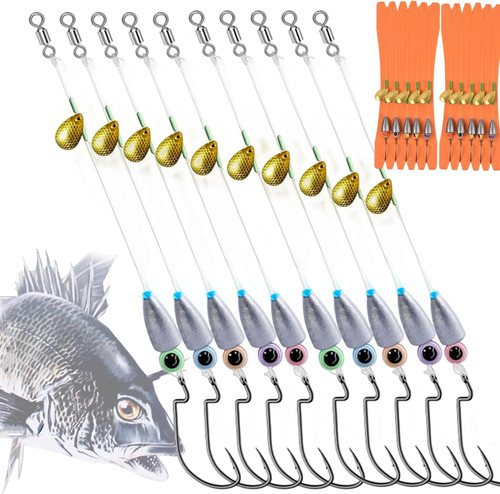
Having 3/16, 1/4, 3/8, and 1/2 oz tungsten bullet weights lets you match fall speed to depth on the water. Tungsten is harder than lead and gives cleaner bottom feedback.
Bullet sinker assortment
Having 3/16, 1/4, 3/8, and 1/2 oz tungsten bullet weights lets you match fall speed to depth on the water. Tungsten is harder than lead and gives cleaner bottom feedback.
 EWG offset hook
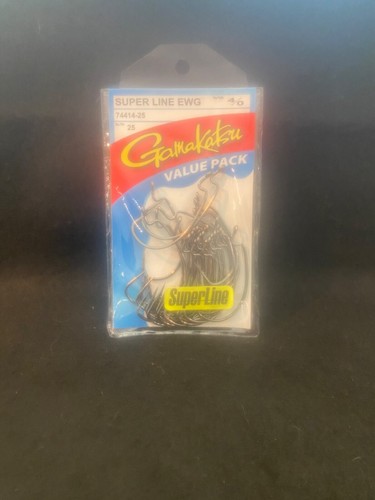
Wide-gap offset hooks (Gamakatsu EWG, Owner Twistlock) are the standard for soft plastics. 4/0 for 4-inch baits, 5/0 for 5-inch. Sharp out of the package; they don't last forever — replace after every few fish.
EWG offset hook
Wide-gap offset hooks (Gamakatsu EWG, Owner Twistlock) are the standard for soft plastics. 4/0 for 4-inch baits, 5/0 for 5-inch. Sharp out of the package; they don't last forever — replace after every few fish.
 Fluorocarbon line (12–15 lb)
Seaguar InvizX and Sunline Sniper are the two most commonly used fluorocarbon lines for finesse Texas rigging. Low-memory, sinks, transmits line movement cleanly.
Fluorocarbon line (12–15 lb)
Seaguar InvizX and Sunline Sniper are the two most commonly used fluorocarbon lines for finesse Texas rigging. Low-memory, sinks, transmits line movement cleanly.
 7' medium-heavy fast-action rod
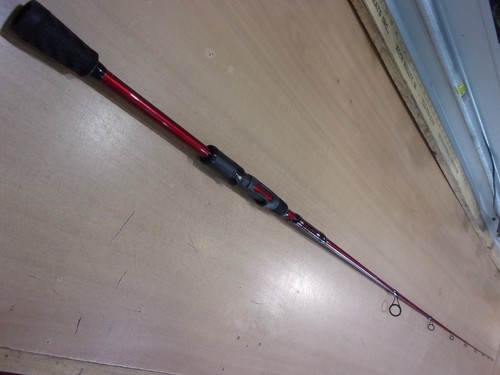
Fast tip for sensitivity during the fall; medium-heavy backbone for driving a wide-gap hook through soft plastic into a bass jaw. St. Croix Bass X, Dobyns Fury, and Shimano SLX are solid mid-range choices.
7' medium-heavy fast-action rod
Fast tip for sensitivity during the fall; medium-heavy backbone for driving a wide-gap hook through soft plastic into a bass jaw. St. Croix Bass X, Dobyns Fury, and Shimano SLX are solid mid-range choices.