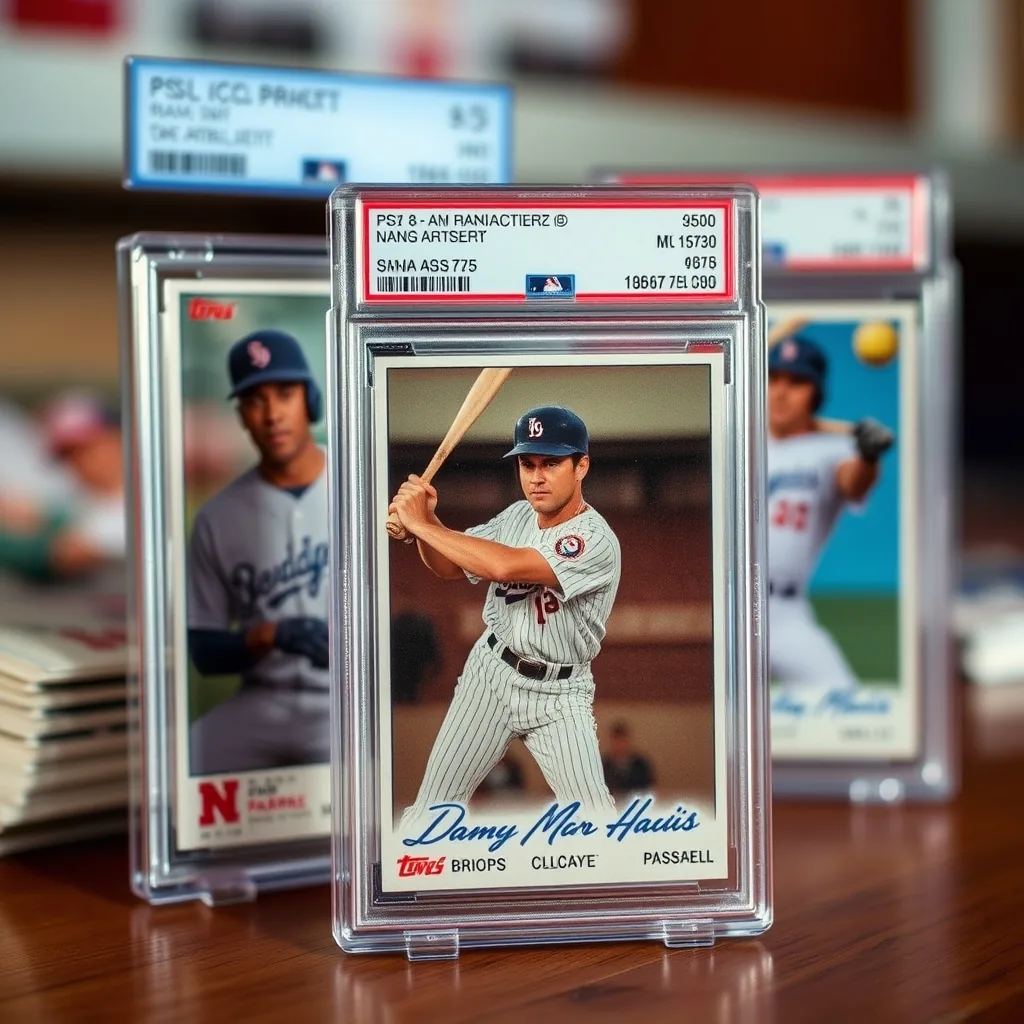
The explosion of professional card grading since 2020 created a widespread assumption that grading is inherently valuable — that putting a card in a slab makes it worth more. This is sometimes true, often false, and never as simple as the forums suggest. The arithmetic that determines whether grading is profitable depends on four variables: the raw value of the card before submission, the grade it will realistically receive, the grading service fee, and the market premium a graded card in that grade commands over raw for that specific card.
If any of those four variables goes wrong — the card grades lower than expected, grading fees eat the margin, or there's no real market premium at that grade level — you've spent money to make your card less valuable or barely more valuable. This guide gives you the framework to check all four before you put a card in a submission bag.
Grading Fees: What You Actually Pay
PSA, Beckett (BGS), and SGC all charge grading fees that vary by service tier (turnaround time) and declared card value. As of 2025, pricing is approximately:
PSA fee tiers (approximate, check psa.com for current pricing)
- Value ($20–$25/card): Cards valued under $499, slowest turnaround (currently 45–90+ business days). The entry-level option for most submissions.
- Regular ($50/card): Faster turnaround, same $499 value cap. Available during certain order windows.
- Express ($100/card): Cards valued up to $2,499. Significantly faster.
- Super Express ($150+/card): High-value cards with expedited handling.
PSA also charges for return shipping, insurance, and — if you go through a dealer or LGS — a handling markup. A realistic all-in cost for PSA value tier in 2025 is $30–40 per card after shipping both ways.
BGS (Beckett) fee tiers
- Economy ($22/card): Slowest tier, most comparable to PSA Value.
- Standard ($35/card): Mid-range turnaround.
- Express ($75/card): Faster, with sub-grades displayed on the label.
SGC fee tiers
- Standard ($18–$25/card): SGC has historically offered competitive pricing and faster turnaround than PSA during periods when PSA was backlogged. Turnaround times fluctuate significantly based on submission volume.
The practical floor for submitting any card is roughly $20–$25 in grading fees plus $10–15 in shipping costs, for a total minimum spend of $30–40 per card. That cost is constant whether the card grades 10 or grades 6.
The Grade-to-Value Math: When It Works and When It Doesn't
The fundamental grading flip calculation looks like this:
(Graded sale price at expected grade) − (Grading fee + shipping) > (Raw sale price)
Example: A raw card sells for $80. After grading, a PSA 9 sells for $200 and PSA 8 sells for $95. Grading costs $35 all-in.
If you're confident in a 9: $200 − $35 = $165 profit vs $80 raw. Worth it.
If the card actually grades 8: $95 − $35 = $60. You've lost $20 net vs selling raw.
When a PSA 8 is a loss
PSA 8 is often called "Near Mint to Mint" but it represents a meaningful step down from PSA 9 and PSA 10 in terms of market value — and critically, in terms of market liquidity. For modern cards (post-1980), the collector market is heavily skewed toward 9s and 10s. A PSA 8 of a high-population modern card frequently sells at or below raw prices for that card, especially for mainstream players and sets where PSA 8 examples are abundant.
The specific scenarios where PSA 8 is almost certainly a losing submission:
- High-pop modern cards. Any card with 500+ PSA 9s and 1,000+ PSA 8s in the population report has a depressed market at 8. The premium over raw is often $0–10, not enough to cover fees.
- 1980s–1990s junk wax era cards. Cards from roughly 1987–1995 were printed in massive quantities with poor centering control. A 1990 Topps Ken Griffey Jr. in PSA 8 is worth almost exactly what an excellent-looking raw example is worth — the grade adds almost no premium at that level because the market knows 8s are plentiful and 9s/10s are the only grades that carry significant premiums.
- Low raw value cards. If a card's raw value is under $30, a PSA 8 outcome leaves you worse off in almost every case after fees.
The "10 or raw" rule
Experienced graders often apply an informal rule: for modern cards, only submit what you believe has a realistic chance of a 10, or what you'd be comfortable selling raw if it comes back an 8. This rule exists because the 10-to-9 premium for most significant modern cards is large and the 9-to-8 premium is small. A PSA 10 of a card that has 50 PSA 10s in the pop report commands a very different price than a PSA 9, even if both are legitimately high-grade examples. A PSA 9 commands a real premium over raw; a PSA 8 often does not.
The exception to the "10 or raw" rule applies to vintage cards (pre-1975) and certain specific players and sets where any authenticated graded copy has collector appeal. A 1952 Topps Mickey Mantle in PSA 4 is worth dramatically more than an ungraded example in similar condition — because for vintage, the authentication and structural integrity the holder provides matters independently of the grade number.
PSA vs BGS vs SGC: Which Service for Which Card
PSA
- Highest market liquidity
- Most sales comps available
- 10-point integer scale
- Large pop report
- Premium brand recognition
BGS (Beckett)
- Half-point grades (9.5, 8.5)
- Four sub-grades on label
- Strong for modern rookies
- Pristine 10 is rare/valuable
- Less liquid than PSA
SGC
- Strong vintage reputation
- Faster turnarounds
- Growing market presence
- Often lower fees
- Less secondary-market depth
PSA: liquidity and the sports card mainstream
PSA is the dominant grading service by volume and by secondary market liquidity. More PSA cards sell on eBay per day than BGS and SGC combined. For most collectors and flippers, this liquidity is the primary reason to use PSA: more buyers means more competitive pricing and faster sales. PSA's 10-point integer scale is familiar to the broadest audience. If you're submitting a card primarily to sell it, PSA is usually the right choice.
PSA's weakness is population. High-pop reports at PSA 9 and 10 suppress prices for individual examples. A card with 5,000 PSA 10s sells for far less than one with 50 PSA 10s, even if the collector demand is similar. Before submitting a modern card to PSA, check the population report on PSAcard.com for your specific card. A card with an already-enormous population at 10 may not grade-flip profitably even if the card comes back a 10.
BGS: half-point grading and the premium collector market
BGS uses half-point grades (10, 9.5, 9, 8.5, 8) and displays four sub-grades on the label: centering, corners, edges, and surface. This detail is useful for buyers who want to know why a card got a 9 (bad centering? soft corners?) and for sellers who can point to a 9 with sub-grades of 9.5/9.5/9/8.5 as near-mint in all categories except one.
BGS Black Label 10 (all four sub-grades at 10) is significantly rarer and more valuable than PSA 10 for the same card. For ultra-premium modern cards where condition is the entire value proposition — autographed rookies, low-numbered parallels, high-demand prospects — BGS Black Label is the collector community's reference grade. The market for BGS 9.5 is smaller than PSA 10 for most cards, but for specific player communities (Luka, Shohei, Trout) it's deep enough to be relevant.
SGC: vintage premium and faster service
SGC has been gaining market share in the vintage card space, where PSA and SGC are considered roughly equivalent in authentication quality and where SGC holders are accepted by most major collectors. The vintage market (pre-1975) has a different relationship with grades than the modern market: condition is everything, authentication is valuable at any grade, and the collector base is experienced enough to read sub-grades and make independent judgments about condition.
SGC's faster turnarounds (historically) and competitive pricing have made it an attractive option during periods when PSA's backlogs were extreme. The tradeoff is slightly less secondary-market depth: fewer eBay sales comps for SGC-graded examples means more uncertainty when pricing a card for sale.
Centering: The Variable That Determines Grade Most Often
Grading services evaluate cards on four primary criteria: centering, corners, edges, and surface. Of these, centering is the most commonly decisive factor for modern cards, because centering is measurable, visible without a loupe, and non-negotiable. A card that is otherwise pristine but off-center by more than 60/40 front or 65/35 back will not receive a 10 from any major service.
The specific centering limits that generally apply:
- PSA 10: 60/40 or better front, 65/35 or better back. Both must pass.
- BGS 10 sub-grade: 55/45 or better front and back.
- PSA 9: 65/35 or better front, 75/25 or better back.
Before submitting, use a centering tool or a ruler to measure your card's centering from border to image on all four sides. A card that is visibly off-center to the naked eye is unlikely to receive the grade you're hoping for, regardless of corner and surface condition. This single check eliminates a large percentage of cards that shouldn't be submitted.
What Makes a Card Grade-Worthy: The Four Criteria
Every grading service evaluates some version of the same four attributes:
- Centering: The percentage measurement from card edge to printed image on all four sides, front and back. Measurable before submission.
- Corners: Examined under magnification. Fraying, wear, soft corners, and print chips all count against the grade. Fresh-from-pack corners are sharp, not rounded. Handle only by the edges.
- Edges: Nicks, dents, roughness, and print indentations on the card's four edges. Hold the card to light at an angle to see edge condition clearly.
- Surface: Print defects (gum lines, printing artifacts, scratches), staining, creases, and haze. Surface issues from mishandling are distinct from manufacturing defects — both count against the grade, but manufacturing defects visible in PSA's qualifiers are disclosed and sometimes don't suppress value the same way damage does.
A realistic self-assessment: sit under good lighting, use a loupe at 10x magnification, and be harder on yourself than you think necessary. Graders see thousands of cards per day. The soft corner you talked yourself into ignoring is exactly the corner they'll catch.
When Raw Beats Graded: The Specific Cases
Grading is not worth it — or is actively value-destructive — in these common scenarios:
- Low raw value cards. If the card sells for $15–40 raw, there is no realistic grade outcome that recovers the $30–40 grading cost. The math simply doesn't work below roughly $50 raw value for most cards.
- High-population modern base cards. A 2011 Topps Mike Trout rookie in PSA 9 is not worth grading in 2025 — the market is saturated at every grade level. Check the population report and sold eBay listings before submitting anything from the 2008–2020 era.
- Cards you're not confident grade 9 or better. If your honest assessment is "probably an 8," the card should not go in a submission. Sell it raw to someone who values the eye appeal.
- Junk wax era bulk. 1987–1995 cards in any grade generally don't flip profitably through grading. The exceptions are key rookies (1989 Upper Deck Griffey PSA 10 is a real market; most others aren't) and miscuts or printing errors that have niche appeal.
Before You Submit: A Practical Checklist
- Look up the raw value on eBay sold listings for your specific card in similar condition. Not the asking price — sold.
- Check the PSA (or BGS/SGC) population report for that card at the grade you expect. If there are already thousands of copies at that grade, the premium over raw is likely thin.
- Look up sold listings for graded copies at the grade you expect. Calculate: graded sale price minus grading fees minus shipping. Is the result better than your raw sale price?
- Measure centering. If it doesn't meet the threshold for your target grade, stop here.
- Examine corners, edges, and surface under 10x magnification. Adjust your grade estimate based on what you actually see, not what you hope.
- If the math works at your realistic expected grade and the card passes physical inspection, submit. If not, sell raw.
Supplies for grading prep
What you need to prep and protect cards before and after submission. We earn a small commission on qualifying eBay sales. Full disclosure.
 10x loupe magnifierA 10x jeweler's loupe lets you see corner wear, edge nicks, and surface scratches before submission. The difference between a 9 and a 10 is visible at 10x, not to the naked eye.
Card centering toolA transparent centering ruler overlaid on the card shows border measurements directly. Eliminates guesswork about whether a card meets the 60/40 PSA 10 standard before you pay to submit it.
10x loupe magnifierA 10x jeweler's loupe lets you see corner wear, edge nicks, and surface scratches before submission. The difference between a 9 and a 10 is visible at 10x, not to the naked eye.
Card centering toolA transparent centering ruler overlaid on the card shows border measurements directly. Eliminates guesswork about whether a card meets the 60/40 PSA 10 standard before you pay to submit it.
 Penny sleeves (1000-pack)Every card should be sleeved immediately after handling. Penny sleeves are the floor. The most common way cards are damaged before submission is handling without sleeves.
 Top loaders (35pt)Top loaders protect cards during shipping to the grading service and back. 35pt fits standard cards; 55pt and 100pt for relic and thick patch cards. Submit in a sleeve inside the top loader.
 Graded slab display casesDisplay cases designed for PSA, BGS, and SGC slabs protect against UV fading and dust. Relevant for cards you intend to keep long-term; less so for flips headed back to eBay.