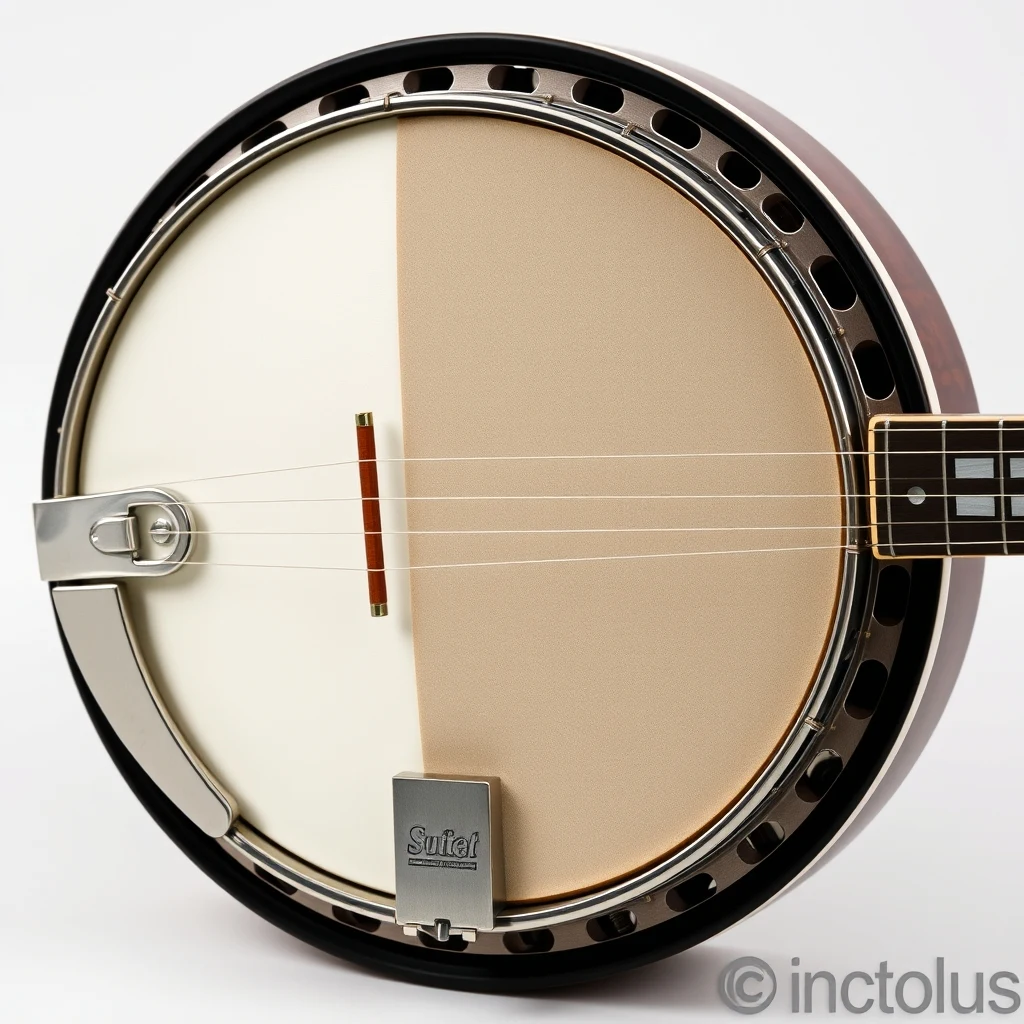
Openback vs resonator: the fundamental configuration split
A banjo pot (the circular body) can be configured as openback — no back cover — or with a resonator, a wooden bowl attached to the back that projects sound forward toward the audience and gives the instrument its characteristic loud, projecting tone.
Openback banjos produce a softer, more muted, rounder tone. They are the instrument of old-time, clawhammer, and traditional folk playing. The resonator banjo is louder and brighter — specifically designed for bluegrass contexts where the banjo needs to cut through a band mix at speed. Earl Scruggs-style three-finger picking on a resonator banjo in a bluegrass ensemble is the context that drove the resonator's dominance in mid-20th century American music.
Gibson's naming system encoded this: RB = resonator banjo (5-string), TB = tenor banjo. Openback versions were sometimes designated PB (plectrum banjo) or UB. The RB and TB Mastertone lines are what most collectors focus on.
The Gibson Mastertone: what the name actually means
Gibson introduced the Mastertone designation in the mid-1920s to indicate their higher-end banjo line. The Mastertone instruments featured a tone ring — a metal ring that sits between the drumhead and the pot — that Gibson claimed (accurately) affected the tone and sustain of the instrument.
Not all Mastertones are equal. The line includes numbered models (RB-1, RB-3, RB-4, RB-75, RB-250) indicating decoration and hardware quality, and more importantly, the tone ring type varied across production eras. The model number tells you about cosmetic grade; the production year and pot details tell you about the tone ring.
| Designation | String count | Primary use | Collector focus |
|---|---|---|---|
| RB (Resonator Banjo) | 5 strings | Bluegrass, country | Pre-war flatheads most sought |
| TB (Tenor Banjo) | 4 strings (short scale) | Jazz, ragtime, Irish trad | Pre-war archtops, Whyte Laydie pots |
| PB (Plectrum Banjo) | 4 strings (long scale) | Jazz, dance orchestras | Rarer, specific model variants |
Tone rings: flathead vs archtop
The tone ring is the most technically significant variable in vintage Gibson banjo collecting. Gibson used two primary tone ring designs during the Mastertone era:
Archtop tone ring
The archtop ring was the earlier design, used from approximately 1925 through the early 1930s. It contacts the drumhead at the outer edge only, leaving the center of the head free. The archtop ring produces a brighter, more cutting sound — ideal for the tenor banjo jazz context of the 1920s, where clarity and cut were prioritized.
Flathead tone ring
The flathead ring, introduced around 1934–35, contacts the drumhead more broadly across its surface. This produces fuller bass response, more sustain, and the overall tone associated with Earl Scruggs and the bluegrass tradition. Pre-war flathead Mastertones are among the most valuable fretted instruments in the vintage market.
Pre-war vs post-war Gibson production
The dividing line in Gibson banjo collecting is roughly 1942, when WWII production constraints effectively halted civilian instrument production. Pre-war instruments used different wood selections, different hardware materials (some wartime or post-war substitutions used lower-quality plating), and the pre-war labor standards in many respects produced finer fit and finish.
Post-war Mastertones (1940s–1970s) are capable players and have their own collector following, but they command lower prices than pre-war examples of equivalent specification. The exception is specific post-war variants that carried over or improved on pre-war features — some early 1950s Mastertones are considered transitional and valued accordingly.
Serial numbers are the primary tool for dating Gibson banjos. Several published references and online resources provide Gibson banjo serial number ranges — these should be considered approximate, as Gibson was not always consistent in sequential serial application. Physical details (inlay patterns, headstock shape, hardware plating) provide confirming evidence alongside serial numbers.
Shopping for vintage banjos? Browse current eBay listings → (we earn a small commission; your price is unchanged).
Neck condition: the most variable factor
Banjo necks are separate from the pot and are bolt-on construction in most cases. This makes neck replacement easier than on most fretted instruments — but it also means the neck and pot of any given vintage banjo may not be original to each other. Mismatched necks and pots are common in the vintage market.
What to check on the neck
- Straightness: Sight down the neck from the headstock end. A slight forward bow (relief) is normal and adjustable via truss rod. A severely back-bowed or kinked neck is more problematic.
- Truss rod function: Turn the truss rod nut — it should move freely without binding. A stuck truss rod may indicate the rod is at its limit or is damaged.
- Fret wear: Deeply worn frets reduce intonation accuracy and playability. Refrets are routine maintenance but reduce originality value on collector-grade instruments.
- Heel and attachment: The neck heel should fit cleanly against the pot flange. Gaps, shimming, or evidence of repair at the heel joint indicate past work that may affect stability.
- Headstock repairs: Headstock breaks and repairs are common on older banjos and reduce value if visible. Inspect the back of the headstock carefully.
Head condition and pot assessment
The drumhead (banjo head) is a consumable item — it can be replaced. Original heads on vintage instruments are not especially valued; what matters is that the head is properly tensioned and undamaged. Inspect for cracks, tears near the hooks, or signs of extremely high tension that could indicate structural stress on the pot.
The pot (the circular rim, flange, and coordinator rods) should be inspected for:
- Cracks in the wooden rim — rare but significant
- Missing or replaced hooks and nuts (minor if standard size replacements)
- Flange condition — the metal flange should be flat and undistorted
- Coordinator rod configuration — original coordinator rods confirm a more original instrument
Non-Gibson makers worth knowing
Gibson dominated professional banjo production in the 1920s–30s but was not the only quality maker:
- Vega (Boston): Made the Tubaphone and Whyte Laydie tone rings, both highly regarded. Some collectors prefer certain Vega models over equivalent Gibson instruments for specific tone ring characteristics.
- Bacon & Day: Connecticut maker producing high-quality banjos in the 1920s–30s. Silver Bell models are their most collected. Less frequently encountered than Gibson but respected among specialists.
- Orpheum (Rettberg & Lange): New York maker producing quality instruments, particularly in the tenor format. Collected in their own right.
- Fairbanks (Boston): Pre-Gibson maker whose Electric model influenced later developments. Collector interest particularly in the electric (arched top) banjo variants.
What originality means in this market
In the vintage banjo market, originality is parsed at several levels. A banjo with its original finish, original hardware, original neck-and-pot pairing, and original case commands a premium over any example with non-original components. The degrees:
- All original parts, original finish: maximum value
- Original parts, refinished: reduced, particularly on pre-war instruments
- Replaced neck on original pot: significantly reduced if pre-war flathead pot
- Replaced resonator: less significant reduction if pot is original and correct
- Replaced tone ring: significant reduction — the tone ring is central to the instrument's identity and value
The honest bottom line
If you are buying a vintage banjo as a player: the tone ring type matters more than the cosmetic model number, and openback vs resonator matters more than maker for most playing contexts. A clean pre-war or post-war resonator Mastertone in playing condition with a flathead ring is the bluegrass benchmark. A solid openback from Vega, Orpheum, or even mid-grade Gibson is the old-time benchmark.
If you are buying as a collector: pre-war flathead RB Mastertones are the apex of the market. Documentation, serial numbers, original components, and the ability to verify the tone ring type are all prerequisite to paying collector prices. Get hands-on with the instrument, compare serial numbers to published references, and if the stakes are high enough, consult a specialist luthier before committing.
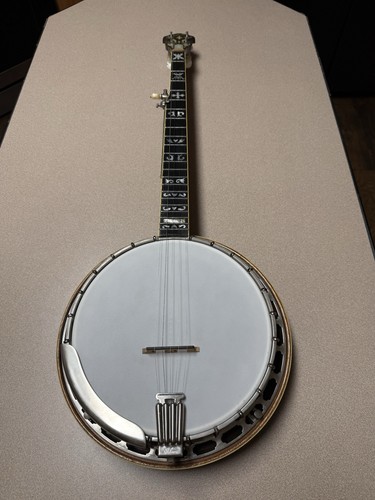 Gibson Mastertone banjo
 Tenor banjo vintage
 Openback banjo vintage