The internet's weight-reduction advice clusters around two bad extremes: gear nerds obsessing over sub-ounce savings on items that do not change how a trip feels, and dismissive traditionalists claiming weight does not matter if you are fit enough. Both are wrong. Weight matters — every pound in a pack adds real physical cost over miles — but most weight is concentrated in a small number of decisions. Fix those decisions and you can halve your base weight without buying exotic ultralight equipment.
Base weight is your pack weight excluding food, water, and fuel. It is what you weigh in with before the trip variables that change daily. A reasonable base weight target for a three-season backpacker is under 20 pounds. Under 15 pounds is achievable without spending more than $500 total, buying used. Under 10 pounds (the ultralight threshold) requires intentional purchases but not titanium-everything.
The Big Three: Where 60–70% of Your Base Weight Lives
Pack, shelter, and sleep system are called the Big Three because they carry the most weight and offer the most room to improve. If you are over 20 pounds base weight, this is where to look first.
The Pack
Most beginner backpackers use a pack that weighs 5–7 pounds empty. That is a 65L mountaineering pack designed for expedition use, bought because it had the most features and looked the most "serious." A properly fitted 45–50L frameless or semi-frameless pack for three-season use weighs 2–3 pounds. The difference is 2–4 pounds before you have packed anything.
The objection is usually "but I need the frame for support." You do if you are carrying 40+ pounds. But if your base weight drops to 15 pounds and you carry 2 days of food, a frame is weight you do not need. The pack is often the last thing people replace because it feels like the wrong place to start. Start there.
The Shelter
A two-person tent with poles, stakes, and a footprint often weighs 5–6 pounds. A double-wall single-person shelter with an integrated footprint weighs 2–3 pounds. A trekking-pole-supported shelter (one tarp or bivy + trekking poles you carry anyway) weighs under 1.5 pounds. The single biggest decision in shelter selection is whether you use dedicated poles or trekking poles for structure.
Trekking poles as shelter poles is not a hack — it is how most serious long-distance hikers set up. The math is obvious: poles you carry on the trail and poles you pitch the shelter with are the same poles. Dedicated tent poles are payload on the trail and structure at camp. If you already carry trekking poles, a trekking-pole shelter costs you zero additional weight and saves you 1–3 pounds over a standard tent.
The Sleep System
A 3-season sleeping bag typically weighs 2.5–4 pounds. A down quilt covering the same temperature range — a bag without the back panel and hood, since you are lying on it and have a sleeping pad under you — weighs 1–1.5 pounds. Down quilts are not a gimmick. They exist because sleeping bag manufacturers for decades included material in the part of the bag compressed under your body that provides zero insulation there. A quilt removes that material. You add a sleeping pad to compensate, which you needed anyway.
The trade-off is real: quilts are less forgiving in cold weather, and people who sleep cold report more discomfort. If you sleep cold, keep a bag. If you sleep warm, a quilt is the highest-value weight cut in the Big Three after the pack.
| Item | Standard weight | Lighter option | Savings |
|---|---|---|---|
| Pack (65L frame) | 5.5 lb | 45L semi-frame 2.5 lb | ~3 lb |
| Shelter (2P freestanding tent) | 5.5 lb | Single trekking-pole shelter 1.5 lb | ~4 lb |
| Sleep system (3-season bag) | 3.5 lb | Down quilt 1.2 lb | ~2.3 lb |
| Big Three total savings | ~9 lb |
Nine pounds is not a marginal improvement. Nine pounds is the difference between a trip that destroys your knees on descents and a trip you finish feeling like you could do it again tomorrow.
The Hidden Grams: Six Places Beginners Overlook
After the Big Three, the savings get smaller but they accumulate. These are the categories where beginners carry weight they do not notice because they are hidden in "obvious" choices.
Footwear
Heavy leather boots weigh 3–4 pounds per pair. Trail runners weigh 1.5–2 pounds. The protection argument for boots is real on rugged terrain with a heavy pack, but disappears for most three-season trail conditions with a pack under 20 pounds. Trail runners also dry faster when wet, which matters more than ankle support on most trips.
The transition from boots to trail runners is the weight cut most people resist longest and appreciate most immediately after making it. Your feet go light; your pace goes up; your energy cost drops measurably.
Cookware and Fuel
A standard camp cooking setup — big pot, lid, folding stove, windscreen, spare fuel canister — weighs 1.5–2 pounds. An alcohol stove made from a cat food can weighs 15 grams. A titanium pot and lid weigh 90 grams. For a three-day trip where you are boiling water for dinner and coffee, the difference between a full cooking kit and a minimal alcohol stove with a titanium pot is over 1 pound.
The counter-argument: alcohol stoves are slower in cold weather and require carrying fuel in a separate container. For winter trips or high altitude above treeline, a canister stove is worth the weight. For shoulder-season trips at moderate elevation, the lightweight setup is fine.
Water Treatment
A water filter pump weighs 11–14 oz. A Sawyer Squeeze filter weighs 3 oz. Aquatabs (chemical treatment) weigh negligible grams. The filter pump exists for high-throughput group use and convenience. Solo or duo, the Sawyer Squeeze covers every situation a pump covers and costs a quarter of the weight.
Note: the Sawyer Squeeze's included plastic pouch weakens with use and will eventually burst. Replace it with a SmartWater bottle — same thread size, more durable, weighs 1.3 oz. This is common knowledge among Sawyer users and fixes the one reliable failure point.
Clothing
Clothing is where the most invisible weight hides. A cotton base layer weighs 300–400g. A merino wool base layer weighs 180–220g and handles odor over multiple days so you carry fewer changes. A hardshell rain jacket weighs 600–900g. An ultralight rain jacket (1.5–2 layer construction) weighs 200–350g at the cost of some durability. Most three-season trips in non-technical terrain do not need a 900g hardshell.
The biggest clothing mistake is bringing redundancy you do not need. Two pairs of hiking pants, three shirts, multiple layers that serve the same function. Define the conditions you are actually likely to encounter — not the worst possible scenario — and build toward those conditions. If the forecast shows a dry week, a rain poncho that weighs 170g covers emergency use. If it shows a wet week, bring the hardshell.
First Aid and Emergency Kit
Pre-assembled first aid kits from outdoor retailers are padded with supplies you will not use and packaged in heavy pouches. Build your own: moleskin for blisters, ibuprofen and antihistamine for the obvious needs, a small SAM splint, ace bandage, a few butterfly closures, irrigation syringe, and a space blanket. Strip it of its retail packaging. You will cut 6–10 oz from the standard kit and have a kit that is actually sized to what backpacking injuries require.
Bear Canister vs. Hang vs. Ursack
If your destination requires a bear canister, you carry a bear canister — that is not optional weight. But if hanging is permitted and legal, an Ursack (a bear-resistant Spectra bag) weighs 7.6 oz versus 33–40 oz for a plastic canister. The volume difference matters: canisters limit how much food you can bring; an Ursack does not. In many wilderness areas, an Ursack meets the "bear-resistant container" requirement. Verify regulations before relying on this, but it is a legitimate 1.5–2 pound cut where regulations allow it.
The Cuts That Are Not Worth Making
Gear Twitter and ultralight forums celebrate some weight cuts that have poor value in practice.
Cutting your toothbrush handle. Saves 8 grams. Takes 45 seconds of work. One of the most famous ultralight tips and one of the lowest-value. Do it if you want to. Do not prioritize it over any of the six categories above.
Removing pack straps and attachment points. Some ultralighters cut off unused straps and D-rings with scissors. Saves 50–100g. Damages the pack, eliminates features you might need, and is irreversible. Not recommended.
Going stoveless to eliminate cooking weight entirely. For the right trip with the right food tolerance, this works. Cold soaking (soaking dehydrated food in water until edible without heat) saves 1–1.5 pounds. It also means every meal for multiple days is cold food at the end of a hard hiking day. This is a comfort trade-off that some people make willingly and others regret deeply. Know yourself.
Replacing a pack rain cover with a trash compactor bag liner. A compactor bag liner weighs 60g versus 120–150g for a pack cover. Valid cut. But a cover also protects the exterior of the pack and your external attachment points. A liner only protects the interior. Both is ideal; if you can only have one in a wet climate, choose the liner.
How to Actually Weigh Your Gear
A kitchen scale accurate to 1 gram costs $12–18. Weigh everything in your pack and write it down. Most people who have never done this are surprised to discover where the weight is — often it is in items they considered "light" and not in items they considered "heavy." The scale does not lie.
A gear spreadsheet does not need to be elaborate. Item name, category (shelter, sleep, cooking, clothing, misc), and weight in grams. Total by category. This shows you instantly whether the Big Three are your problem, or whether you have spread weight evenly across fifteen categories.
Ultralight backpacking is not an aesthetic or an ideology. It is applied math: every pound costs energy on every mile, and the goal is to spend that energy on the experience rather than on payload. The cuts that change how a trip feels are all in the Big Three and the six overlooked categories. The cuts that make people feel serious about ultralight but change nothing are in toothbrush handles and tent stake weight. Put your time and money where the pounds are.
Gear worth considering for weight reduction
Smart eBay searches we'd start with ourselves. Small commission on qualifying sales; your price is the same either way. Full disclosure.
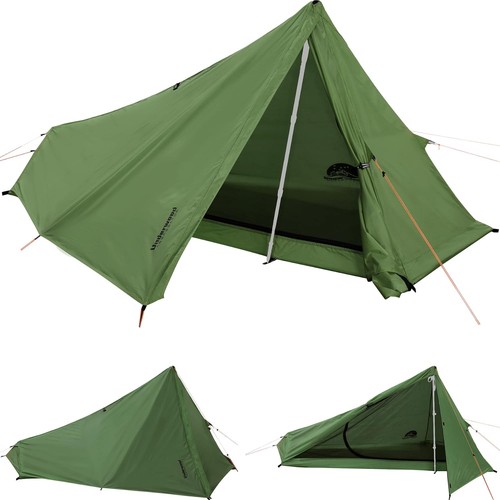 Trekking-pole shelterBig Agnes Copper Spur, Zpacks Duplex, Six Moon Designs — all use trekking poles as structure. The biggest single weight cut in most packs.
 Down quilt (20°F)Enlightened Equipment Revelation, Katabatic Gear, Hammock Gear — the established quilt makers. Covers three-season use for warm sleepers.
 Frameless or semi-frame packHyperlite Mountain Gear, Osprey Exos, Gossamer Gear — all significantly lighter than standard expedition packs. Start used to test fit.
 Trail runnersHoka Speedgoat, Salomon Speedcross, Altra Lone Peak — all significantly lighter than hiking boots and dry faster when wet.
 Sawyer Squeeze water filter3 oz, 100,000-gallon rated, 0.1 micron absolute. Replaces pump filters at a third of the weight. Pair with a SmartWater bottle for the soft pouch.