Apiary scaling: 2 hives to 10 to 50 economics
Per-hive cost structure, the volume thresholds that change everything (equipment, insurance, regulatory category), and the honest revenue ceiling at each scale.

Most beekeepers stop at 2-4 hives forever. The math at that scale is hobby — break-even at best. The beekeepers who break to $30k-$150k annual revenue cross specific volume thresholds with specific equipment and operational changes at each. Here's the honest scaling framework.
The volume tiers
| Hive count | Honey/yr | Revenue (mixed channels) | Time investment |
|---|---|---|---|
| 2 hives | ~80 lbs | $800-1,200 | 2-3 hrs/week |
| 5 hives | ~200 lbs | $2,000-3,500 | 4-5 hrs/week |
| 10 hives | ~450 lbs | $5,000-9,000 | 6-8 hrs/week |
| 25 hives | ~1,200 lbs | $13,000-25,000 | 10-15 hrs/week |
| 50 hives | ~2,500 lbs | $28,000-65,000 | 20-25 hrs/week |
| 100 hives | ~5,500 lbs | $55,000-150,000 | 30-40 hrs/week (FT operation) |
The thresholds that change everything
Threshold 1: 5-10 hives (extraction equipment)
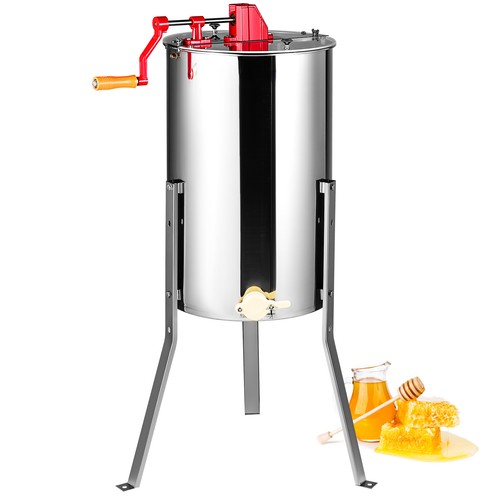
At 2-3 hives, manual extraction works. Crush-and-strain, or borrowing your local beekeeping club's extractor. At 5+ hives, you need your own extractor. The honest options:
- 2-frame manual extractor: $200-350. Works for 5-15 hives. Tedious but functional.
- 6-frame motorized extractor: $850-1,500. Sweet spot for 15-40 hives. Pays for itself in time savings.
- 20-frame radial extractor: $3,500-7,000. Required for 50+ hives. Commercial-grade.
Threshold 2: 10-15 hives (transportation)
At 2-5 hives, you keep them in one yard (your backyard or a friend's field). At 10+, you need multiple yards because the local nectar resources can't support concentrated hives. Multiple yards means a pickup truck or trailer.
Hive transport requires: pickup truck or van, ratchet straps, tail-light extensions if towing, and a hive stand/pallet system. Initial investment: $2,000-5,000 (used pickup) or $400-800 (utility trailer if you have a vehicle).
Threshold 3: 25 hives (commercial registration)
Most US states require commercial apiary registration above 25-50 hives (the exact threshold varies). This usually involves:
- Annual state apiary inspection (typically $25-75 fee)
- Hive labeling/registration numbers visible on each hive
- Compliance with state varroa treatment protocols
- Notification to state ag department of yard locations
Skipping registration past the threshold opens you to fines and forced disposal of hives in worst-case scenarios. Worth doing right.
Threshold 4: 50 hives (insurance and business structure)
At 50+ hives, liability insurance becomes non-optional. A swarm causing damage, a customer claiming allergic reaction to honey, an apprentice getting stung — any of these become real claims. Beekeeping-specific liability insurance runs $400-1,200/year for a 50-hive operation.
Also at this scale: LLC formation. Personal liability shielding matters when revenue is real.
Threshold 5: 100+ hives (full-time operation)
Beyond 100 hives, beekeeping becomes a full-time job. The operation needs:
- Dedicated honey house (separate from home kitchen)
- Commercial extractor and bottling line
- Possibly employees during peak extraction season
- Vehicle suitable for moving 50+ hive loads (flatbed truck or larger)
- Cold storage for honey inventory
The economic break points
| Operational stage | Net profit rate |
|---|---|
| Hobby (2-5 hives) | -$500 to +$1,200/year |
| Side income (10-20 hives) | $3,000-12,000/year |
| Serious part-time (25-50 hives) | $12,000-35,000/year |
| Full-time small commercial (75-150 hives) | $45,000-90,000/year |
| Full commercial (200+ hives) | $80,000-200,000/year (often with seasonal employees) |
Common scaling mistakes
- Adding hives faster than you can manage. Going from 5 to 30 in one season usually means losing 30-40% of colonies. The honest pace is doubling each year max.
- Buying packages vs splitting your own. Packages cost $160-200 each. Splitting strong colonies costs $0 (you keep the bees). Scale from your own colonies whenever possible.
- Forgetting the time math. 50 hives at 5 minutes each per inspection = 4+ hours per inspection round. Plus mite treatment, feeding, harvesting. Total time at 50 hives is 15-25 hours/week during active season.